Categories
Flight Simulation

Explore the Planet in Flight Simulation (22)

KLM MD-11 airborne from Rotterdam The Hague virtual airport in Microsoft Flight Simulation

After Holland, France is stage 22 of the flight simulation tour of the world. The first airport of interest will be Paris-Le Bourget (LFPB), more specifically the Musée de l’Air et de l’Espace du Bourget. Since this is a historical visit, we choose the aircraft accordingly.

So, departing from Rotterdam, passengers board an MD-11 in KLM colors. The last flight of KLM’s MD-11 passenger aircraft in the real world took place in 2014, departing from Montreal to Amsterdam.

Today, several MD-11s are still flying, but only in cargo versions. Airlines are progressively replacing them by more modern aircrafts.

TFDI produced this high-quality virtual aircraft. An updated version has further improved the aircraft. It can be seen below flying at 13,000 feet.

A KLM MD-11 climbs for FL210 towards Paris-Le Bourget (LFPB) with MSFS

Below, the MD-11 reaches flight level FL210. The virtual weather based on METAR reports from Rotterdam and Paris indicates no serious problems for the approach and landing.

Virtual TFDI KLM MD-11 about to reach FL210 enroute to (LFPB) Paris Le Bourget airport

For this flight, the MD-11 is carrying only about 100 passengers. The runway at Le Bourget offers plenty of room for maneuvering when landing such an aircraft. Thirty-five degrees of flaps will therefore be sufficient for the final approach to runway 25.

The approach axis is unusual in that it is offset by 26 degrees from the center of the runway. As Jean-Pierre Otelli so aptly puts it in his book, ” Piloter en sécurité ”  : “If the localizer were in line with the runway, the final approaches at Le Bourget would pass 1,000 feet above Terminal 1 at Roissy” […]. Aircraft landing on 25 must make a final 26-degree turn after following the localizer.”

Le Bourget is not the only airport where a serious turn is necessary on final approach. We obviously remember the Hong Kong Checker Board Approach for runway 13 at the former Kai Tak Airport in Hong Kong. At that airport, the final turn was not 26 degrees, but 47 degrees.

Finally, we can also mention Ronald Reagan Airport, where the approach for runway 19 requires a final turn of 36 degrees to avoid the area surrounding the White House.

KLM MD-11 on final for the virtual airport Paris Le Bourget (LFPB) with Microsoft Flight Simulator

The MD-11 taxis down the runway after a smooth landing. After switching off the autopilot for the final approach, an alarm sounds in the cockpit. Even after the plane has touched down, no matter what I do to silence the alarm, nothing works. I still have several hours of study ahead of me to master this aircraft.

Virtual KLM MD-11 taxiing on rwy 27 Paris Le Bourget airport after landing with MSFS

The MD-11 taxis to a makeshift parking area near the museum after crossing the disused runway.

A KLM MD-11 de KLM arrives at the Paris Le Bourget (LFPB) airport with Microsoft Flight Simulator

Le Musée de l’Air et de l’Espace du Bourget (The Air and Space Museum in Le Bourget).

Virtual Musée de l'Air et de l'Espace du Bourget with Microsoft Flight Simulator MSFS
Virtual Musée de l’Air et de l’Espace du Bourget with Microsoft Flight Simulator MSFS

The next stage of our flight around the world with Microsoft Flight Simulator will also take place in France. The current weather conditions will once again dictate the choice of aircraft and destination.

Click on the link for photos and previous flights around the world in flight simulation on my blog.

Categories
Flight Simulation

Explore the world in flight simulation (21)

Today’s flight around the planet takes place between the virtual airports of London City (EGLC) in England and Rotterdam-The Hague (EHDR) in the Netherlands. The weather looks good, apart from a few large TCUs here and there along the route. The crew imports the Simbrief flight plan into Navigraph to facilitate navigation between the two countries.

Daher TBM930 airborne from the London City virtual airport (EGLC) in United Kingdom

For a fast and comfortable journey, we choose the high-performance Daher TBM930 in Canadian colors. Microsoft has truly designed a marvel of a virtual aircraft.

Virtual TBM930 over United Kingdom heading to the Rotterdam airport (EHDR), Netherlands

The operating ceiling is 31,000 feet and the maximum range of the TBM930 is around 1,730 nm. With a cruising speed of 330 knots, we cross the English Channel in no time. As you would expect, there is a lot of shipping traffic between the North Sea and the English Channel.

TBM930 turboprop aircraft over water and approaching Netherlands

We are now above the Netherlands. The programmed route reads as follows: EGLC runway 09 DEP ODUK1H ODUKU M84 TOVGU M84 CLN P44 RATLO M197 REDFA MASOS. We have selected the REDF3R arrival and the RNAV runway 24 approach.

Working Title Simulations Daher TBM930 over Netherlands approaching the Rotterdam virtual airport (EHDR) with Microsoft Flight Simulator

Below, the cockpit photo shows the interior of the TBM930 and the route followed for the approach. We are descending rapidly to reach the recommended altitude of 2,000 feet a little further on for arrival.

Cockpit of the Daher TBM930 as it approaches runway 24 for the Rotterdam (EHDR) in flight simulation MSFS

There are strong winds today and mechanical turbulence throughout the journey to Rotterdam.

TBM930 approaching rwy 24 for the Rotterdam virtual airport (EHDR) with Microsoft Flight Simulator MSFS

The autopilot keeps the single-engine turboprop slightly to the right of the centerline of runway 24 during the long final approach to counter strong crosswinds. The VNAV function does a very good job of maintaining the correct altitude during descent.

MSFS Daher TBM930 on final for rwy 24 Rotterdam airport in flight simulation

During the short final approach, we disconnect the autopilot. Surface winds are blowing at 320/14 knots. Moments later, we land the virtual aircraft without breaking anything. A short taxi brings us to a parking spot where staff are waiting for us.

Canadian Daher TBM930 arriving at the virtual Rotterdam The Hague airport (EHDR) with Microsoft Flight Simulator

Flying virtually with the TBM930 is a treat. It is one of the best virtual aircraft currently available on the market for use with the Microsoft Flight Simulator (MSFS) flight simulator. What’s more, virtual pilots don’t have to pay extra for this aircraft, as it comes with the MSFS software.

The next leg of this simulated flight around the world takes place between Rotterdam and Paris-Le Bourget Airport (LFPB) in France. Customers have chartered an old MD-11 in KLM colors for a historic flight to the Air and Space Museum in Le Bourget.

Click on the link for the previous stages of this flight simulation tour of the planet in my blog.

Categories
Flight Simulation

Explore the planet in flight simulation (16)

The exploration of the planet in flight simulation continues. Today we’re flying from Bruray / Out Skerries (EG78 or OUK for the IATA code) to the Barra beach airfield (EGPR). It’s a demanding virtual flight, especially when it comes to taking off from Out Skerries. The winds are strong and quite sideways to the small runway. You can see this by observing the windsock from the cockpit.

Virtual DHC-4 Caribou ready for crosswind take-off at EG78 Out Skerries aerodrome with MSFS

The crew opted to use a good old DHC-4 Caribou, which has proved its worth in difficult landings and take-offs. The virtual clouds reflect the current situation in the Shetland Islands.

With both feet on the brakes, the flaps adjusted and the steering wheel turned to the right to limit the effect of the wind on the right wing, the crew push the throttle to maximum while releasing the brakes. The aircraft moves a little to the left as it rolls, but by using rudder, it stays on the runway long enough to take off.

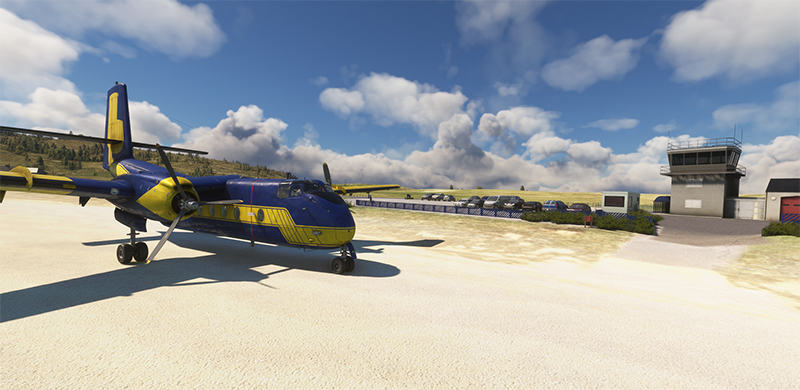
DHC-4 Caribou virtual aircraft airborne out of Out Skerries (EG78) in Scotland

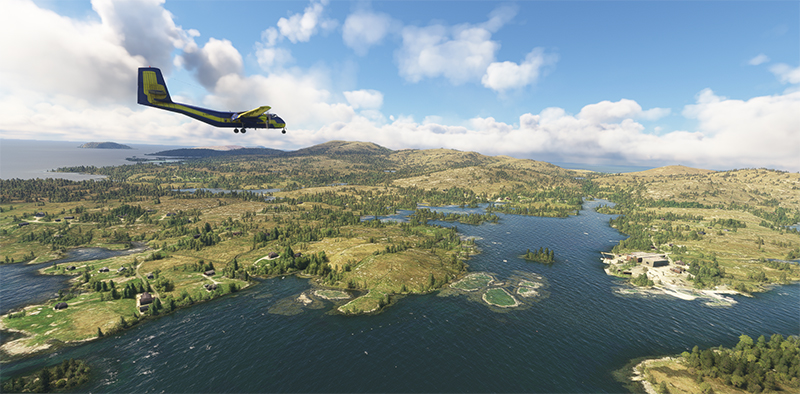
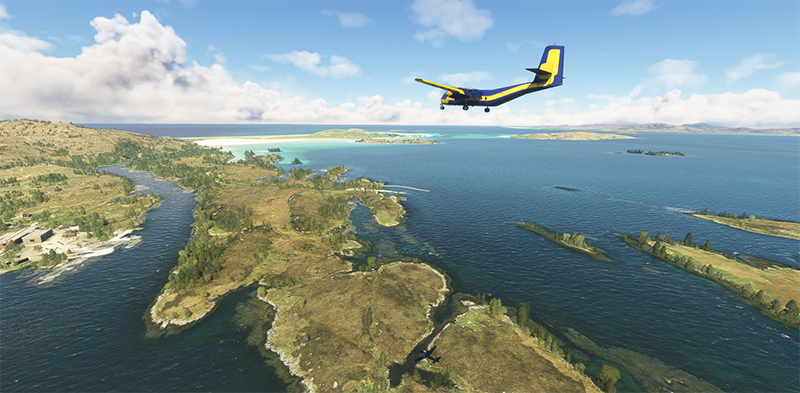
The flight is made in VFR mode under cloud. Eventually, the sky clears and we can enjoy the scenery as we approach Barra beach. The low tide makes for a smooth landing.

DHC-4 Caribou enroute to the Barra (EGPR) virtual airport on the beach with MSFS

The photo below shows the Caribou in right base for Barra beach. What a great day for visual flying!

Barra (EGPR) sand runway in sight with the virtual DHC-4 Caribou with MSFS
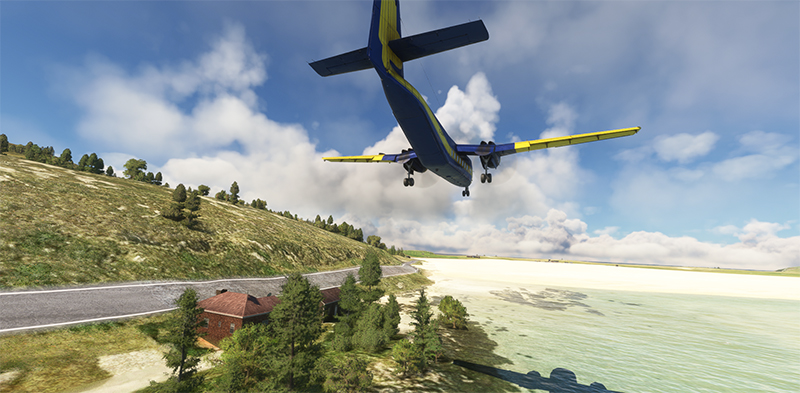
DHC-4 Caribou on final for the sand runway at Barra virtual airport (EGPR) with MSFS

The DHC-4 is now on short final for the sand runway. Even though it’s a large twin-engine aircraft, its short take-off and landing capabilities mean that it will only need a very small portion of the available range.

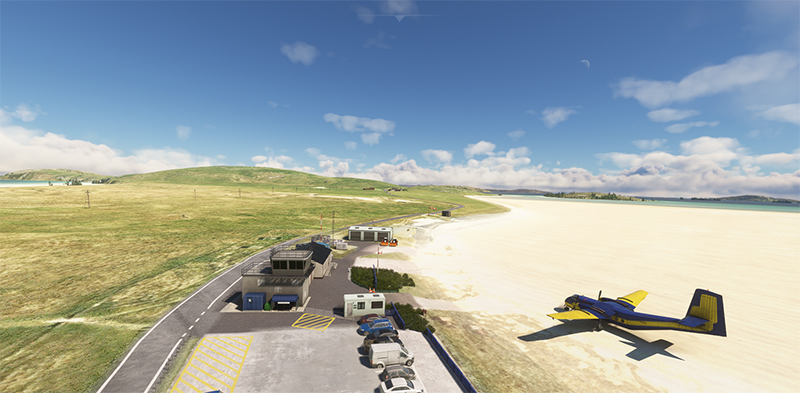
The virtual Barra airport (EGPR) and the DHC-4 Caribou on a stopover in flight simulation with MSFS.

A few passengers seem to have already arrived, unless they’re curious onlookers who heard the aircraft approaching. This is certainly a very rare visit by a DHC-4 to Barra!

Virtual DHC-4 Caribou landed on the beach at Barra airport (EGPR) with MSFS

Airport management refuses to reveal the aircraft’s destination. In any case, this won’t be the first time a Caribou has made special flights on demanding runways.

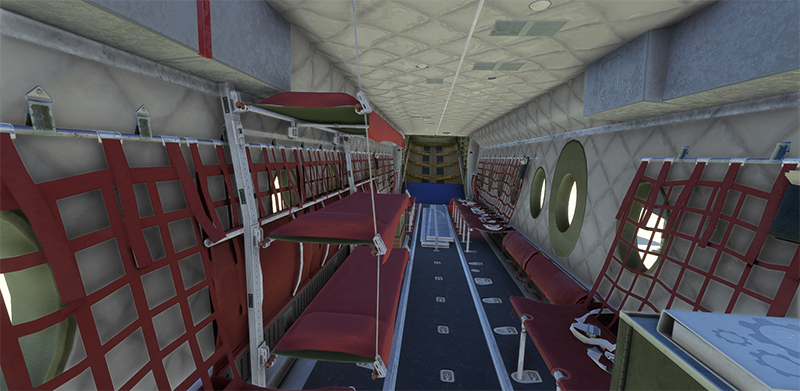
Ultimate luxury with sleeping pods for the future passengers of a virtual DHC-4 Caribou with MSFS

A final photo shows the interior of the Caribou. Impressive luxury, with berths available for first-class passengers. There’s no stopping progress!

Stage 17 of this round-the-world flight simulation will take place between Barra and Donegal (EIDL) in Northern Ireland. The virtual Britten Norman BN2A Trislander MK III will make the journey using the Microsoft Flight Simulator 2020 (MSFS) flight simulator.

Click on the link for more virtual flights around the world in my blog.

Categories
Flight Simulation

Explore the planet in flight simulation (15)

Through the videos on Youtube, I see that a runway called Out Skerries (EG78 or OUK) in the Shetland Islands attracts interest for its challenging landing. It is only 1195 feet long.

The tiny airstrip will therefore be the destination for leg #15 of our round-the-world flight simulation tour with the MSFS flight simulator.

To increase the fun, we choose a twin-engine aircraft, which is heavier and requires a longer breaking distance.

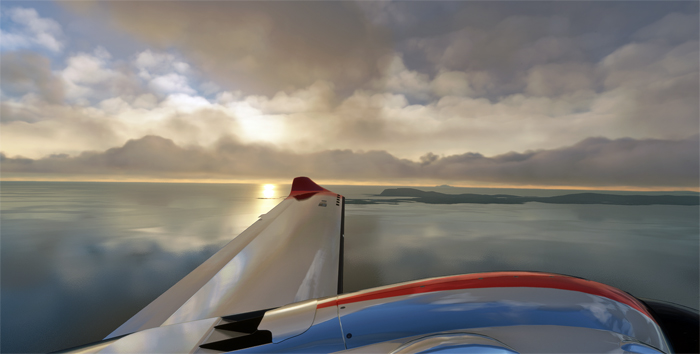
We take off from Dundee (EGPN) with a virtual Diamond DA-62 and arrive at dusk. It’s probably a bit tight for a short, unlit runway, but we’ll give it a go.

DA-62 aircraft taking off from Dundee airport, Scotland, with Microsoft Flight Simulator

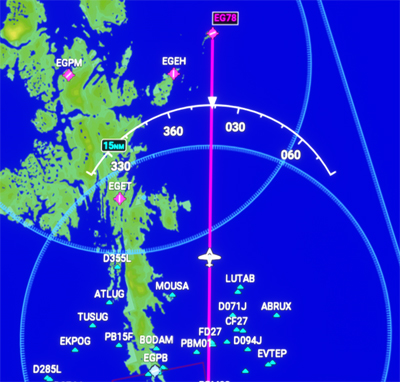
The stall speed of the DA-62 in landing configuration is 68 knots, which will help us to succeed in our undertaking. We take a 018-degree northerly course to reach the islands from Dundee. Ground speed is around 155 knots for this 250 nautical mile journey.

Virtual DA-62 over Scotland enroute to the Shetland Islands
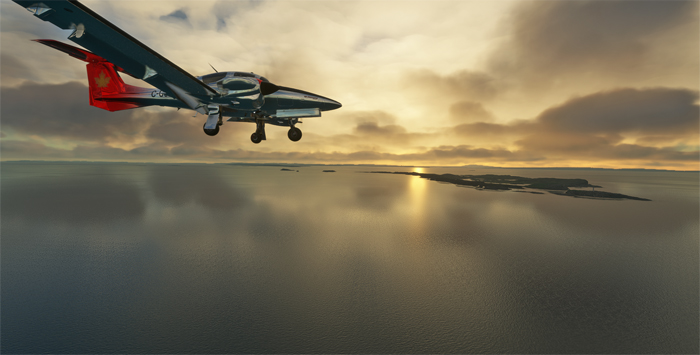
DA-62 aircraft near Fair Isle in the Shetland Islands with Microsoft Flight Simulator

We have to fly off Fair Isle on the way to our destination. I learn from some research that Fair Isle knitwear remains one of Shetland’s most famous products. I imagine that fish products are also very popular.

Flight trajectory towards Out Skerries (EG78) on the Shetland Islands, Scotland
Approaching Out Skerries (EG78) airport in Scotland with the DA62 virtual aircraft

Here we are, approaching Out Skerries. The absence of runway lights makes the operation tricky.

The surrounding hills block the pilot’s view at low altitude, and what is considered a landing strip is not visible until fairly late in the approach. There are no other aids to help locate the facilities.  

The omnipresent winds complicate the task, as does the turn on approach. One of the runway thresholds ends in a cliff ready to receive ill-prepared aviators.

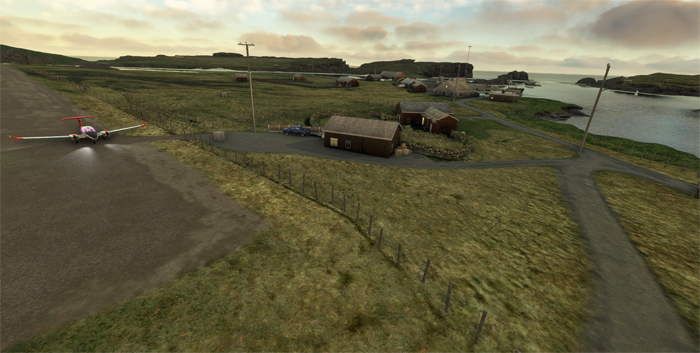
After landing at Out Skerries airport (EG78) with Microsoft Flight Simulator

We see the runway threshold at the last moment. Since the DA-62 weighs more than a single-engine model, the aircraft requires a longer braking distance.

Ground contact is harder than usual, but without bouncing. If there’s a bounce, the pilot has to climb back up and repeat the approach.

You really have to glue the aircraft to the ground at the runway threshold, immediately raise the flaps while pulling back on the stick to maximize braking efficiency. In real life, we’d add that braking must be performed without locking the wheels.

I classify this exercise as a challenging virtual flight.

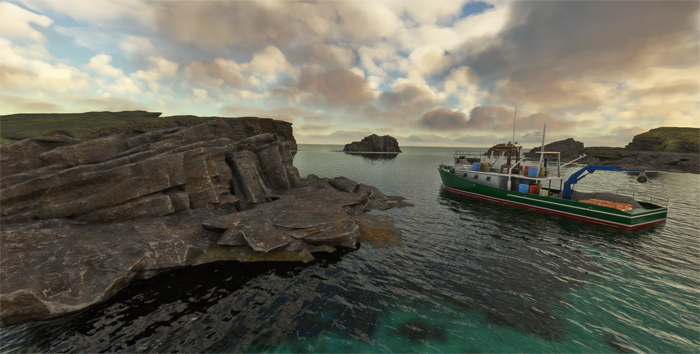
Fishing boat around the Shetland Islands with Microsoft Flight Simulator

Once the flight is over, the crew visits the surroundings. Many fishing boats come and go around the islands.

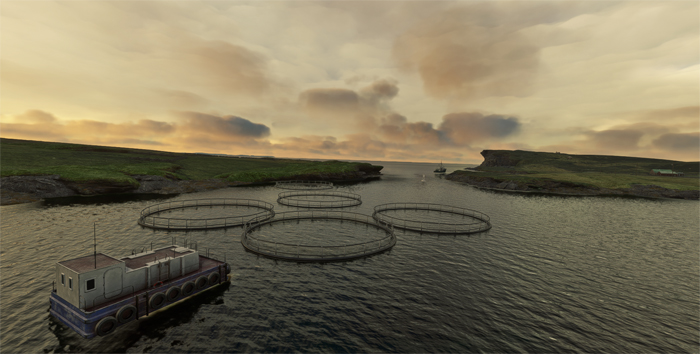
Mussel farming around the Shetland islands in Scotland, with Microsoft Flight Simulator.

We can even see mussel farming facilities.

On our next flight, we head for Barra Airfield (EGPR). It’s located in Scotland’s Outer Hebrides and is the only airport in the world “where scheduled services land on a beach”. We’ll be sure to check the tide before take-off…

Click on the link for more stages of this flight simulation world tour on my blog.
Categories
Flight Simulation

Explore the planet in flight simulation (14)

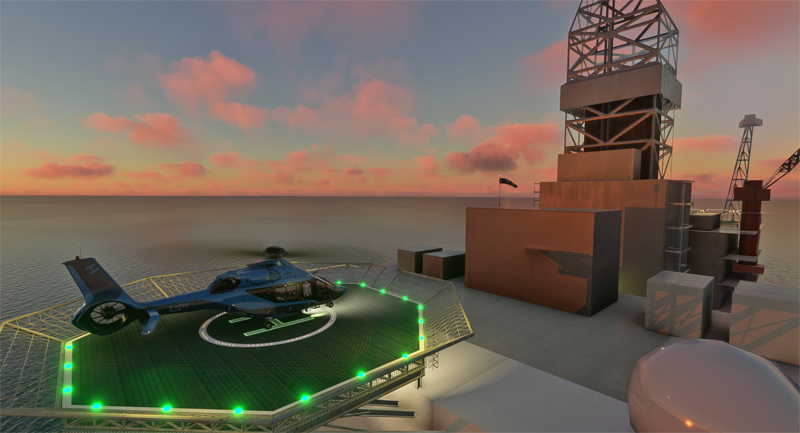
H160 ready for take-off from the ENXB Eldfisk B oil platform for Edinburgh, Scotland, with MSFS

Take-off for stage 14 of this flight simulation exploration of the planet takes place in the early hours of the morning, with good winds. Fortunately, take-offs require much less work than landings.

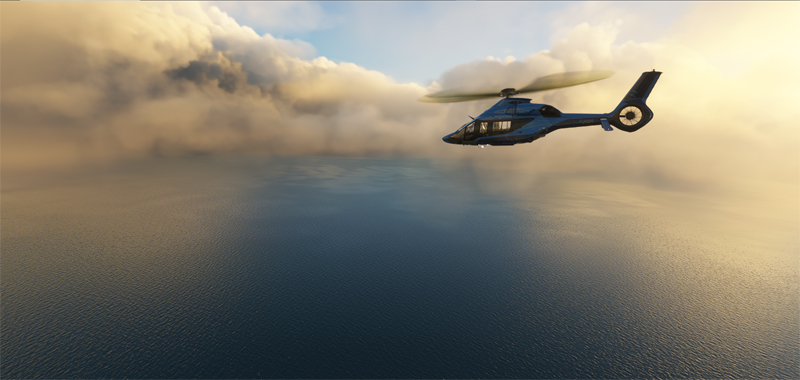
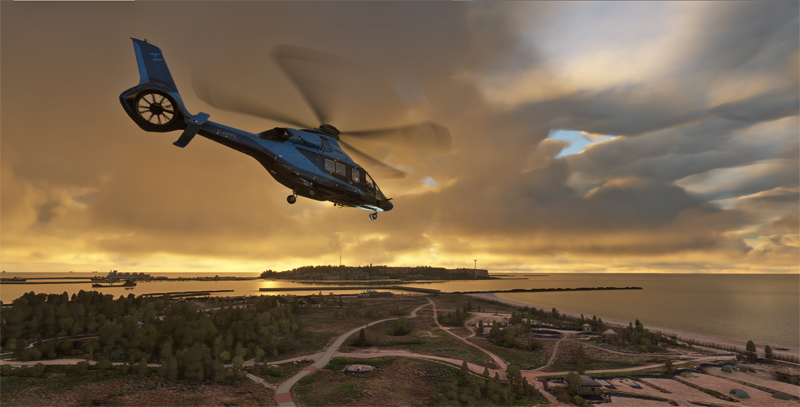
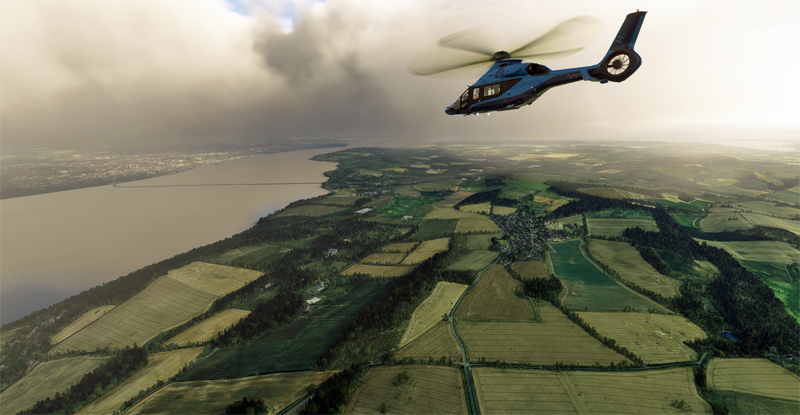
Airbus helicopter H160 airborne from the ENXB Eldfisk B oil platform heading to Edinburgh, Scotland

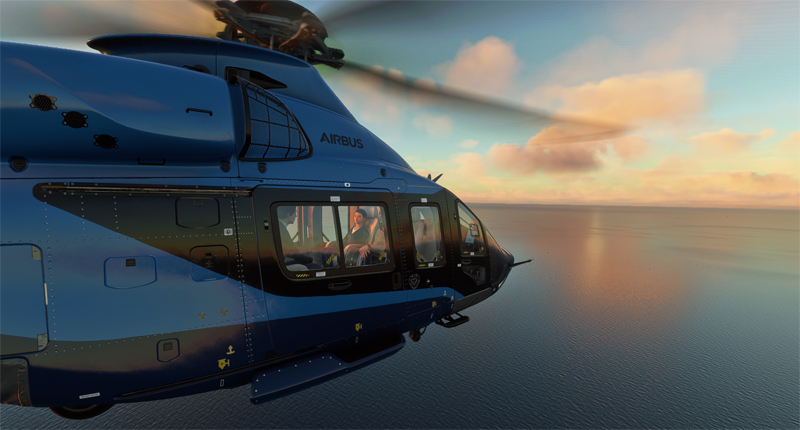
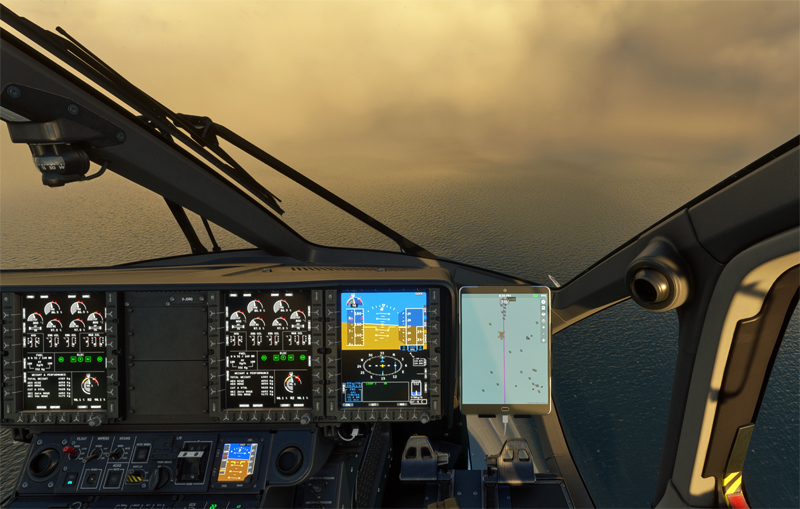
The Airbus H160 Luxury virtual helicopter leaves the ENXB Eldfisk B oil platform for the Palace of Holyrood in Scotland. The flight then continues to Edinburgh Castle, and ends with a landing in Dundee (EGPN).

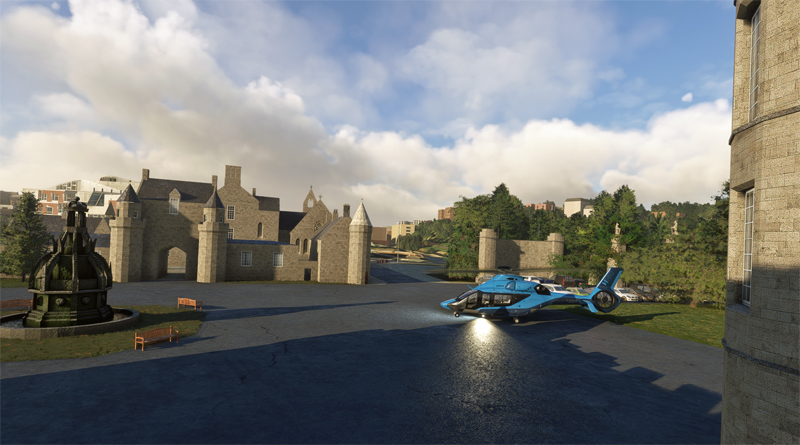
Virtual H160 landed at the Palace of Holyroodhouse in Scotland with MSFS

We received permission to land in the inner courtyard of the Palace of Holyrood to drop off a dignitary visiting King Charles III. Virtual flights make it easy to obtain all kinds of authorizations!

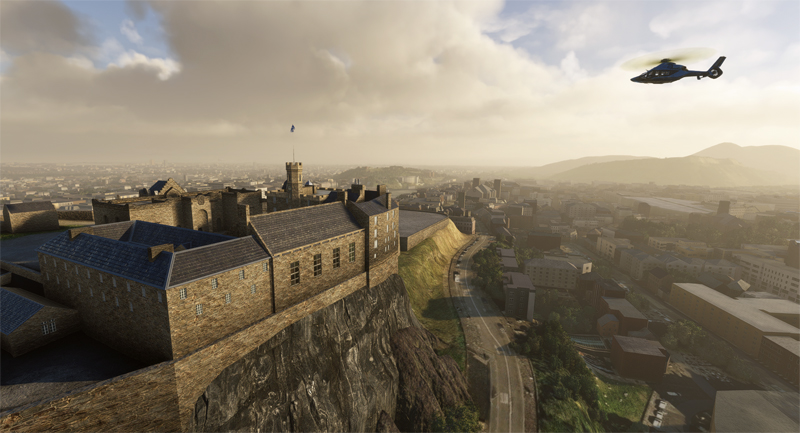
Airbus H160 helicopter by the Edinburgh Castle in Scotland with Microsoft Flight Simulator MSFS

One of the passengers organized a detour to Edinburgh Castle to take a few pictures. A structure well protected by its location on a rocky massif! The helicopter then returned to Dundee Airport (EGPN).

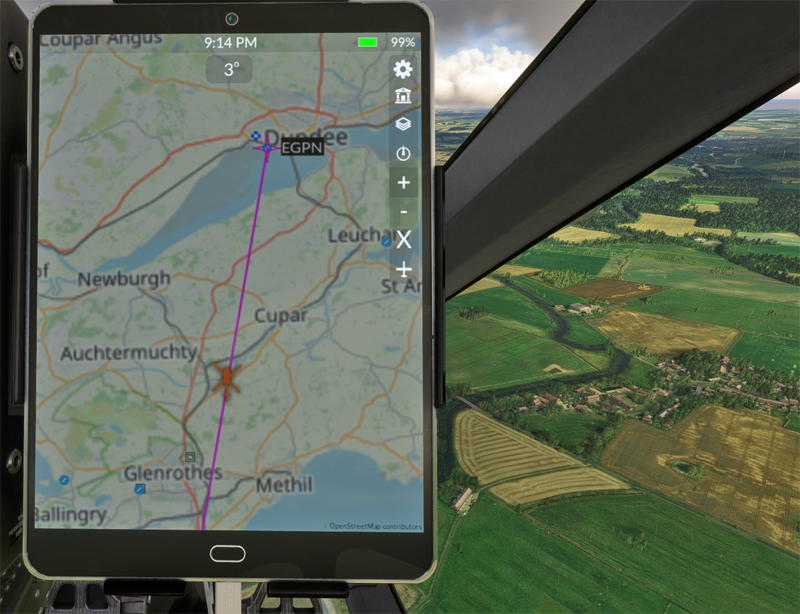
Enroute for Dundee (EGPN) in Scotland with MSFS

Scotland’s splendid landscape features many valleys and fields in magnificent shades of green and yellow.

Route towards Dundee (EGPN) in Scotland in flight simulation

The VFR approach to Dundee is carried out in good weather.

Approaching the Dundee airport (EGPN) in Scotland with an Airbus H160 helicopter and MSFS

With just one more river to cross, we’ve arrived in Dundee.

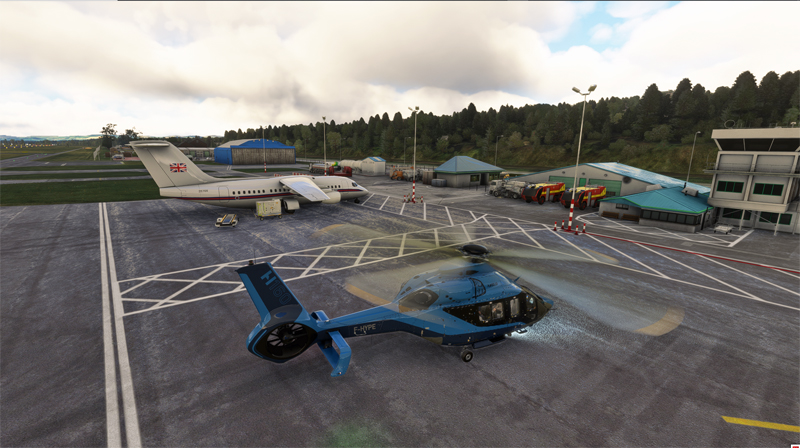
Helicopter H160 Luxury landed at Dundee virtual airport (EGPN) with MSFS

Finally at destination! Flying this helicopter and landing it on oil rigs has been a very stimulating experience (flights 11, 12, 13 and 14). But now it’s time for a change of aircraft.

The next step is a demanding virtual flight. The destination known as Out Skerries EG78 is an aerodrome with a short 1,200-foot runway. It is located in the Shetland Islands, north of Scotland. To spice things up, the crew will be flying a light twin-engine rather than a single-engine aircraft.

Click on the link for more flight simulator flights around the world on my blog.
Categories
Flight Simulation

Explore the Planet in Flight Simulation (13)

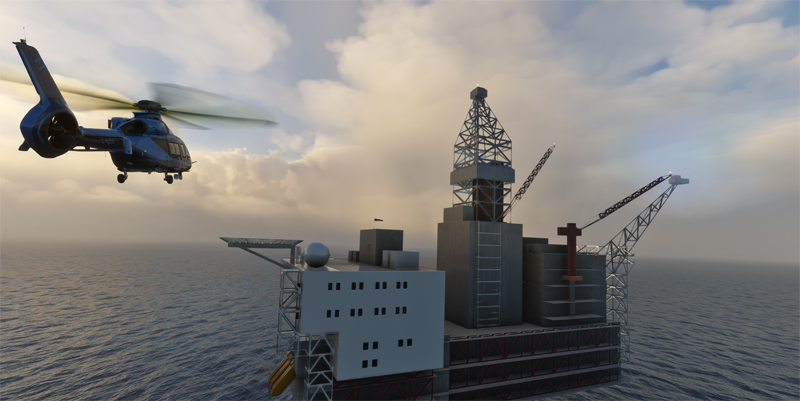
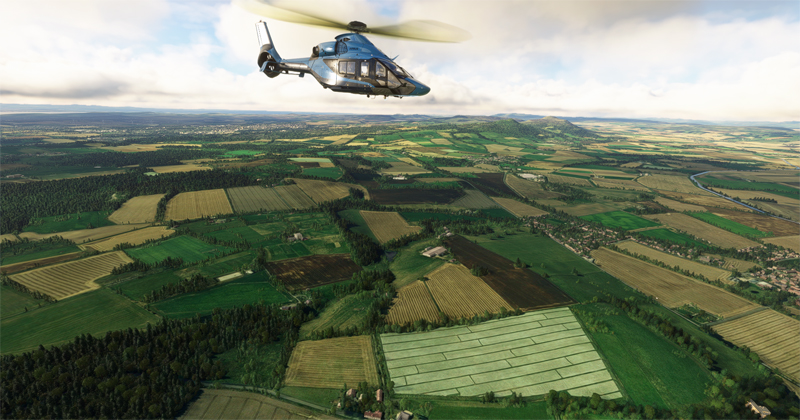
Airbus H160 helicopter airborne from the EHFD F3-FB-1A in the North Sea with MSFS

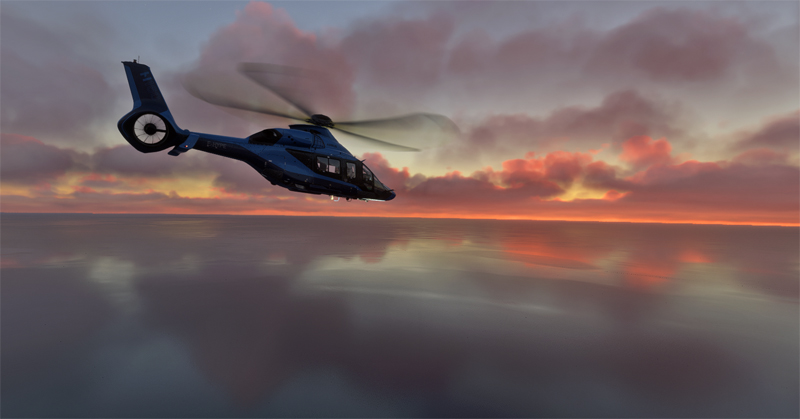
Stage 13 of the round-the-world flight simulator tour takes place with the Airbus H160 Luxury helicopter. I’m still using Microsoft Flight Simulator (MSFS).

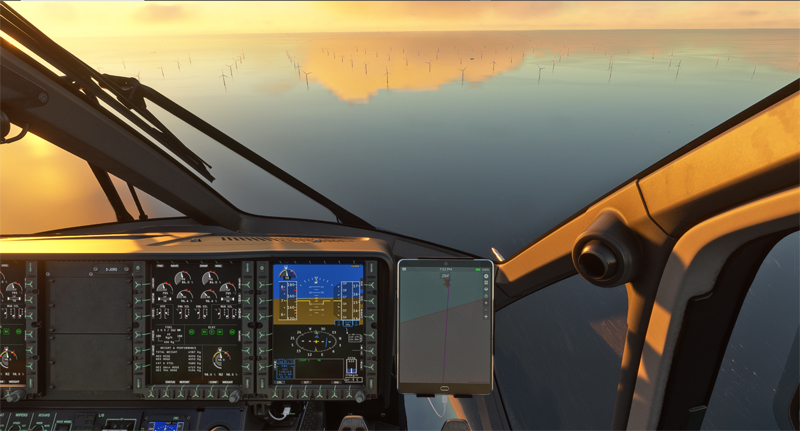
Internet injects real weather data for the trip between two oil platforms located in the North Sea. The helicopter then takes off from EHFD F3-FB-1A, a helipad in the Netherlands.

Everyone head to Norway on this flight, on an installation known as ENXB Eldfisk B. Scotland’s FIR (Flight Information Region) provides the SAR (Search and Rescue) service for the area.

H160 helicopter enroute to the ENXB Eldfisk B oil platform with MSFS

Around 90 nm separates the two facilities. Atmospheric conditions are deteriorating in places, but this is hardly surprising in the North Sea.

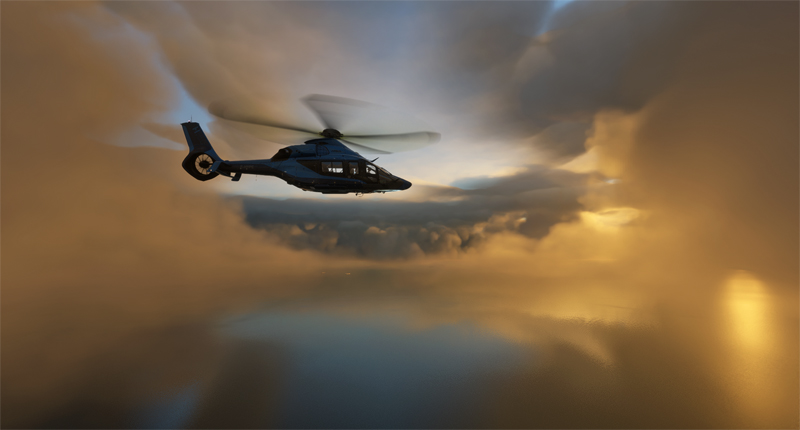
Virtual low clouds over the North Sea seen from a H160 helicopter in flight simulation

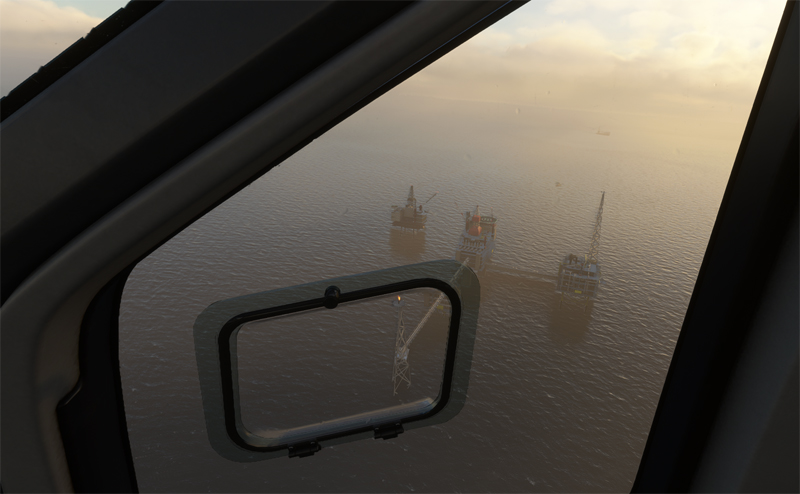
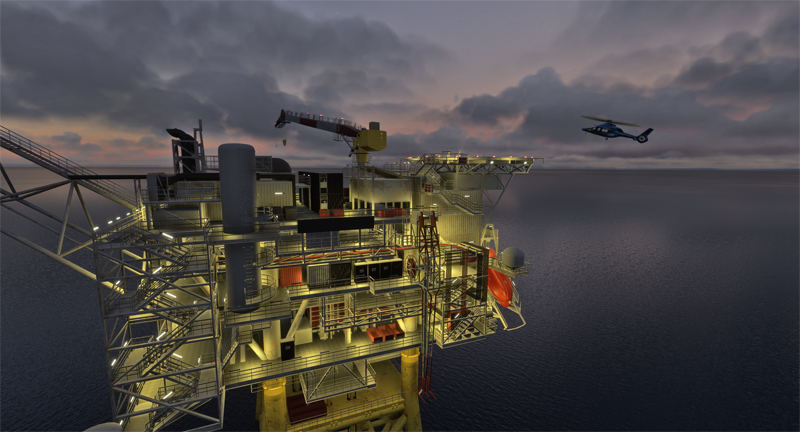
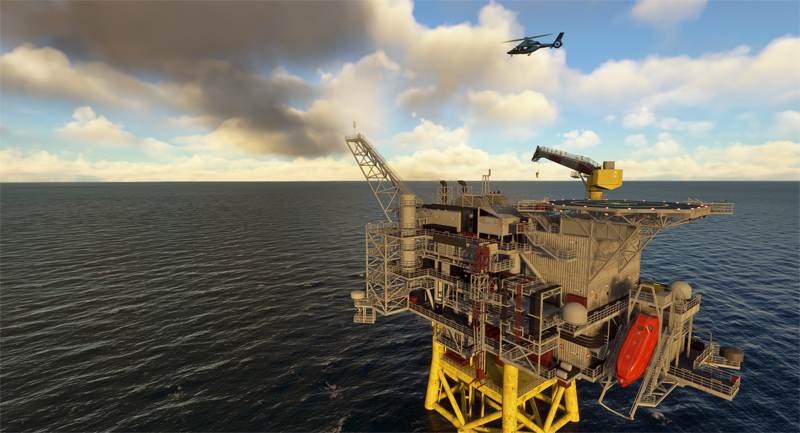
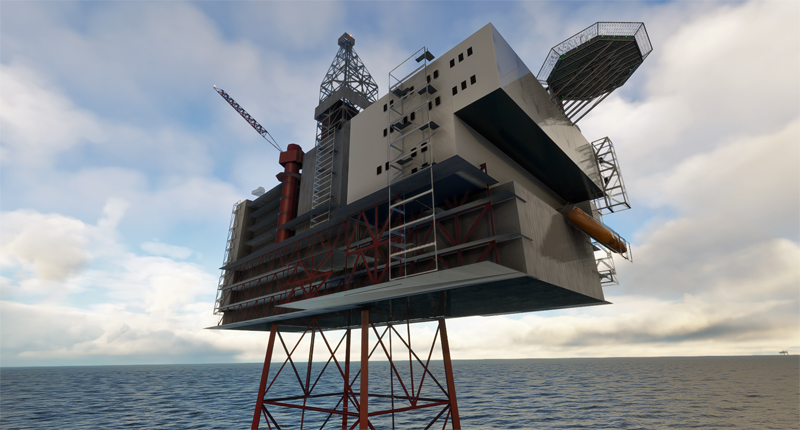
During this virtual flight, we come across other oil and gas platforms. Aerosoft Offshore Landmarks virtual scenery allows a better immersion. One of the installations is shown below. But the digital scene also adds fishing vessels, tankers and cargo ships. In short, everything normally found in the North Sea, English Channel and Irish Sea.

One of the oil platform in the North Sea with Microsoft Flight Simulator

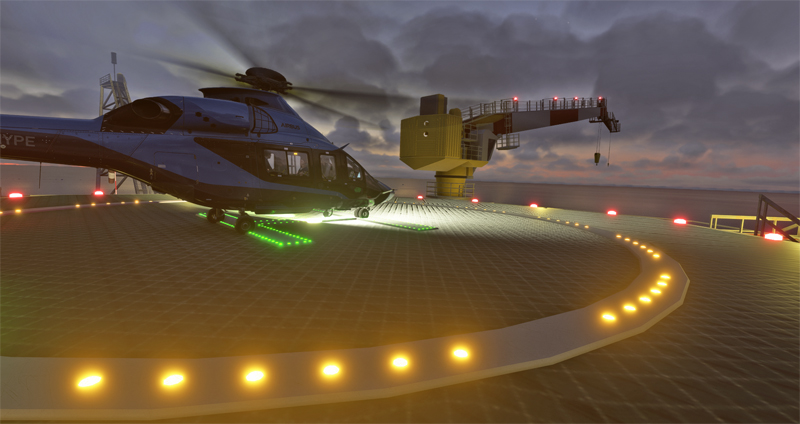
The approach to the helipad begins with strong winds, complicating the landing procedure. Gusty winds and the pilot’s relative inexperience make maneuvering tricky. The crew labors for twenty minutes to land the Airbus H160 helicopter safely.

H160 helicopter on final approach for the oil platform ENXB Eldfisk B in Norway in MSFS

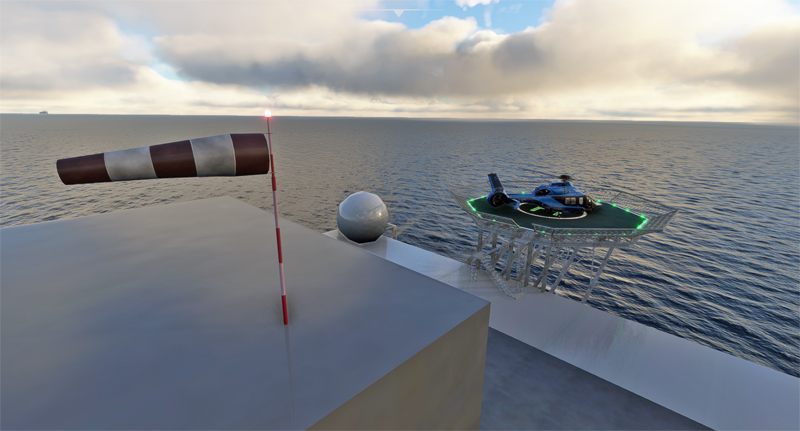
A look at the windsock in the photo below gives a good idea of the weather conditions. What’s more, the wind direction constantly pushes the helicopter towards the facilities. In the end, however, the landing goes smoothly.

Nevertheless, the multiple approach attempts shake the passengers’ composure. One person decides to change career and will now work in an office on land.

Strong winds for a virtual landing with a H160 helicopter on the ENXB Eldfisk B oil platform in Norway
The ENXB Eldfisk B oil platform in Norway but in the Scottish FIR under MSFS Microsoft Flight Simulator

Stage 14 of the simulated exploration of the planet will take place between ENXB Eldfisk B and Scotland, via the city of Edinburgh and Dundee Airport (EGPN).

Click on the link for more flight simulator flights around the world on my blog.
Categories
Flight Simulation

Explore the Planet in Flight Simulation (12)

Airbus H160 helicopter leaving Helgoland (EDHX) for an oil platform in the North Sea

This twelfth leg of the round-the-world flight simulation trip features a precision landing. Indeed, there is a stopover on an oil platform in the North Sea. The code name of this facility in the Netherlands is EHFD F3-FB-1A. As usual, we’re using the MSFS flight simulator.

Airbus virtual H160 helicopter in flight towars the EHFD F3-FB-1A oil platform in flight simulation.

We are airborne in the evening from the island of Düne, in Germany. We shall reach the oil platform around dusk.

Virtual H160 helicopter approaching a wind farm in the North Sea with MSFS.

The photo above shows a wind farm straight ahead in the North Sea. In the event of a ditching, the H160 helicopter is equipped with floats that can be activated by the captain.

The night approaches as the H160 approaches the oil platform in MSFS

The virtual flight takes place in real weather conditions. As the day draws to a close, the sky takes on superb hues.

A few minutes later, the rig becomes visible.

Very windy for an H160 landing at EHFD F3-FB-1A oil platform in the North Sea with MSFS

Generally, the winds remain at a fairly high speed for the approach to the helipad. In addition, the crane constantly moves from left to right not too far from the landing zone. As a result, the helicopter needs to be in the appropriate place. Moreover, turbulence near the building complicates manoeuvres. Therefore, two approaches become necessary before landing safely.

H160 helicopter landed on the EHFD F3-FB-1A oil platform in flight simulation

The helicopter will finally spend the night on the platform. Crew and passengers will certainly enjoy a well-deserved rest. Tomorrow, our mandate is to make the connection to a second drilling rig. This one is located further north, in the territory of Norway. For flight simulation fans who’d like to try it out, the code name is ENXB Eldfisk B.  

Click on the link for more flight simulator flights around the world on my blog.
Categories
Flight Simulation

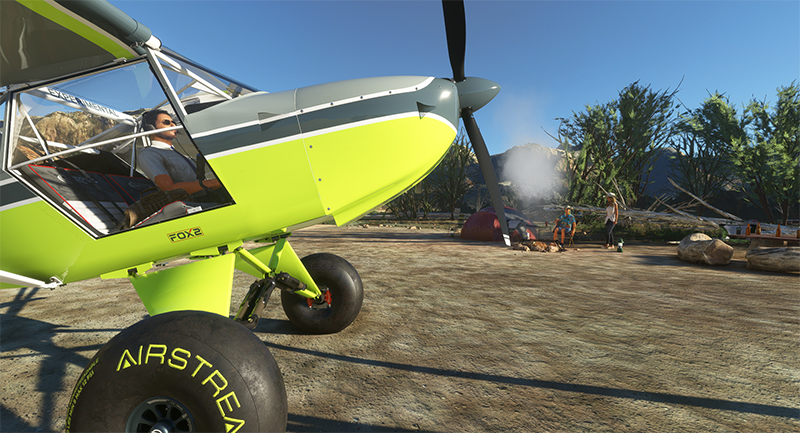
42MX Mexican Mountain in MSFS

Fox2 bushplane at 42MX Mexican Mountain with MSFS

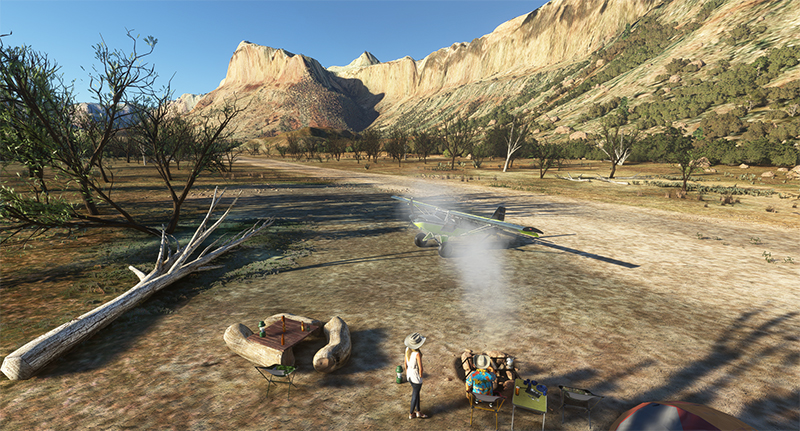
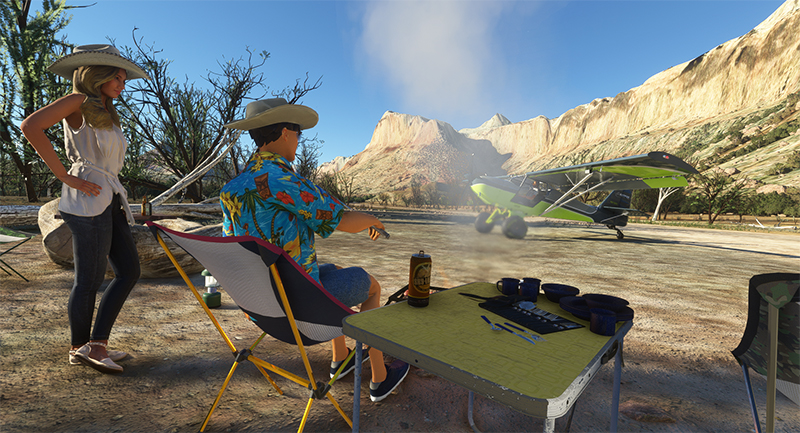
The Mexican Mountain Virtual Landing Strip (42MX) under Microsoft Flight Simulator 2020 (MSFS) is located in the United States, in Utah. It is a 1800 x 40 feet dirt runway, sloping slightly to the west.

The MX42 Mexican Mountain airstrip with visitors (MSFS)

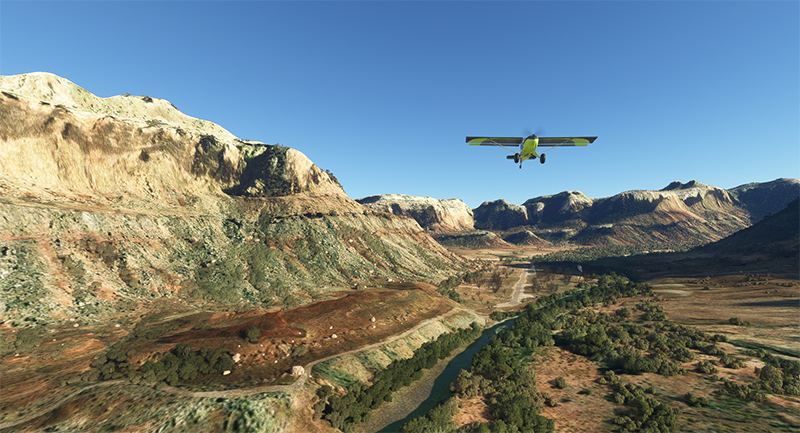
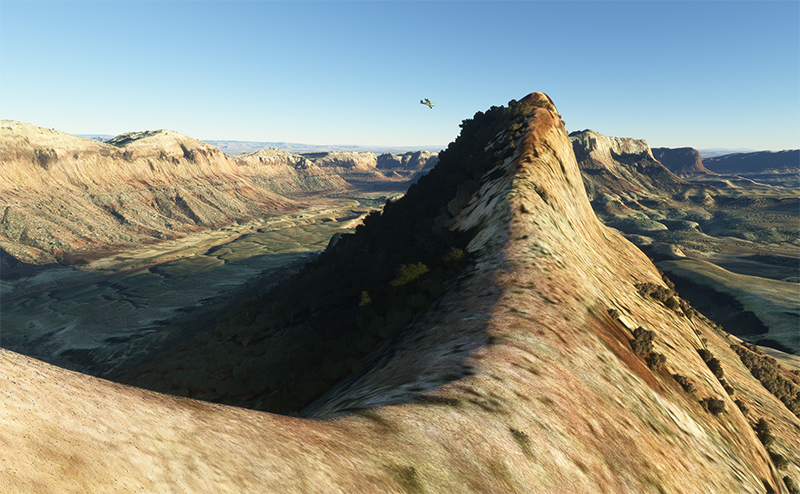
The surrounding landscape is characterized by large cliffs and mountains whose peaks reach 6900 feet.

Airborne from the 42MX Mexican Mountain airstrip in MSFS flight simulation
Virtual scenery around the 42MX Mexican Mountain airstrip (MSFS)

Once on the ground and near the campfire, we can hear the fire crackling and the RC Plane activities through the walkie-talkie left on the table. We can’t tell if anyone will be there when we arrive. This time, a young couple was enjoying the good weather and had taken the time to light a fire in my absence…

42MX Mexican Mountain visitors taking a break in MSFS

One final note from the company: pineapples on pizza are not allowed on the site.

If you have purchased the Bushplane Campout 42BC, the simulation will be all the more realistic.

Click on the link for more flight simulation articles on my blog.
Categories
Flight Simulation

Microsoft Flight Simulator 2020

Approaching the Narita international airport, in Japan, with Microsoft Flight Simulator 2020.

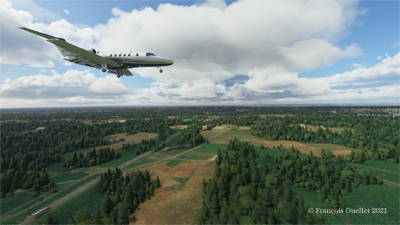
The Microsoft Flight Simulator 2020 is an extremely interesting product. Microsoft is taking advantage of the satellite imagery offered by Bing, which allows the flight simulation enthusiast to fly over the world almost like in the real life. With the addition of live weather and air traffic in real time, the immersion is incredible.

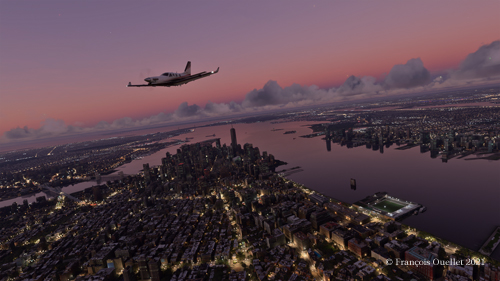
Flying over New York in the evening with Microsoft Flight Simulator 2020.

To download the game’s 128 gigabytes using my current internet plan, it took fourteen hours. I still remember when I bought a hard drive that could hold 30 megabytes of data: it was a computer revolution!

Of course, the game requires an adaptation. We are far from the old FSX platform. It goes without saying that you need a high-performance computer. But a new and very positive aspect of this simulator is that you can now use an X-Box controller as an in-flight camera, with the addition of a rudder and a steering wheel for more reality. This camera offers incredible possibilities and the additional X-Box controller becomes essential.

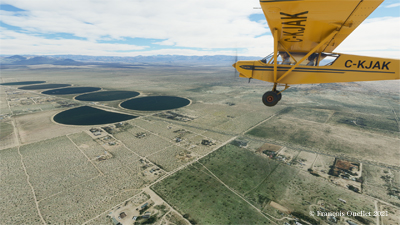
The Zlin Savage Cub flying over the United States using Microsoft Flight Simulator 2020.

As with anything new, there are some glitches. Personally, I have been using the CH company products for flight simulation for many years and the new MSFS 2020 has had problems recognizing the functions of CH products. Many virtual flight enthousiasts have had the same problems. So here are the links below that allowed a neophyte like me to solve the problems.

A first video of interest is also available. Its author uses a slightly different method, but it is super easy to understand and allows you to acquire additional knowledge if you want to map your CH rudder and control column correctly.

A second video gives you access to the CH company products. There you will find the links that allow you to print a representation of your CH flight controls. This will allow you to find which number is associated with a specific command control. You can then remap the controls to your taste and keep a record of all the modifications you made.

Here are two other practical links for answers to various questions about X-Box and other subjects and CH products.

Aerial view of Quebec City using Microsoft Flight Simulator 2020.

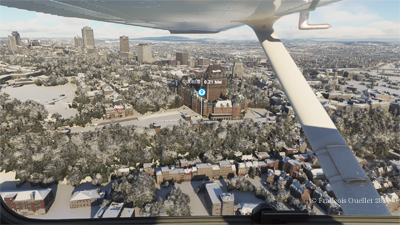
In the screenshot above, you might recognize Quebec City, with the restaurant Le Concorde in the distance on the left, followed by the Edifice Marie-Guyart, a part of the Plains of Abraham, the Château Frontenac, the Price building and the lower town.

Have a good flight!

Click on the link for other flight simulation articles on my blog.
Categories
Flight Simulation

List of the Orbx freeware and payware airports. Halloween 2020 edition.
I have reviewed and edited my list of the Orbx freeware and payware airports, with runway description and airport elevation. It includes most airports that were created up  to Halloween 2020.

The addition of airports are based on what Orbx releases on its “Orbx Release Announcements” section. There are airports for Microsoft 2020 (MSFS), X-Plane, P3DV4+, AFS2 and FSX.

Payware airports often come with secondary, smaller virtual airports included in their package. The data is included in the list.

There are several airports included in the older Orbx regions on the west coast of USA that are not shown here. So the list is not perfect, but it does help the flight simmer. For the rest of the planet, the list is pretty accurate.

You have access to a free download PDF file on my website.

Have fun!