Categories
Flight Simulation

Explore the Planet in Flight Simulation (22)

KLM MD-11 airborne from Rotterdam The Hague virtual airport in Microsoft Flight Simulation

After Holland, France is stage 22 of the flight simulation tour of the world. The first airport of interest will be Paris-Le Bourget (LFPB), more specifically the Musée de l’Air et de l’Espace du Bourget. Since this is a historical visit, we choose the aircraft accordingly.

So, departing from Rotterdam, passengers board an MD-11 in KLM colors. The last flight of KLM’s MD-11 passenger aircraft in the real world took place in 2014, departing from Montreal to Amsterdam.

Today, several MD-11s are still flying, but only in cargo versions. Airlines are progressively replacing them by more modern aircrafts.

TFDI produced this high-quality virtual aircraft. An updated version has further improved the aircraft. It can be seen below flying at 13,000 feet.

A KLM MD-11 climbs for FL210 towards Paris-Le Bourget (LFPB) with MSFS

Below, the MD-11 reaches flight level FL210. The virtual weather based on METAR reports from Rotterdam and Paris indicates no serious problems for the approach and landing.

Virtual TFDI KLM MD-11 about to reach FL210 enroute to (LFPB) Paris Le Bourget airport

For this flight, the MD-11 is carrying only about 100 passengers. The runway at Le Bourget offers plenty of room for maneuvering when landing such an aircraft. Thirty-five degrees of flaps will therefore be sufficient for the final approach to runway 25.

The approach axis is unusual in that it is offset by 26 degrees from the center of the runway. As Jean-Pierre Otelli so aptly puts it in his book, ” Piloter en sécurité ”  : “If the localizer were in line with the runway, the final approaches at Le Bourget would pass 1,000 feet above Terminal 1 at Roissy” […]. Aircraft landing on 25 must make a final 26-degree turn after following the localizer.”

Le Bourget is not the only airport where a serious turn is necessary on final approach. We obviously remember the Hong Kong Checker Board Approach for runway 13 at the former Kai Tak Airport in Hong Kong. At that airport, the final turn was not 26 degrees, but 47 degrees.

Finally, we can also mention Ronald Reagan Airport, where the approach for runway 19 requires a final turn of 36 degrees to avoid the area surrounding the White House.

KLM MD-11 on final for the virtual airport Paris Le Bourget (LFPB) with Microsoft Flight Simulator

The MD-11 taxis down the runway after a smooth landing. After switching off the autopilot for the final approach, an alarm sounds in the cockpit. Even after the plane has touched down, no matter what I do to silence the alarm, nothing works. I still have several hours of study ahead of me to master this aircraft.

Virtual KLM MD-11 taxiing on rwy 27 Paris Le Bourget airport after landing with MSFS

The MD-11 taxis to a makeshift parking area near the museum after crossing the disused runway.

A KLM MD-11 de KLM arrives at the Paris Le Bourget (LFPB) airport with Microsoft Flight Simulator

Le Musée de l’Air et de l’Espace du Bourget (The Air and Space Museum in Le Bourget).

Virtual Musée de l'Air et de l'Espace du Bourget with Microsoft Flight Simulator MSFS
Virtual Musée de l’Air et de l’Espace du Bourget with Microsoft Flight Simulator MSFS

The next stage of our flight around the world with Microsoft Flight Simulator will also take place in France. The current weather conditions will once again dictate the choice of aircraft and destination.

Click on the link for photos and previous flights around the world in flight simulation on my blog.

Categories
Flight Simulation

Explore the world in flight simulation (21)

Today’s flight around the planet takes place between the virtual airports of London City (EGLC) in England and Rotterdam-The Hague (EHDR) in the Netherlands. The weather looks good, apart from a few large TCUs here and there along the route. The crew imports the Simbrief flight plan into Navigraph to facilitate navigation between the two countries.

Daher TBM930 airborne from the London City virtual airport (EGLC) in United Kingdom

For a fast and comfortable journey, we choose the high-performance Daher TBM930 in Canadian colors. Microsoft has truly designed a marvel of a virtual aircraft.

Virtual TBM930 over United Kingdom heading to the Rotterdam airport (EHDR), Netherlands

The operating ceiling is 31,000 feet and the maximum range of the TBM930 is around 1,730 nm. With a cruising speed of 330 knots, we cross the English Channel in no time. As you would expect, there is a lot of shipping traffic between the North Sea and the English Channel.

TBM930 turboprop aircraft over water and approaching Netherlands

We are now above the Netherlands. The programmed route reads as follows: EGLC runway 09 DEP ODUK1H ODUKU M84 TOVGU M84 CLN P44 RATLO M197 REDFA MASOS. We have selected the REDF3R arrival and the RNAV runway 24 approach.

Working Title Simulations Daher TBM930 over Netherlands approaching the Rotterdam virtual airport (EHDR) with Microsoft Flight Simulator

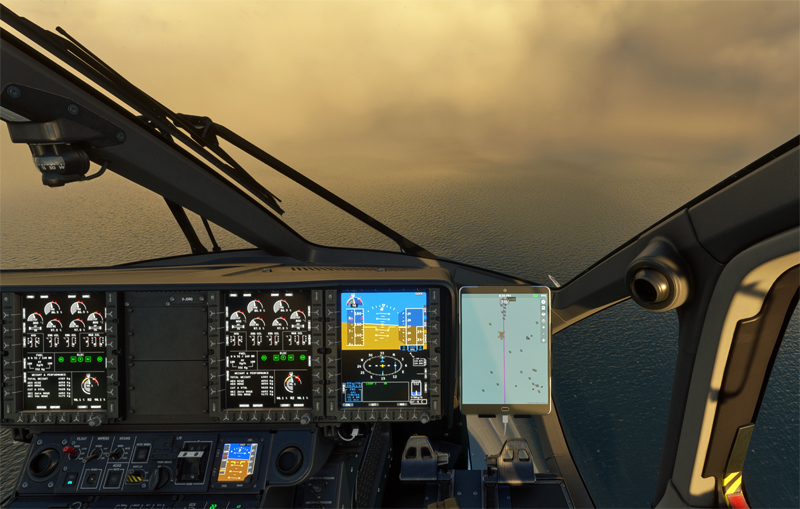
Below, the cockpit photo shows the interior of the TBM930 and the route followed for the approach. We are descending rapidly to reach the recommended altitude of 2,000 feet a little further on for arrival.

Cockpit of the Daher TBM930 as it approaches runway 24 for the Rotterdam (EHDR) in flight simulation MSFS

There are strong winds today and mechanical turbulence throughout the journey to Rotterdam.

TBM930 approaching rwy 24 for the Rotterdam virtual airport (EHDR) with Microsoft Flight Simulator MSFS

The autopilot keeps the single-engine turboprop slightly to the right of the centerline of runway 24 during the long final approach to counter strong crosswinds. The VNAV function does a very good job of maintaining the correct altitude during descent.

MSFS Daher TBM930 on final for rwy 24 Rotterdam airport in flight simulation

During the short final approach, we disconnect the autopilot. Surface winds are blowing at 320/14 knots. Moments later, we land the virtual aircraft without breaking anything. A short taxi brings us to a parking spot where staff are waiting for us.

Canadian Daher TBM930 arriving at the virtual Rotterdam The Hague airport (EHDR) with Microsoft Flight Simulator

Flying virtually with the TBM930 is a treat. It is one of the best virtual aircraft currently available on the market for use with the Microsoft Flight Simulator (MSFS) flight simulator. What’s more, virtual pilots don’t have to pay extra for this aircraft, as it comes with the MSFS software.

The next leg of this simulated flight around the world takes place between Rotterdam and Paris-Le Bourget Airport (LFPB) in France. Customers have chartered an old MD-11 in KLM colors for a historic flight to the Air and Space Museum in Le Bourget.

Click on the link for the previous stages of this flight simulation tour of the planet in my blog.

Categories
Flight Simulation

Explore the world in flight simulation (20)

After a “visit” of Dublin’s bars and museums, we begin leg 20 of the round-the-world flight simulation tour. The crew uses a piston-powered Beechcraft B60 Duke for the flight from Dublin Airport (EIDW) to London City Airport (EGLC).

The virtual aircraft is a creation of Black Square Simulations, and is a great success with virtual pilots.

Beech Duke BE60 airborne from the Dublin airport ( EIDW)

Estimated enroute time is around 01:25 and distance to cover about 305 nm. There are favourable winds from 312/21 for the trip.

BE60 Duke over England heading to the London City airport (EGLC)

Over England, the sky becomes overcast. London reports a broken ceiling at 1700 feet and full-cloud deck at 2200 feet. However, visibility remains excellent.

The Beech Duke’s autopilot presents some difficulties with altitude changes. Unlike most aircrafts, the procedure for generating a descent and reaching another flight level requires a little more knowledge. You can’t apply an intuitive method, as the aircraft will always seek to return to its initial altitude.

Black Square Beechcraft Be60 Duke with Microsoft Flight Simulator

The Duke makes a right turn at the end of the trip on the L15 ODUKU TOPDU trajectory. This will place the Beech Duke on very long final for Runway 27 at London City Airport (EGLC).

Turning towards London City airport EGLC with MSFS 2020

Below is a view of the trajectory flown by the virtual pilot. Near the TOPDU point, the Beechcraft is still veering to establish itself on final approach.

GPS showing ODUKU TOPDU and approach for runway 27 EGLC airport

Excellent visibility and a well-defined ceiling make for an easy approach to runway 27. Slight crosswinds do not represent a problem.

Black Square B60 Duke on final runway 27 at London City airport EGLC

Around London, you can observe the Millennium Dome, all in white. This was the subject of a three-part series on Netflix entitled “The Diamond Heist”. It deals with an attempted theft in 2000 of the Millennium Star diamond and other precious stones worth a total of $350 million. The documentary is well worth seeing.

La dernière photo ci-dessous présente une vue de Londres obtenue au moyen d’un drone virtuel avec le simulateur de vol Microsoft Flight Simulator (MSFS 2020).

A virtual view of London using Microsoft Flight Simulator

Click on the link for previous flights around the planet in flight simulation on my blog.

Categories
Flight Simulation

Explore the world in flight simulation (19)

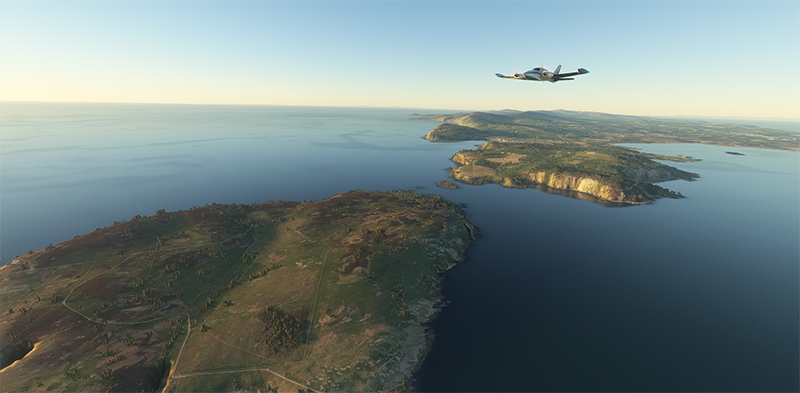
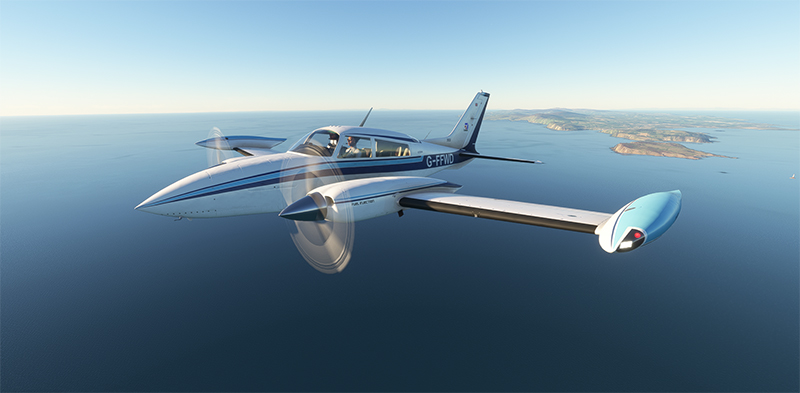
Cessna 310R airborne from Isle of Man airport with MSFS

The crew got their hands on a Cessna 310R for the next stage of their round-the-world flight simulation. The virtual aircraft is manufactured by Blackbird Simulations and scores highly with users. Departure is from the Isle of Man Airport (EGNS), with Dublin as the destination. This will be the only stopover in the Republic of Ireland before proceeding on to London, UK.

Blackbird Simulations twin engine Cessna 310R is crossing the Irish Sea towards the Dublin airport (EIDW)

The good weather continues in this part of the world known for its rather cloudy conditions. Flying the Cessna 310R is a real pleasure. With its cruising speed of 188 knots, we reach Dublin quickly.

The left engine is considered critical in the event of engine failure. Vmc is 80 knots. Stall occurs immediately below this speed when only the right engine is running.

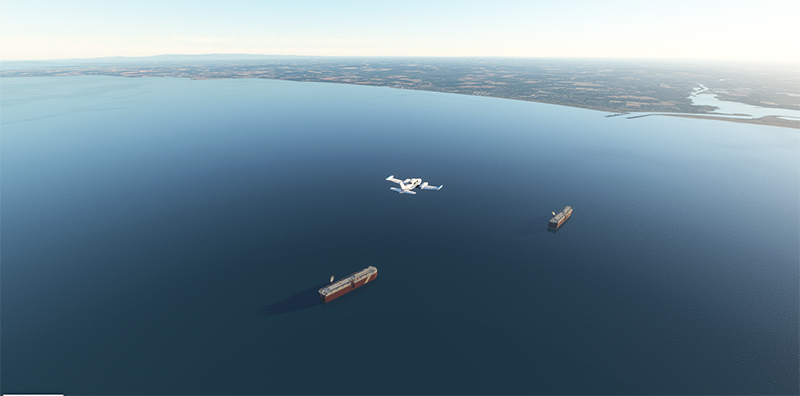
Car ferries on the Irish Sea with Microsoft Flight Simulator

The aircraft approaches the Republic of Ireland as it flies over two ships carrying cars.

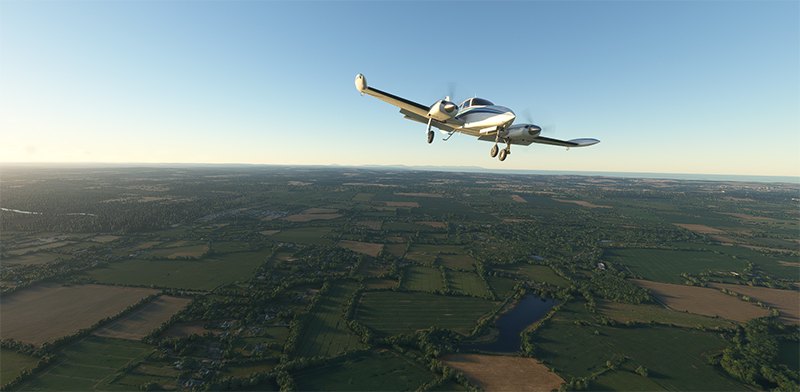
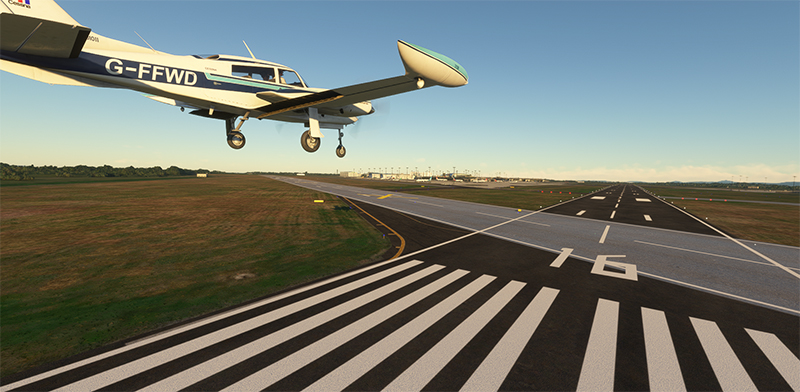
The Blackbird Simulations Cessna 310R turns on final for the Dublin airport (EIDW)

Dublin airport (EIDW) is in sight. A last turn to runway 16 takes us onto long final. Winds are not a problem for the approach.

The virtual pilot extends the landing gear and flaps. Even though this is a flight simulation, you have to keep to the required speeds with flaps and gear, otherwise the flight will come to a halt.

Virtual Cessna 310R on short final for Dublin airport in flight simulation

The UK-registered aircraft arrives on short final after an uneventful flight.

Blackbird C310R taxiing at Dublin after arrival from Isle of Man

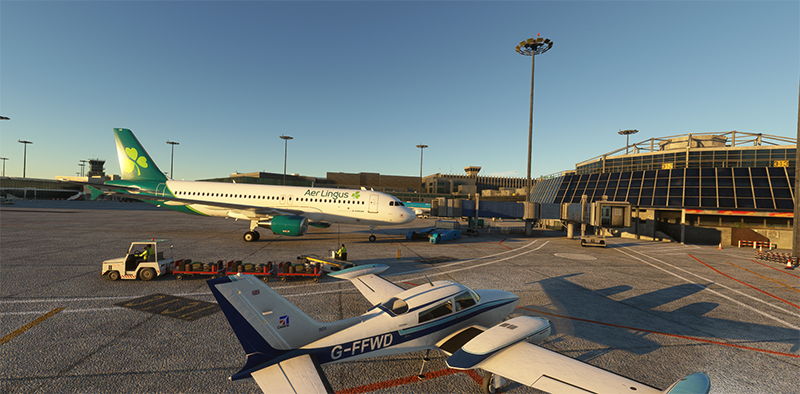
We make our way through the airport to the agreed disembarkation point. Along the route, we can observe several parked aircraft, including those of British Airways, WestJet and Aer Lingus.

FSLTL software works effectively to furnish most airports with virtual aircraft.

Blackbird Simulations Cessna C310R on the ground at Dublin with MSFS 2020

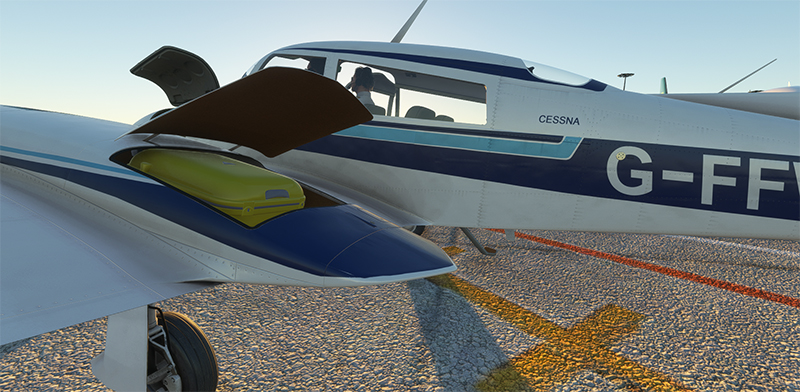
At last, a passenger who had the idea of getting a yellow suitcase instead of the eternal black ones that everyone confuses on luggage straps.

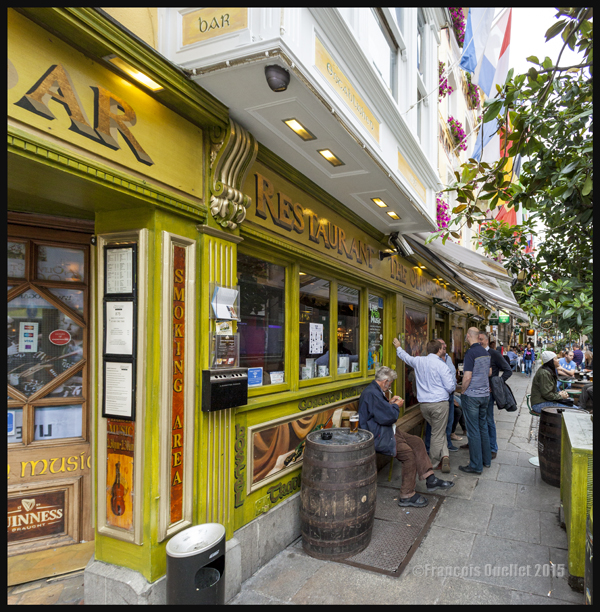
In the evening, we go out in the Temple Bar area without exaggerating the number of drinks. Tomorrow, we’ll be sure to visit the Guinness Storehouse, the Jameson distillery and the Emigration Museum.

Dublin in the evening with Microsoft Flight Simulator

A flight with the virtual drone gives an idea of Dublin illuminated just before nightfall. This is the version offered by Microsoft’s MSFS 2020 flight simulator. The light is superb.

The next leg of our round-the-world trip will soon take us from Dublin to London City Airport (EGLC) in a Black Square Beechcraft B60 Duke.

Click on the link for previous legs of this flight simulation world tour on my blog.

Categories
Flight Simulation

Explore the Planet in Flight Simulation (18)

Stage 18 of the round-the-world flight simulation takes place between Donegal Airport (EIDL) and Isle of Man Airport (EGNS), also known as Douglas Ronaldsway. This island is renowned as a tax haven and for its online gaming. It has a more “advantageous” financial regime than the UK. Its role also came to light in the “Paradise Papers”.

Since we fly over the Irish Sea in a single-engine aircraft, the Nardi FN-333 is an excellent choice in the event of engine failure. What’s more, it offers an attractive range (490 nmi) and a respectable cruising speed (143 knots at 8,000 feet).

Virtual Nardi FN-333 Riviera at the Donegal (EIDL) with MSFS

Capable of an ascent of 1280 feet/minute, it flies smoothly over the terrain after taking off from Donegal.

Virtual Nardi FN-333 Riviera airborne from the Donegal airport (EIDL) in the Republic of Ireland with MSFS

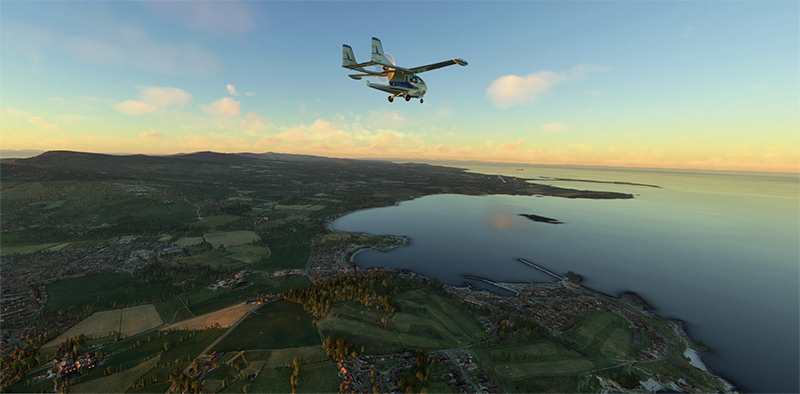
To the left of the flight path is Northern Ireland’s Strangford and Lecale Area of Outstanding Natural Beauty, https://strangfordlough.org/ a tourist attraction rated 4.8/5 by Google users.

Nardi FN-333 Riviera flying by the Strangford and Lecale area of outstanding natural beauty in Northern Ireland with MSFS

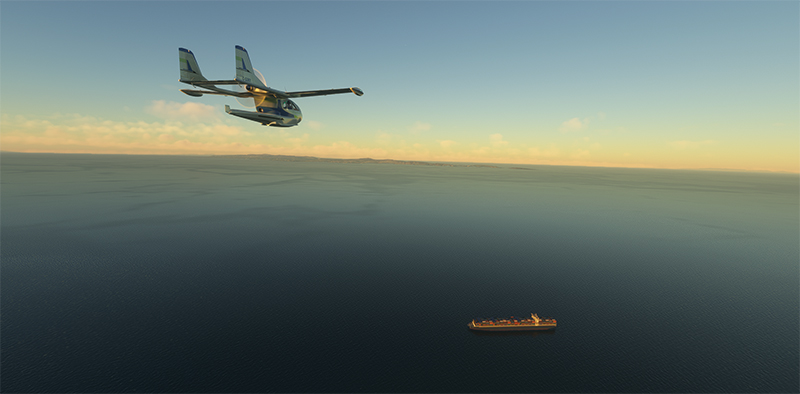
Once over the Irish Sea, you can see the first container ship, which will be followed by many other vessels with a variety of functions (Irish Ferries, car carriers, tankers, LNG carriers, etc.).

Nardi FN-333 Riviera overflying a container ship in the Irish Sea with Microsoft Flight Simulator

Nardi FN-333 Riviera overflying a container ship in the Irish Sea with Microsoft Flight Simulator

At the end of the day, the Isle of Man becomes visible. It’s always nice to arrive before dark when landing for the first time at an unfamiliar airport. This allows the pilot to get a good look at the surroundings.

Nardi FN-333 Riviera on final for the Isle of Man airport with MSFS

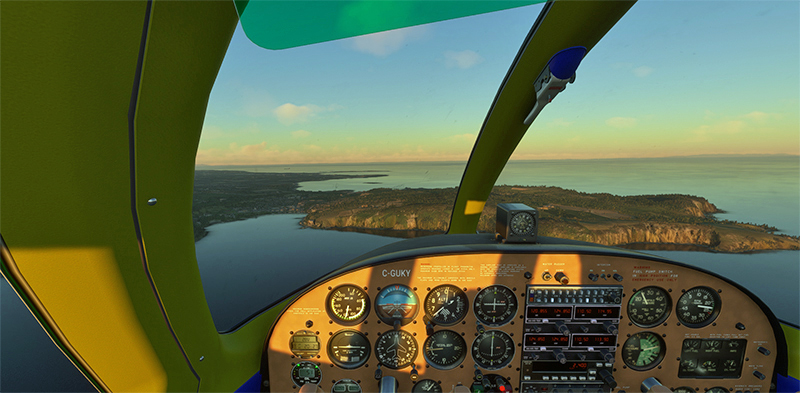
The sun illuminates the cockpit in a very realistic way with the new flight simulators. In the past, shadows didn’t move in the cockpit.

Isle of Man in sight in the evening with Microsoft Flight Simulator 2020

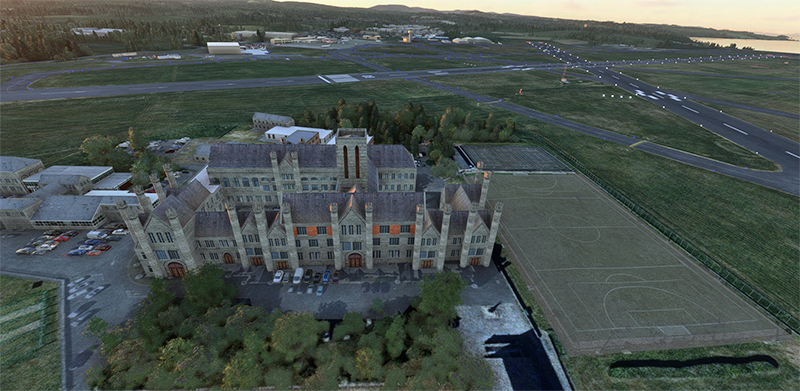
Very close to the Isle of Man Airport (EGNS) is a huge building, King William’s College. It offers private education to young people between the ages of 3 and 18. I wonder if the staff have ever had a scare because of a missed approach by one of the many aircraft that land on the island every day. After all, there is no shortage of accidents.

King William's College near the Isle of Man airport with Microsoft Flight Simulator 2020
King William’s College near the Isle of Man airport with Microsoft Flight Simulator 2020

Fortunately, the landing did not frighten the students at the nearby college.

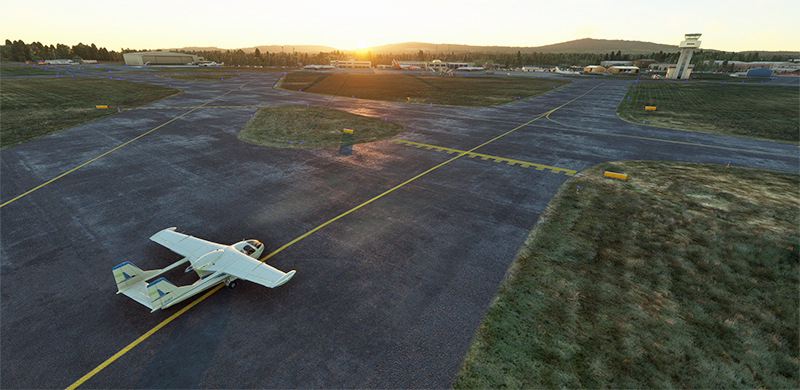
The Nardi FN-333 Riviera just landed at the Isle of Man (EGNS) airport in the evening.

A few days’ stopover will be necessary before embarking on the rest of the trip. We’ll then reach the Republic of Ireland, landing at Dublin airport (EIDW) with the MSFS 2020 flight simulator and the Cessna 310R from Blackbird Simulations.

Click on the link to read more about the exploration of the planet in flight simulation on my blog.

Categories
Flight Simulation

Explore the Planet in Flight Simulation MSFS (17)

The flight simulation world tour continues with a Britten Norman BN2A Trislander MK III. The initial version of the aircraft is not particularly reliable. There have been engine failures, fatigue cracks in the structure, cowlings opening unexpectedly, etc. Nevertheless, we’re going to try our luck with this aircraft today.

The sandy runway at Barra beach (EGPR) is perfect for a take-off with the BN2A. Today, we plan to fly to Donegal Airport (EIDL) in the Republic of Ireland.

BN2A Trislander airborne from the Barra beach airfield with MSFS

With a three-engine aircraft, pilots don’t take into account the distance to shore in case of engine failure. But if we were flying a single-engine aircraft, we’d have to head for Tiree Island at the highest possible altitude, then turn off towards Donegal.

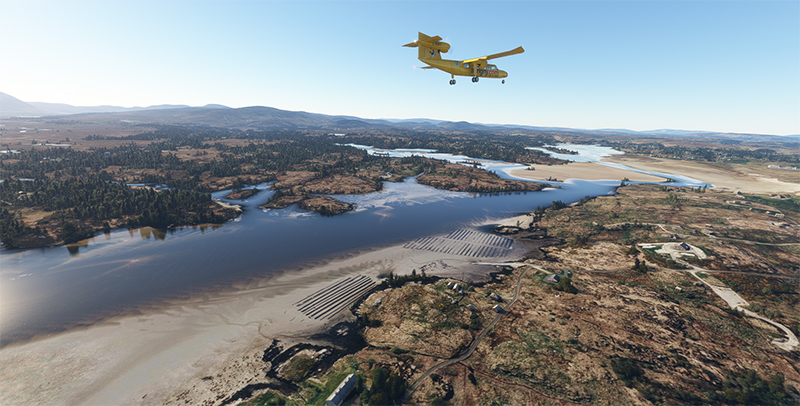
Virtual BN2A Trislander MK III enroute to Donegal airport (EIDL) in the Republic of Ireland with MSFS

In all realistic virtual flights, a program injects weather data received from airports via the Internet directly into the flight simulator.

For the past few days, the weather in Ireland and Scotland has been nothing but fine. I was expecting rain and low clouds, but it’s been just the opposite.

So, for the time being, the fine weather is making it easier to plan flights over a very large area. Below you can see the rockier landscape around Donegal airport.

BN2A Trislander descending towards Donegal in Republic of Ireland with MSFS

The Trislander is now on final for runway 21 at Donegal. Light winds make the approach easy. No part of the aircraft has been lost on the way!

The Britten Norman Trislander is on final for Donegal airport (EIDL) in flight simulation

The airport staff have already brought out the suitcases for the next flight. Way too much luggage! They must have mistaken the Trislander for a Boeing 737. Aviation rules are strict. I don’t know if the passengers bring back too much shells or beer bottles with them, but some of the suitcases won’t be leaving today!

BN2A arrived at Donegal (EIDL) with Microsoft Flight Simulator

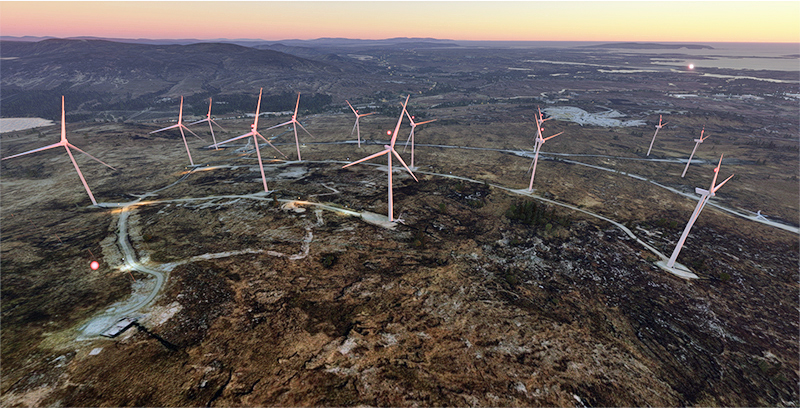
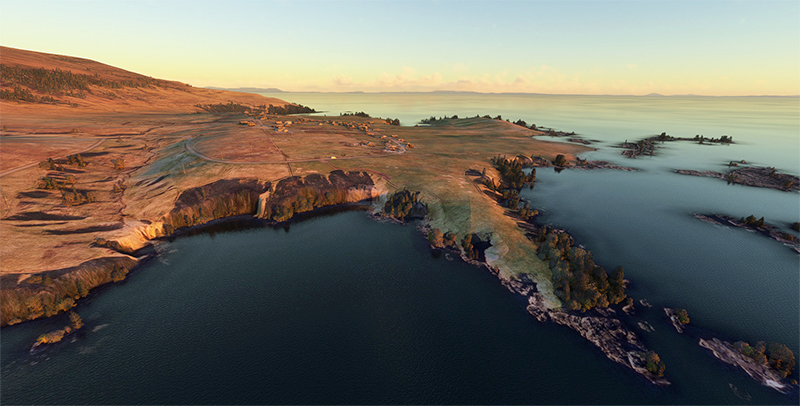
In the evening, a virtual drone flies over the area to observe the cliffs and numerous wind turbines.

Virtual landscape around the Donegal region in the Republic of Ireland with MSFS 2020 flight simulator.
Virtual scenery in the evening in the Donegal region of the Republic of Ireland with MSFS 2020.

Leg 18 of the world tour will take place between Donegal Airport and the Isle of Man, using a Nardi FN-333 Riviera and Microsoft Flight Simulator 2020.

Click on the link for more flight simulator flights around the world on my blog.
Categories
Flight Simulation

Explore the planet in flight simulation (16)

The exploration of the planet in flight simulation continues. Today we’re flying from Bruray / Out Skerries (EG78 or OUK for the IATA code) to the Barra beach airfield (EGPR). It’s a demanding virtual flight, especially when it comes to taking off from Out Skerries. The winds are strong and quite sideways to the small runway. You can see this by observing the windsock from the cockpit.

Virtual DHC-4 Caribou ready for crosswind take-off at EG78 Out Skerries aerodrome with MSFS

The crew opted to use a good old DHC-4 Caribou, which has proved its worth in difficult landings and take-offs. The virtual clouds reflect the current situation in the Shetland Islands.

With both feet on the brakes, the flaps adjusted and the steering wheel turned to the right to limit the effect of the wind on the right wing, the crew push the throttle to maximum while releasing the brakes. The aircraft moves a little to the left as it rolls, but by using rudder, it stays on the runway long enough to take off.

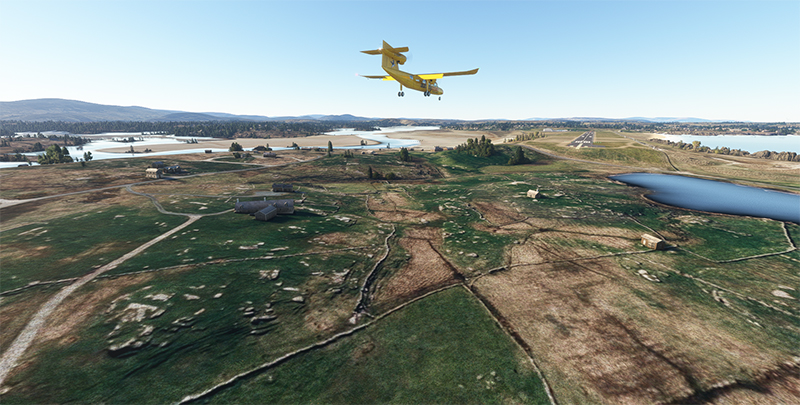
DHC-4 Caribou virtual aircraft airborne out of Out Skerries (EG78) in Scotland

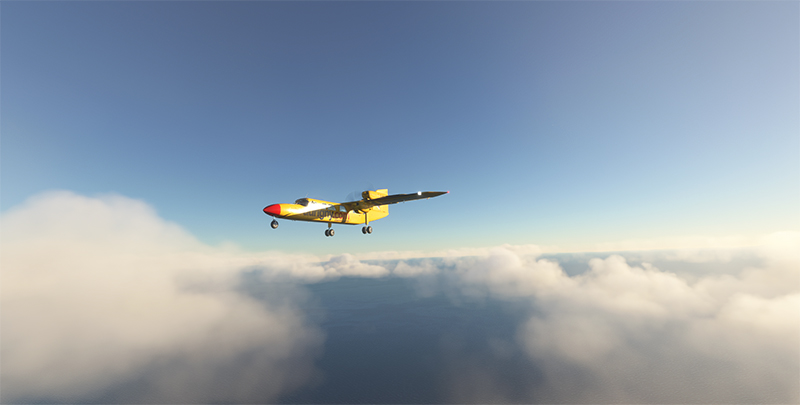
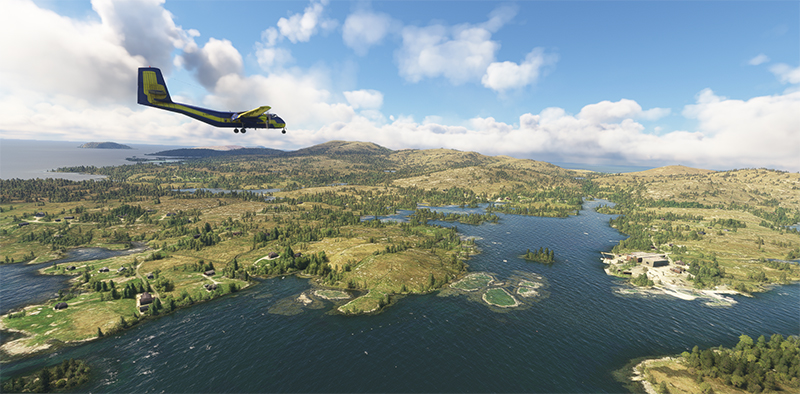
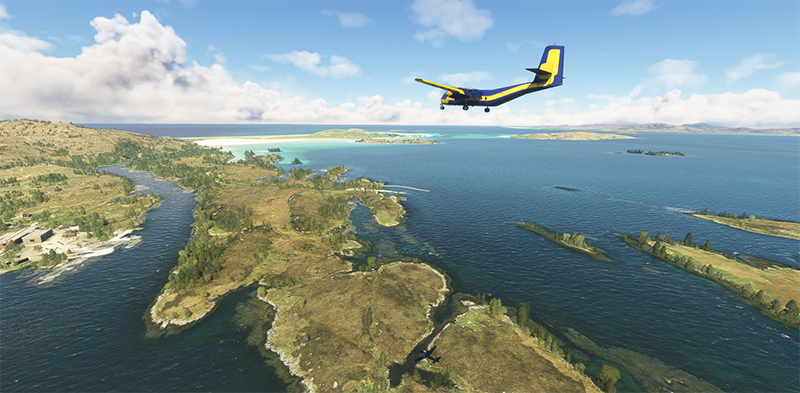
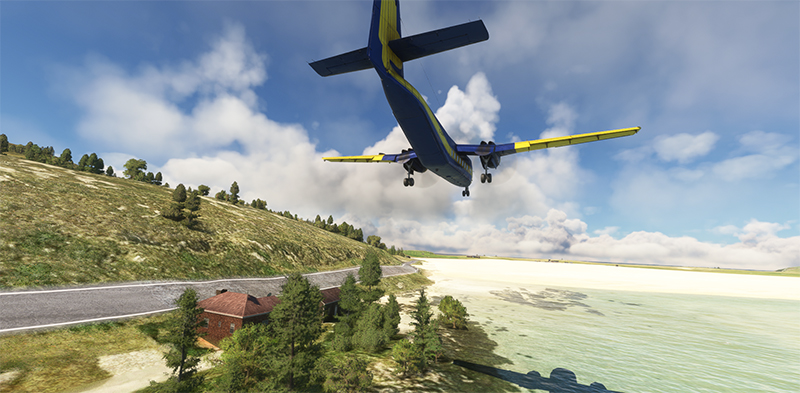
The flight is made in VFR mode under cloud. Eventually, the sky clears and we can enjoy the scenery as we approach Barra beach. The low tide makes for a smooth landing.

DHC-4 Caribou enroute to the Barra (EGPR) virtual airport on the beach with MSFS

The photo below shows the Caribou in right base for Barra beach. What a great day for visual flying!

Barra (EGPR) sand runway in sight with the virtual DHC-4 Caribou with MSFS
DHC-4 Caribou on final for the sand runway at Barra virtual airport (EGPR) with MSFS

The DHC-4 is now on short final for the sand runway. Even though it’s a large twin-engine aircraft, its short take-off and landing capabilities mean that it will only need a very small portion of the available range.

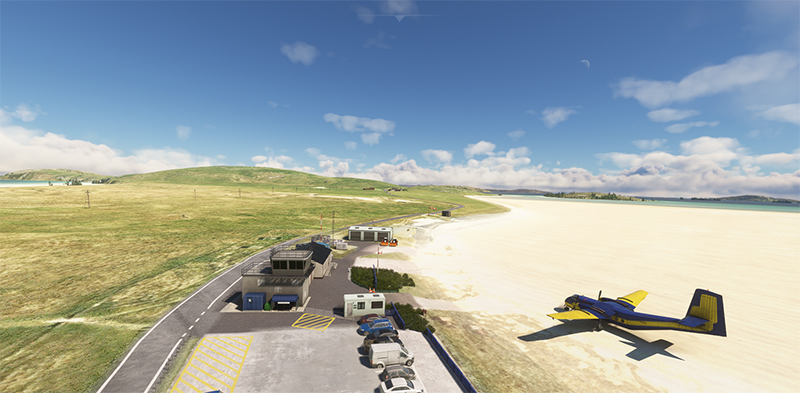
The virtual Barra airport (EGPR) and the DHC-4 Caribou on a stopover in flight simulation with MSFS.

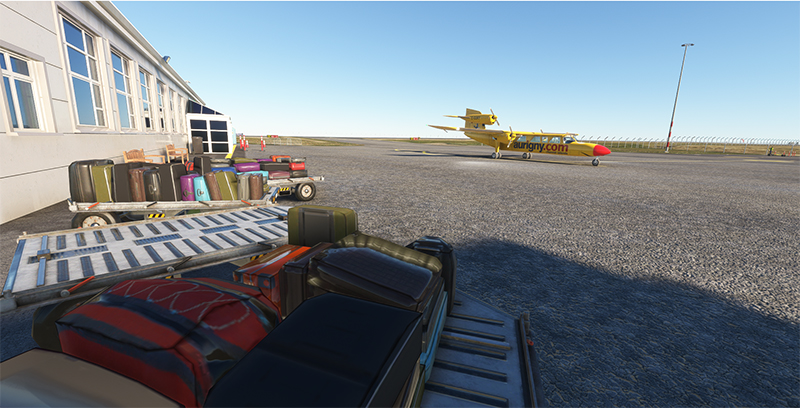
A few passengers seem to have already arrived, unless they’re curious onlookers who heard the aircraft approaching. This is certainly a very rare visit by a DHC-4 to Barra!

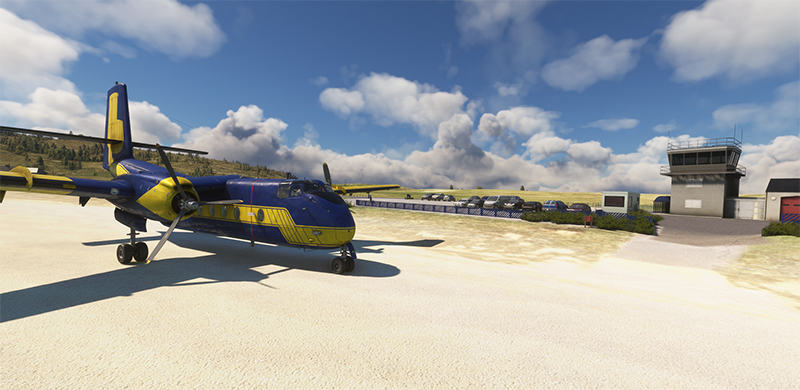
Virtual DHC-4 Caribou landed on the beach at Barra airport (EGPR) with MSFS

Airport management refuses to reveal the aircraft’s destination. In any case, this won’t be the first time a Caribou has made special flights on demanding runways.

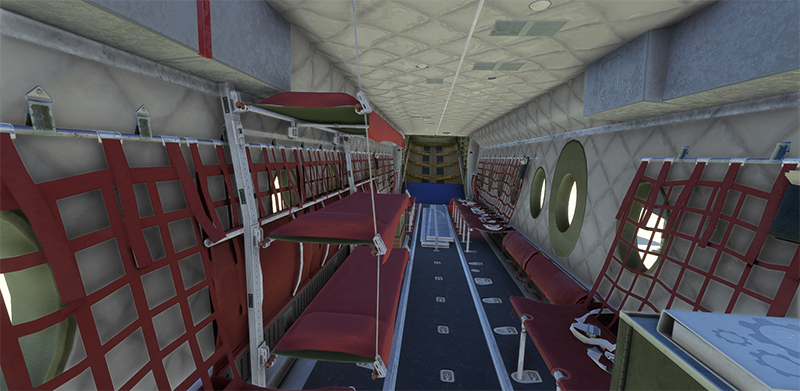
Ultimate luxury with sleeping pods for the future passengers of a virtual DHC-4 Caribou with MSFS

A final photo shows the interior of the Caribou. Impressive luxury, with berths available for first-class passengers. There’s no stopping progress!

Stage 17 of this round-the-world flight simulation will take place between Barra and Donegal (EIDL) in Northern Ireland. The virtual Britten Norman BN2A Trislander MK III will make the journey using the Microsoft Flight Simulator 2020 (MSFS) flight simulator.

Click on the link for more virtual flights around the world in my blog.

Categories
Flight Simulation

Explore the planet in flight simulation (15)

Through the videos on Youtube, I see that a runway called Out Skerries (EG78 or OUK) in the Shetland Islands attracts interest for its challenging landing. It is only 1195 feet long.

The tiny airstrip will therefore be the destination for leg #15 of our round-the-world flight simulation tour with the MSFS flight simulator.

To increase the fun, we choose a twin-engine aircraft, which is heavier and requires a longer breaking distance.

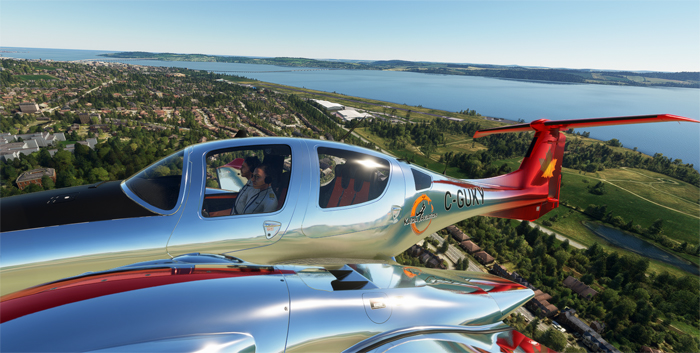
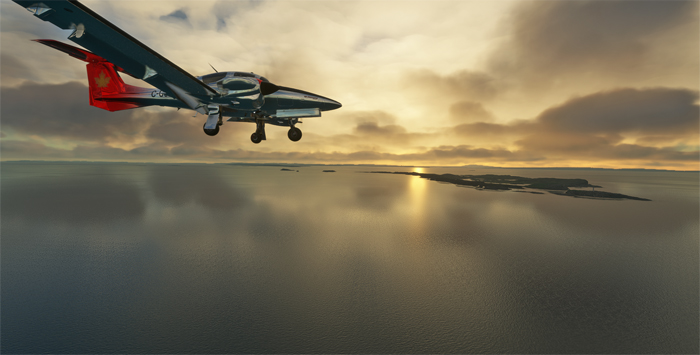
We take off from Dundee (EGPN) with a virtual Diamond DA-62 and arrive at dusk. It’s probably a bit tight for a short, unlit runway, but we’ll give it a go.

DA-62 aircraft taking off from Dundee airport, Scotland, with Microsoft Flight Simulator

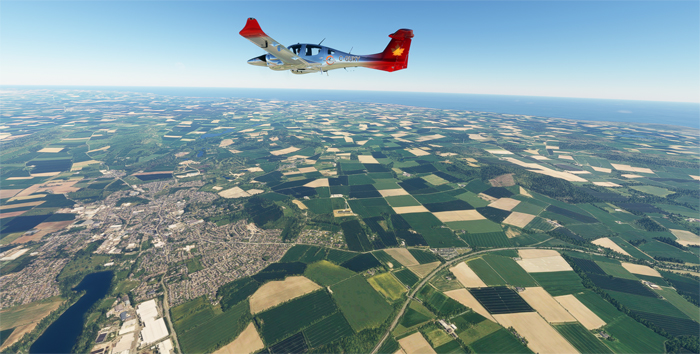
The stall speed of the DA-62 in landing configuration is 68 knots, which will help us to succeed in our undertaking. We take a 018-degree northerly course to reach the islands from Dundee. Ground speed is around 155 knots for this 250 nautical mile journey.

Virtual DA-62 over Scotland enroute to the Shetland Islands
DA-62 aircraft near Fair Isle in the Shetland Islands with Microsoft Flight Simulator

We have to fly off Fair Isle on the way to our destination. I learn from some research that Fair Isle knitwear remains one of Shetland’s most famous products. I imagine that fish products are also very popular.

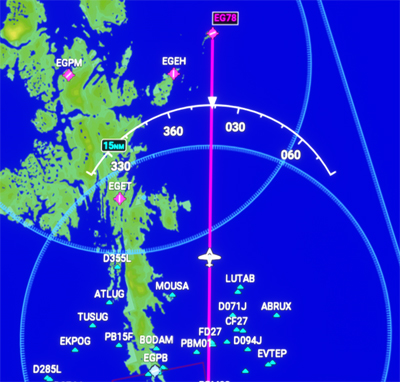
Flight trajectory towards Out Skerries (EG78) on the Shetland Islands, Scotland
Approaching Out Skerries (EG78) airport in Scotland with the DA62 virtual aircraft

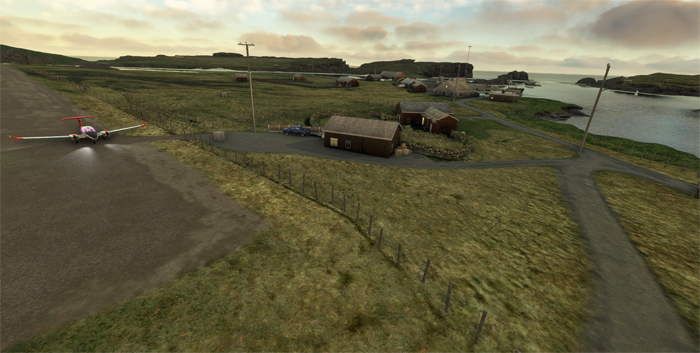
Here we are, approaching Out Skerries. The absence of runway lights makes the operation tricky.

The surrounding hills block the pilot’s view at low altitude, and what is considered a landing strip is not visible until fairly late in the approach. There are no other aids to help locate the facilities.  

The omnipresent winds complicate the task, as does the turn on approach. One of the runway thresholds ends in a cliff ready to receive ill-prepared aviators.

After landing at Out Skerries airport (EG78) with Microsoft Flight Simulator

We see the runway threshold at the last moment. Since the DA-62 weighs more than a single-engine model, the aircraft requires a longer braking distance.

Ground contact is harder than usual, but without bouncing. If there’s a bounce, the pilot has to climb back up and repeat the approach.

You really have to glue the aircraft to the ground at the runway threshold, immediately raise the flaps while pulling back on the stick to maximize braking efficiency. In real life, we’d add that braking must be performed without locking the wheels.

I classify this exercise as a challenging virtual flight.

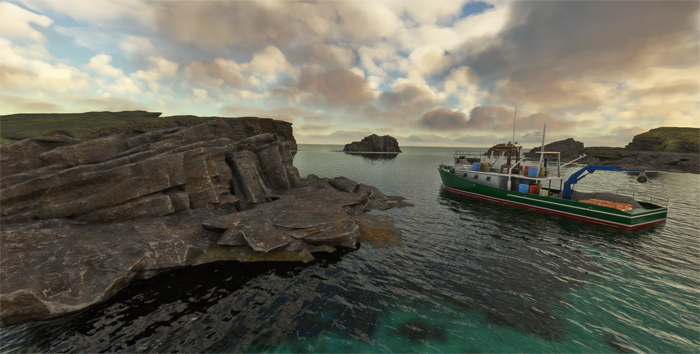
Fishing boat around the Shetland Islands with Microsoft Flight Simulator

Once the flight is over, the crew visits the surroundings. Many fishing boats come and go around the islands.

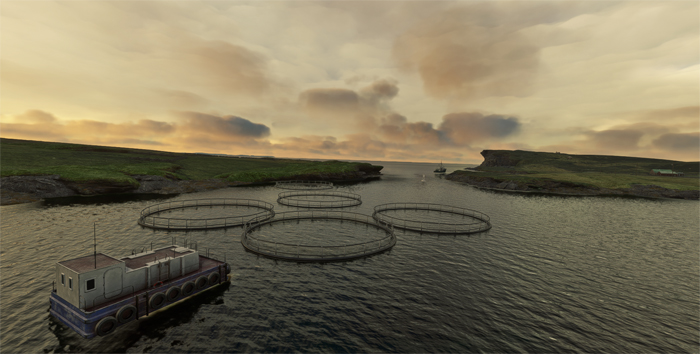
Mussel farming around the Shetland islands in Scotland, with Microsoft Flight Simulator.

We can even see mussel farming facilities.

On our next flight, we head for Barra Airfield (EGPR). It’s located in Scotland’s Outer Hebrides and is the only airport in the world “where scheduled services land on a beach”. We’ll be sure to check the tide before take-off…

Click on the link for more stages of this flight simulation world tour on my blog.
Categories
Flight Simulation

Explore the Planet in Flight Simulation (13)

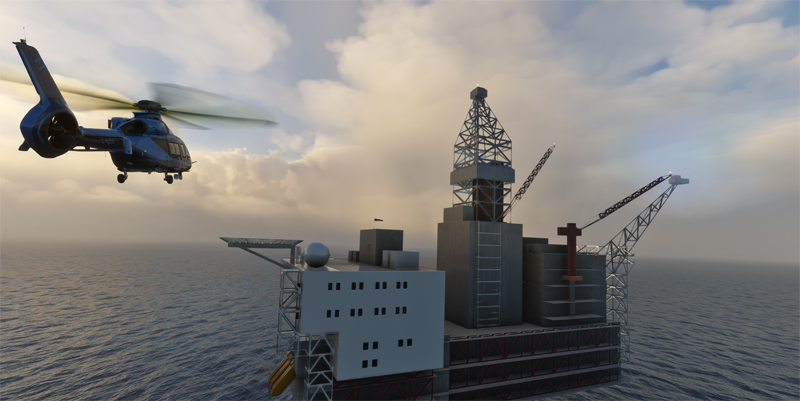
Airbus H160 helicopter airborne from the EHFD F3-FB-1A in the North Sea with MSFS

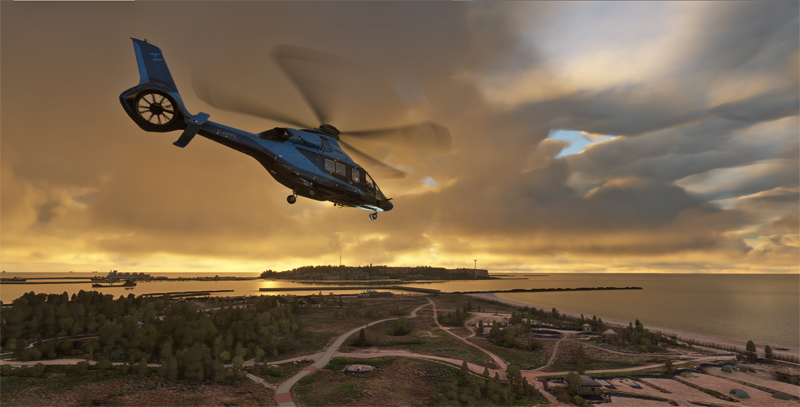
Stage 13 of the round-the-world flight simulator tour takes place with the Airbus H160 Luxury helicopter. I’m still using Microsoft Flight Simulator (MSFS).

Internet injects real weather data for the trip between two oil platforms located in the North Sea. The helicopter then takes off from EHFD F3-FB-1A, a helipad in the Netherlands.

Everyone head to Norway on this flight, on an installation known as ENXB Eldfisk B. Scotland’s FIR (Flight Information Region) provides the SAR (Search and Rescue) service for the area.

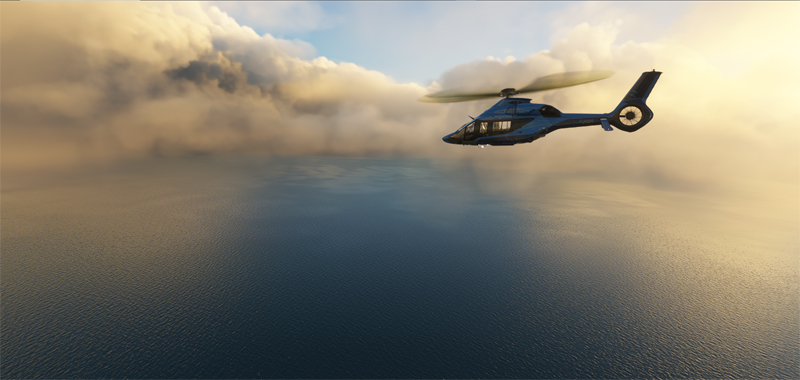
H160 helicopter enroute to the ENXB Eldfisk B oil platform with MSFS

Around 90 nm separates the two facilities. Atmospheric conditions are deteriorating in places, but this is hardly surprising in the North Sea.

Virtual low clouds over the North Sea seen from a H160 helicopter in flight simulation

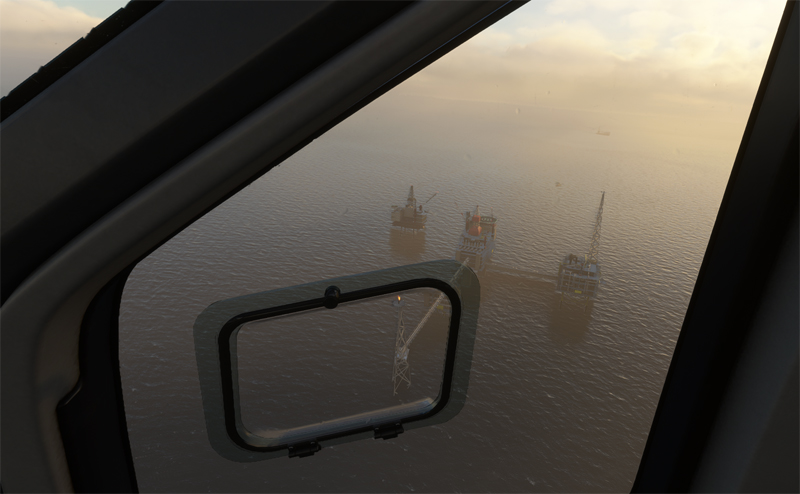
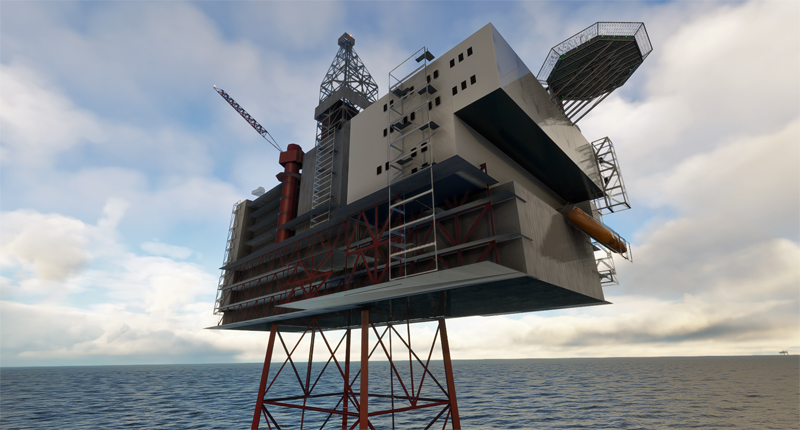
During this virtual flight, we come across other oil and gas platforms. Aerosoft Offshore Landmarks virtual scenery allows a better immersion. One of the installations is shown below. But the digital scene also adds fishing vessels, tankers and cargo ships. In short, everything normally found in the North Sea, English Channel and Irish Sea.

One of the oil platform in the North Sea with Microsoft Flight Simulator

The approach to the helipad begins with strong winds, complicating the landing procedure. Gusty winds and the pilot’s relative inexperience make maneuvering tricky. The crew labors for twenty minutes to land the Airbus H160 helicopter safely.

H160 helicopter on final approach for the oil platform ENXB Eldfisk B in Norway in MSFS

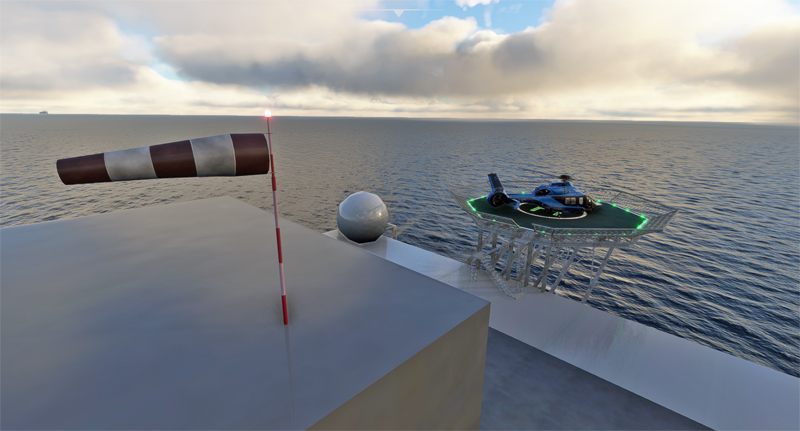
A look at the windsock in the photo below gives a good idea of the weather conditions. What’s more, the wind direction constantly pushes the helicopter towards the facilities. In the end, however, the landing goes smoothly.

Nevertheless, the multiple approach attempts shake the passengers’ composure. One person decides to change career and will now work in an office on land.

Strong winds for a virtual landing with a H160 helicopter on the ENXB Eldfisk B oil platform in Norway
The ENXB Eldfisk B oil platform in Norway but in the Scottish FIR under MSFS Microsoft Flight Simulator

Stage 14 of the simulated exploration of the planet will take place between ENXB Eldfisk B and Scotland, via the city of Edinburgh and Dundee Airport (EGPN).

Click on the link for more flight simulator flights around the world on my blog.
Categories
Flight Simulation

Explore the Planet in Flight Simulation (12)

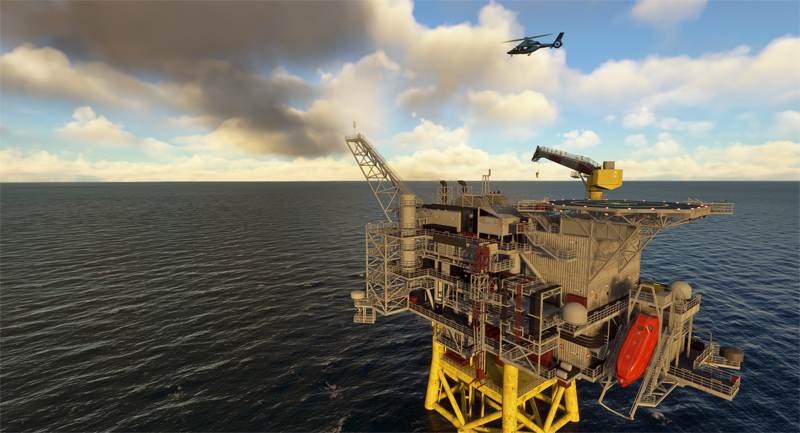
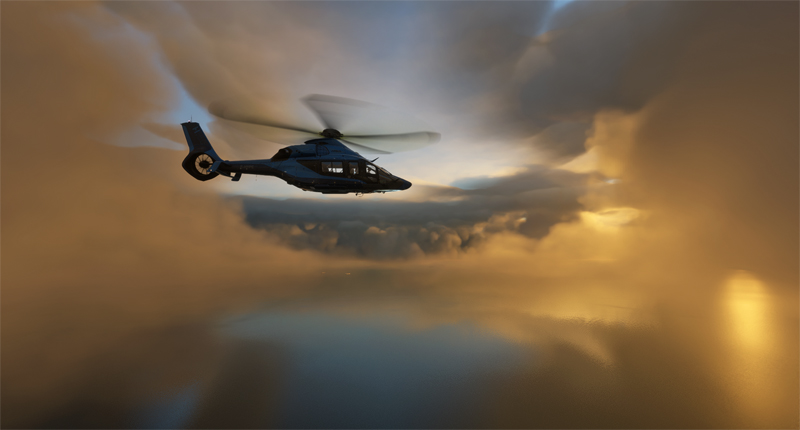
Airbus H160 helicopter leaving Helgoland (EDHX) for an oil platform in the North Sea

This twelfth leg of the round-the-world flight simulation trip features a precision landing. Indeed, there is a stopover on an oil platform in the North Sea. The code name of this facility in the Netherlands is EHFD F3-FB-1A. As usual, we’re using the MSFS flight simulator.
Airbus virtual H160 helicopter in flight towars the EHFD F3-FB-1A oil platform in flight simulation.

We are airborne in the evening from the island of Düne, in Germany. We shall reach the oil platform around dusk.

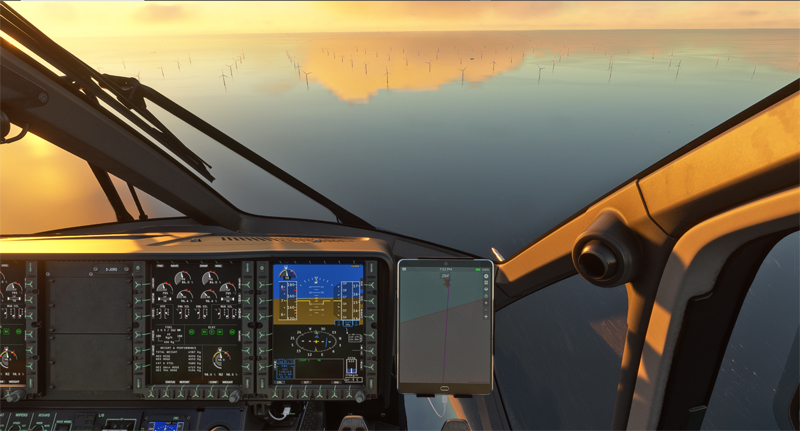
Virtual H160 helicopter approaching a wind farm in the North Sea with MSFS.

The photo above shows a wind farm straight ahead in the North Sea. In the event of a ditching, the H160 helicopter is equipped with floats that can be activated by the captain.

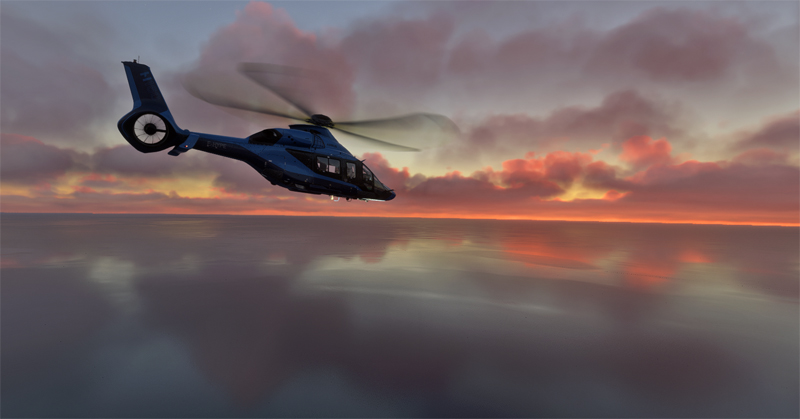
The night approaches as the H160 approaches the oil platform in MSFS

The virtual flight takes place in real weather conditions. As the day draws to a close, the sky takes on superb hues.

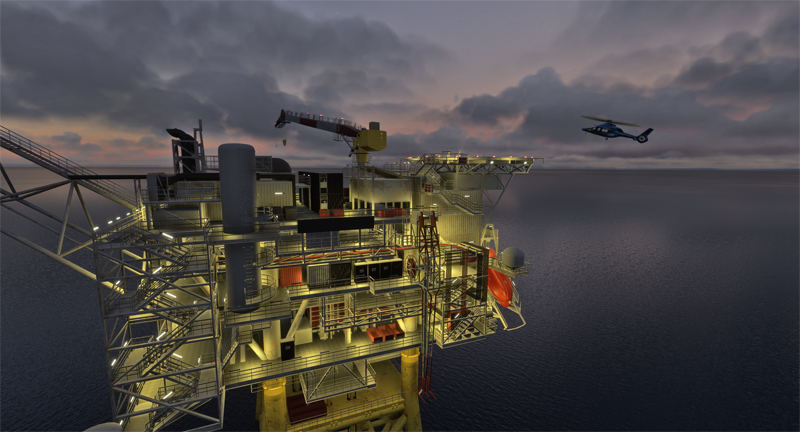
A few minutes later, the rig becomes visible.

Very windy for an H160 landing at EHFD F3-FB-1A oil platform in the North Sea with MSFS

Generally, the winds remain at a fairly high speed for the approach to the helipad. In addition, the crane constantly moves from left to right not too far from the landing zone. As a result, the helicopter needs to be in the appropriate place. Moreover, turbulence near the building complicates manoeuvres. Therefore, two approaches become necessary before landing safely.

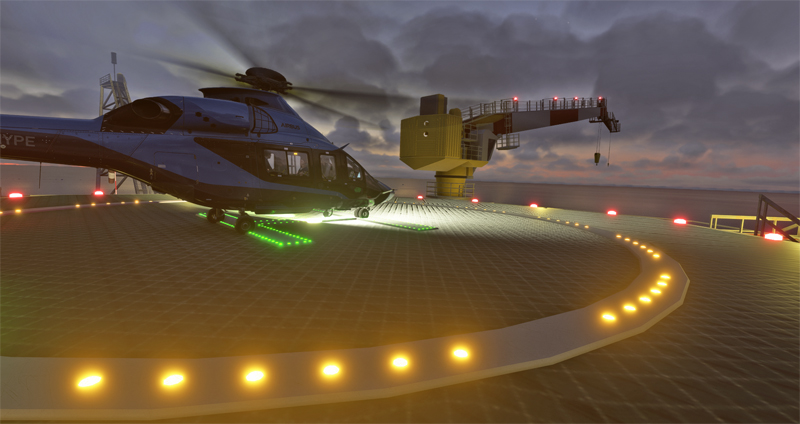
H160 helicopter landed on the EHFD F3-FB-1A oil platform in flight simulation

The helicopter will finally spend the night on the platform. Crew and passengers will certainly enjoy a well-deserved rest. Tomorrow, our mandate is to make the connection to a second drilling rig. This one is located further north, in the territory of Norway. For flight simulation fans who’d like to try it out, the code name is ENXB Eldfisk B.  

Click on the link for more flight simulator flights around the world on my blog.