DC-3 at the Homer (PAHO) virtual airport in Alaska (FSX)
If you feel like attempting a virtual landing on an ice runway, an opportunity is offered by ORBX through their Homer (PAHO), Alaska virtual airport. For the flight, I used the FSX platform but it could have been also done under P3D.
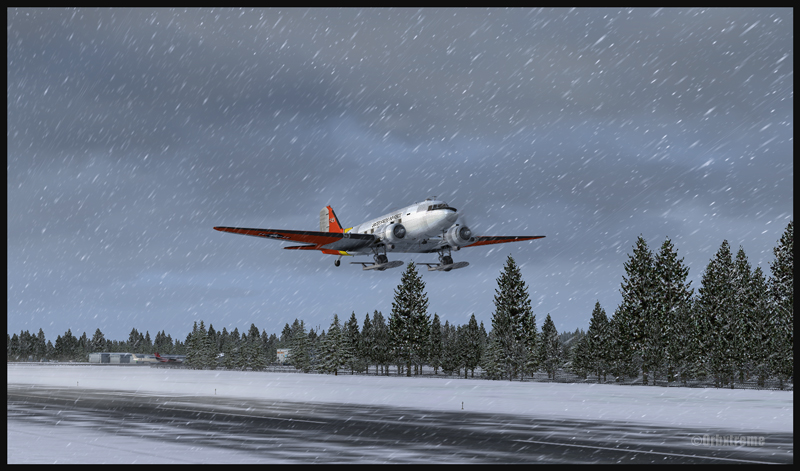
DC-3 on skis airborne from the Homer (PAHO) virtual airport in Alaska (FSX)
The ice runway is just a short distance away from the regular Homer asphalted runway. The DC-3 is an excellent aircraft for the task since its approach speed is very low and it is one of the few virtual aircrafts equipped with skis.
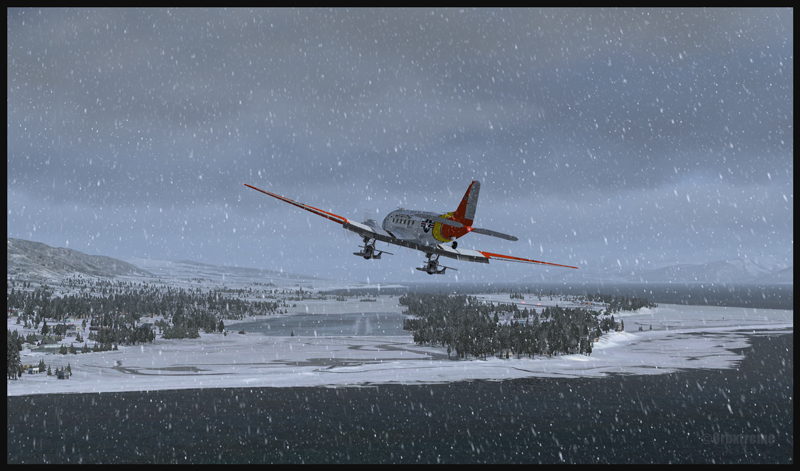
A DC-3 on skis is turning final for the Homer ice runway in Alaska (FSX)
If you want to try that flight, make sure to adjust the flight simulator configuration settings so that the Homer ice runway option is activated, otherwise you’ll end up under water…
In order to add a bit of challenge as well as winter realism, you can add a bit of crosswinds or some snow using the standard « heavy snow » option in FSX. The program PrecipitFX helps a lot if you are looking for a better definition of precipitations, be it snow or rain. For this flight, the Cumulus X program was also activated.
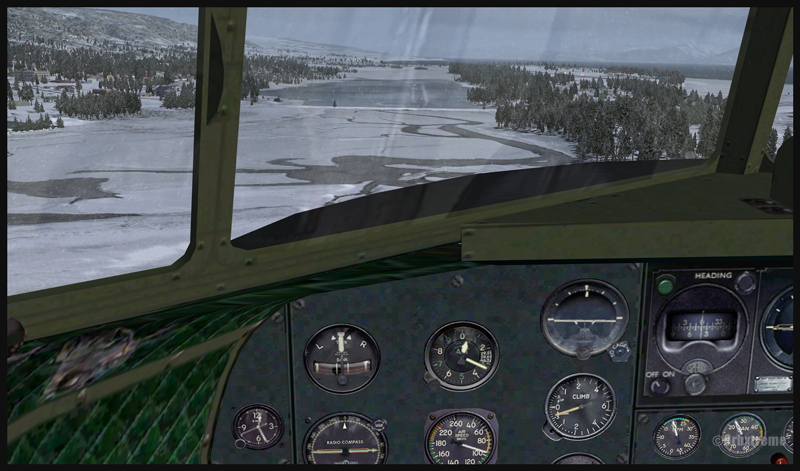
Cockpit view of a virtual DC-3 on final for the Homer (PAHO) ice runway in Alaska (FSX)
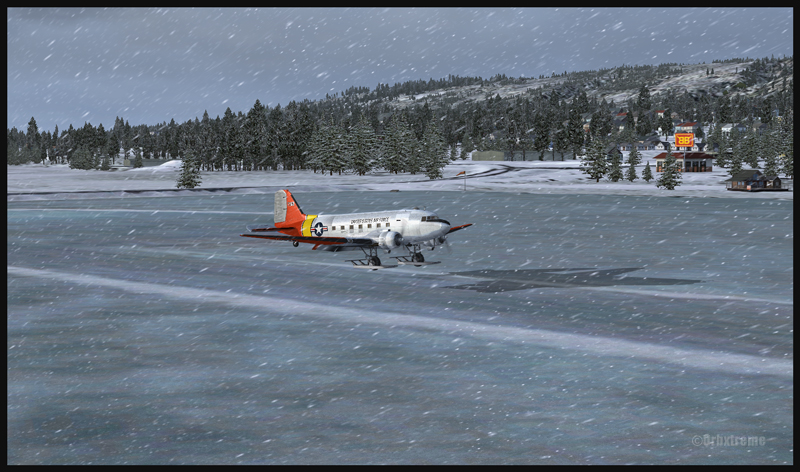
Virtual DC-3 on skis on short final for the Homer (PAHO) ice runway in Alaska (FSX)
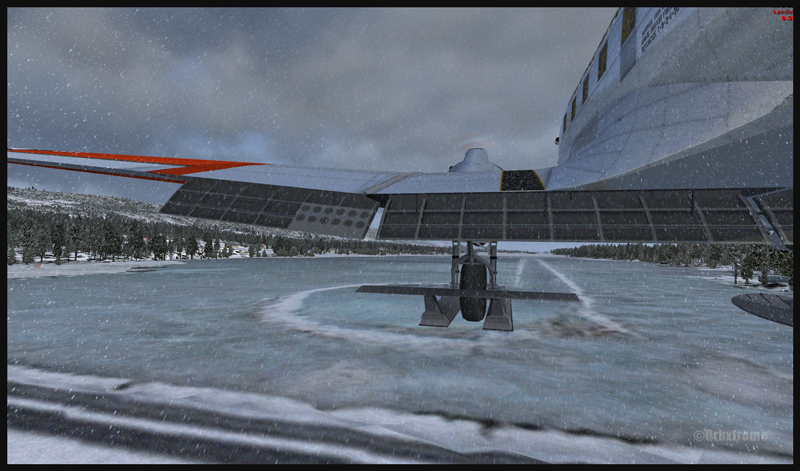
Virtual DC-3 on skis about to touch the threshold of the Homer ice runway in Alaska (FSX)
The short flight proved to be an interesting experience, since the runway was narrow and there were some crosswinds. I thought that it would be very slippery but it was not the case. Maybe one day Orbx, in association with the FSX Steam (Dovetail Games) professionals, will work at modifying the flight simulation platform and add a CRFI (JBI) index of .40 or less to increase the difficulty in slowing down and controlling the virtual aircraft?
A DC-3 on skis flying few feet over the Homer (PAHO) (FSX) ice runway, a product of the ORBX company
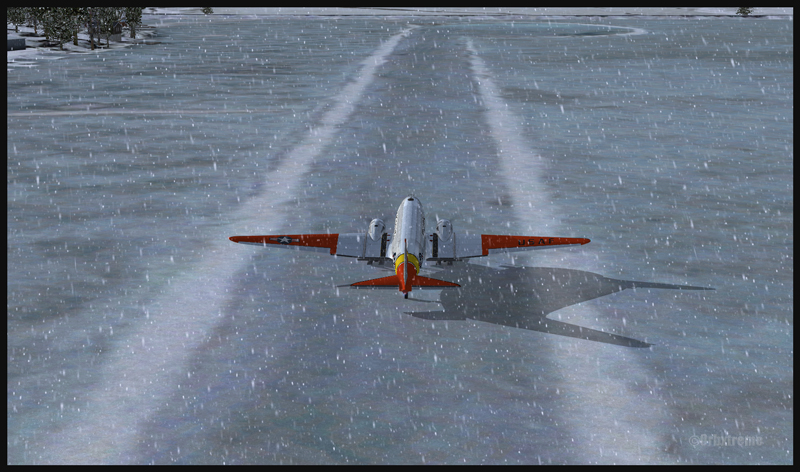
A virtuel DC-3 on skis after a landing on the Homer (PAHO) ice runway in Alaska (FSX)
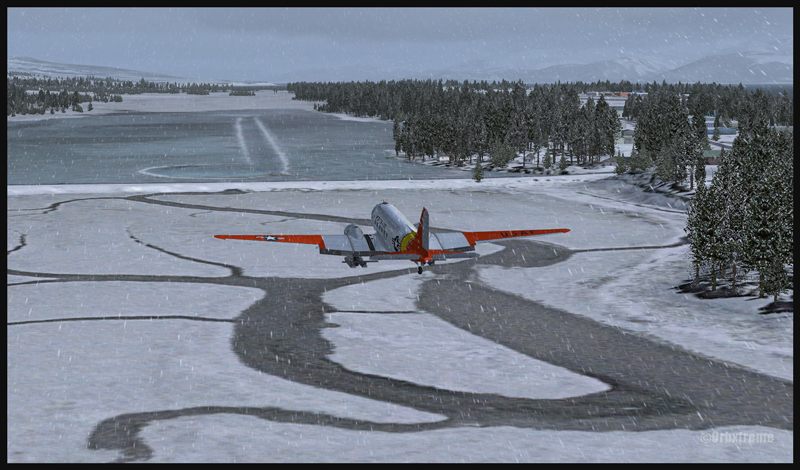
A DC-3 virtual on skis backtracking the Homer (PAHO) ice runway in Alaska (FSX)
As this flight is not a super though exercise, I have placed it in the “standard virtual flights”, in the flight simulation section of my website. For more of those flights, click on the following link: Other standard virtual flights
Have fun trying this one! Later on, I’ll present another ice runway located on Antarctica, which virtual scenery was made by Aerosoft. Even the C-17 Globemaster III is approved there…
For more articles on flight simulation on my web site, click on the following link : Flight simulation
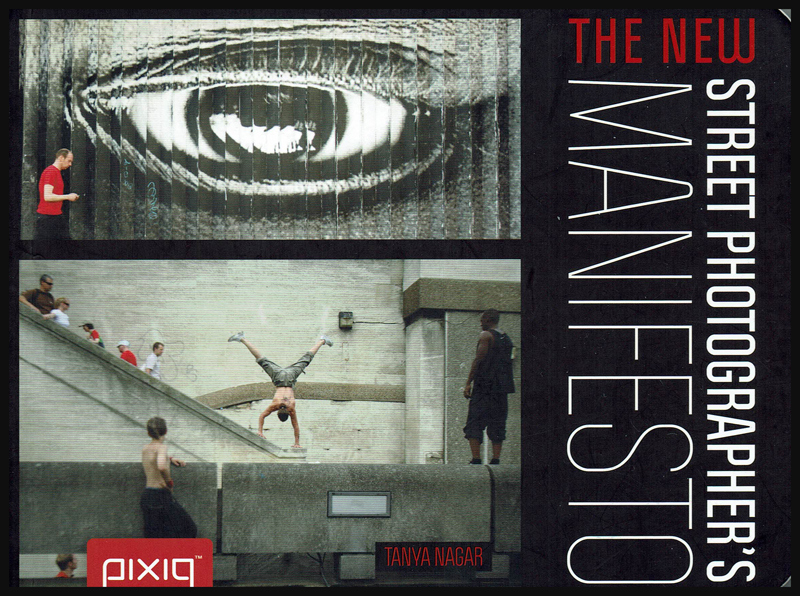
Livre de photographie: “The new street photographer’s manifesto” par Tanya Nagar
Tanya Nagar is an award-winning photographer from London. Her book, “The new street photographer’s manifesto” is perfect for those who aim to improve their street photography techniques. The present article is not a comprehensive critic of her book but an overview of what a reader will find. I also highlighted some tips in photography that will help to improve the street photographer’s performance.
Tanya’s manifesto not only contains technical advices helping a photographer to improve his shots but also some tips to avoid common mistakes. Subjects include: timing, composition, shooting portraits, framing and juxtaposition, perspective and angles, the choice between landscape and portrait, depth of field, shutter speed, exposure, night photography, rule of thirds, etc.
The book’s content is divided in six categories: 1. Street Photography 2. Where & What to Shoot 3. Seize the Moment 4. Equipment 5. Digital Processing 6. Showcase.
1. Street photography requires the ability to seize a life moment with precision and timing. It is about candid shots and does not have to include humans, as long as it fixes a moment in life. It certainly can include animals (in fact, animals are a very popular subject).
2. It is best if you use a light, discrete camera (even an I-Phone). Walking with a huge camera with big lenses makes you look like a professional photographer and people will see you coming. The trick is to avoid drawing attention. Coughing while clicking drowns out the sound of the camera. You might also think of “shooting from the hip” or “shooting blind”. Those techniques are explained in the book and can be mastered with a bit of practice.
3. It takes a bit of courage to photograph situations that include people since you never know what to expect when you raise your camera. Respect the different cultures and personal space and don’t be afraid to smile and explain what you are doing. If somebody refuses to be photographed, move on, don’t dwell on the situation.
4. In order to gain experience and a feeling of security at taking pictures of people on the street, start with protests or parades.
5. It is a good thing to know the laws pertaining to photography of the country you are visiting. Police officers in some countries might be tempted to order you to delete a shot while they actually don’t have the right to. Often, a misunderstanding by police or security guards of anti-terrorism legislation leads to different interpretations and subsequently to abuse towards a photographer. Just make sure you stay up to date with the country’s regulations.
6. You might think of shooting from within your vehicle to obtain interesting results (while respecting the country’s laws).
7. Use graffitis, signs, graphical billboards, text and advertising logos.
8. Use contrasts like big versus small, light versus dark, rich versus poor, etc.
9. Bear attention to details and look for second degree interpretation of a situation.
10. Look for amusing, funny and unusual captures.
11. Make sure you master your camera in order to be quick when the perfect opportunity comes. Set most of the parameters of the camera before actually arriving on a scene (you already have an idea of the light intensity in the area and the ISO setting that will be required to obtain the speed you desire).
12. Be cautious when it comes to taking pictures of children. Societies change and authorization from the child’s parents is required almost every time.
13. “The only way to avoid missing a moment is by carrying your camera at all times”. Therefore, get something small and light.
Endos du livre de photographie “The new street photographer’s manifesto”
The book holds a section dedicated to multiple types of cameras: rangefinders, SLR and DSLR, four thirds and micro four thirds, medium format, point-and-shoot compact cameras, camera phones, toy and pinhole cameras. Their advantages and disadvantages are clearly explained.
The reader will also find some information about lenses (the best for street photography and what to avoid) and the effects obtained through the use of different type of films (colored, black and white, expired).
The fifth section of the book relates to digital processing and the basic image editing techniques like cropping, rotating, the use of the “Curves” command, as well as dodging and burning.
The final section, “Showcase”, presents many well-known street photographers from around the world, including few photos taken by each of them to allow the reader to have an overview of each photographer’s personal style and creativity. Presented in order are: Antonio Navarro Wijkmark, Brian Quentin Webb, Charlotte Gonzalez, Claire Atkinson, Danny Santos II, Felix Lupa, Ferhat Çelik, Mustafa Abdulaziz, Ronya Galka, Seamus Travers and Severin Koller.
This is certainly a very interesting and practical photography book that will help you avoid costly mistakes (missed photo opportunities or buying the wrong photography equipment) while helping you to improve your knowledge on street photography as much as the quality of your shots.
Here is a link towards Tanya Nagar’s website: Tanya Nagar
Street photography in Toronto: love at first sight!
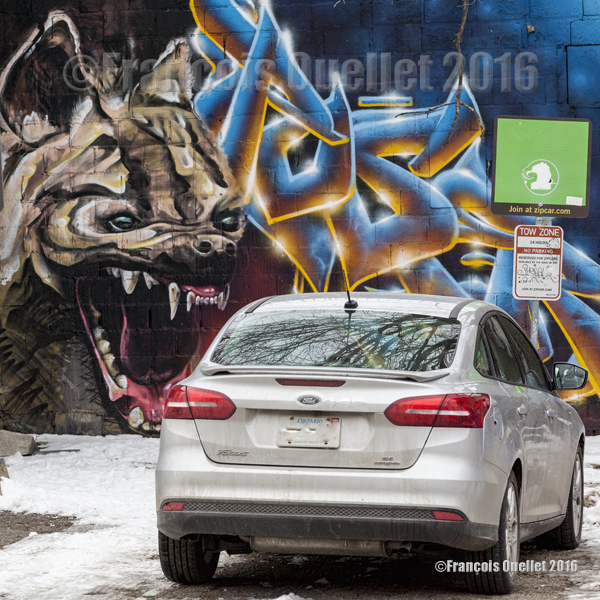
While wandering through the streets of a big city like Toronto, in Ontario, it is quite common to see very interesting graffitis. A new visual experience can sometimes be created simply by shifting to the side.
By standing exactly in a position where the enraged animal will be right against the car, more tension can be created. The car is now positioned between a not so friendly animal and a panel clearly indicating that this is a tow zone.
This is one little creation allowed by street photography, since everything is about positioning oneself and seeing a possible new interpretation to a normal scene. The photographer must nonetheless respect the principle that demands that no objects be moved or no special requests be made to a person in order to obtain a desired effect. Everything has to be untouched and it is the photographer that has to position himself in order to create the desired effect.
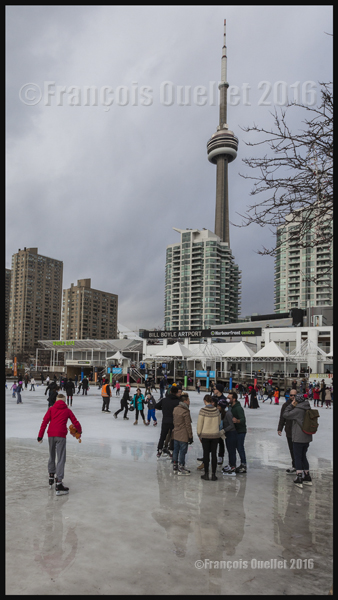
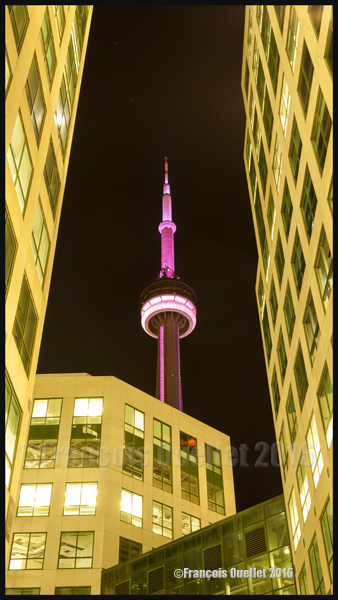
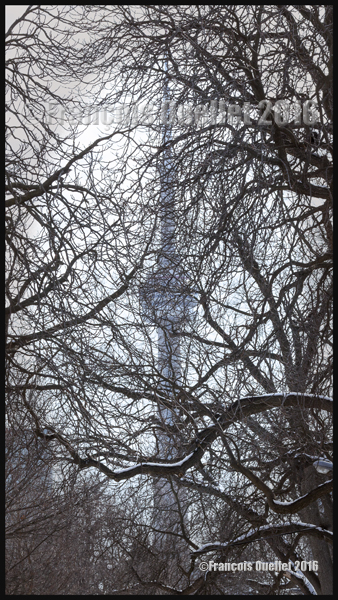
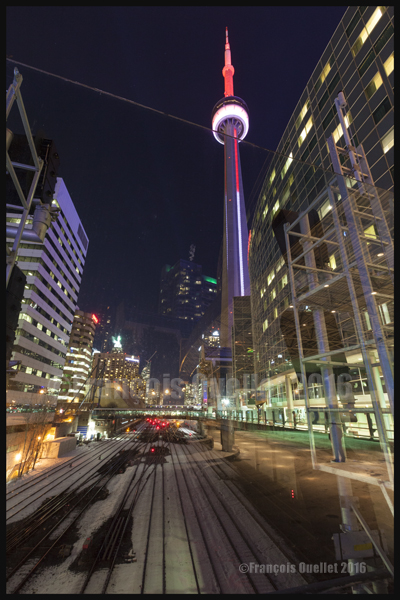
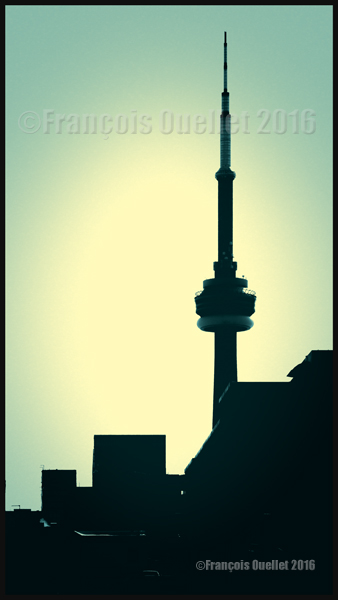
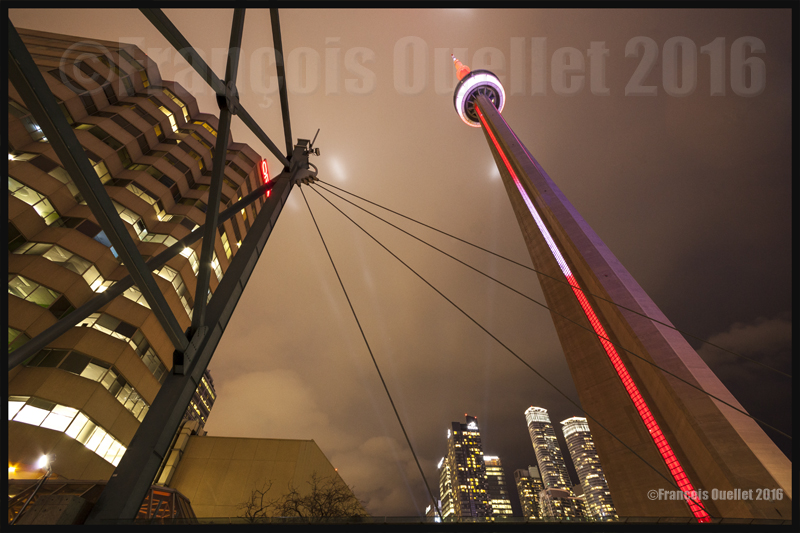
It is always difficult to find new ways of taking pictures of such a popular touristic attraction as the CN Tower in Toronto, Ontario. This tower, with its 553,33 meters in height, is one of the most elevated free standing structure in the world.
Here are six photos that present the CN tower under a different perspective. It was necessary to take those pictures at different times of the day (including dusk and night) in order to obtain more diversified and original pictures. I used a Canon 5D MKII camera for all the photos. I hope you like the shots!
Skating near the CN Tower inToronto, Ontario (2016)
CN Tower during nightime in Toronto, Ontario (2016)
Toronto’s nature and the CN Tower (2016)
CN Tower and railway at night. Toronto, Ontario (2016)
The CN Tower in Toronto, Ontario in 2016
The CN Tower at dusk in Toronto, Ontario (2016)
For more articles in the category « Photos of Canada », click on the following link : Photos of Canada
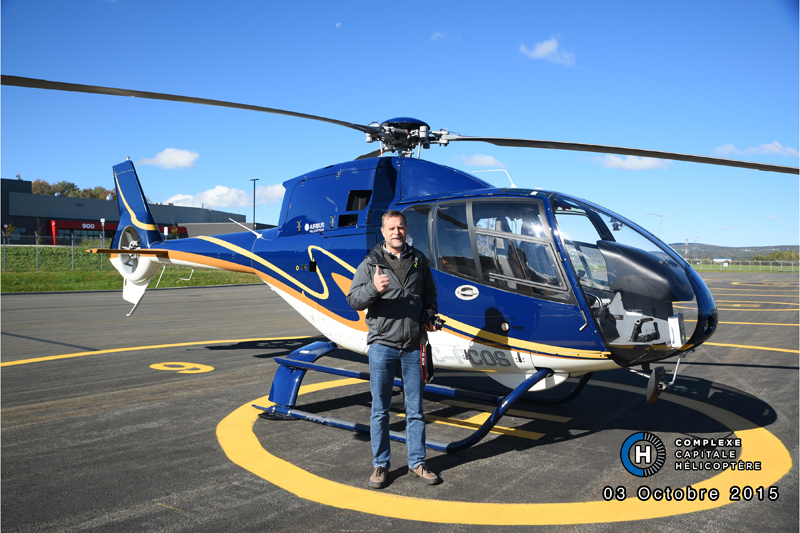
A souvenir photo in front of a Eurocopter EC120 Colibri (C-FCOS) at the Quebec Jean-Lesage international airport (2015)
December 2013. Time for retirement had come. On my last working shift as a flight service specialist (FSS), I was able to share good memories of the past experiences as a Transport Canada and later Nav Canada employee. A shift supervisor had bought an excellent chocolate cake which was rapidly taken care of by the employees.
The next year, during an official retirement party including two other retirees, the Nav Canada flight information center (FIC) employees in Quebec City (CYQB) presented us with several gifts. I used the gift certificates to book a helicopter ride.
The pilot headed towards the Quebec Bridge then followed the St-Lawrence Seaway to Old Quebec. He then flew towards the Davie shipyard, Île d’Orléans, the Montmorency falls and then returned to the Quebec Jean-Lesage international airport. During the flight, we were able to witness the arrival of the Queen Mary II cruise ship in Old Quebec. Here are some pictures that I took during the flight:
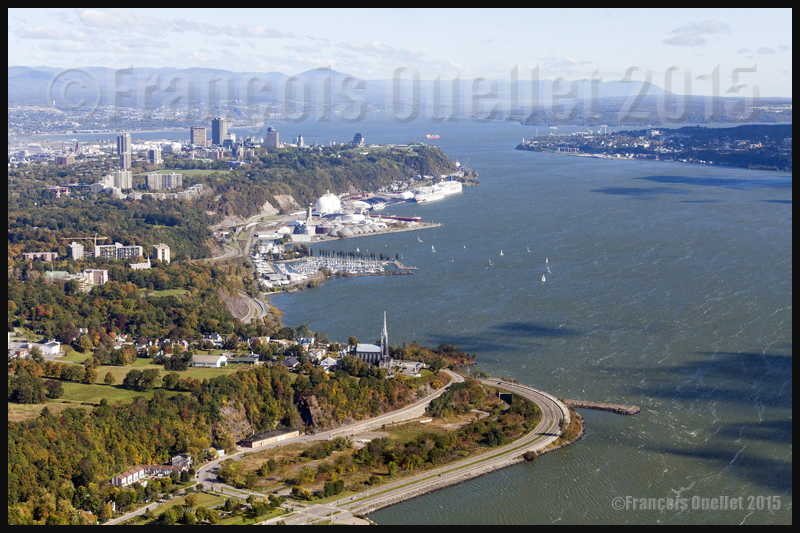
Samuel-de-Champlain promenade and St-Lawrence Seaway in 2015
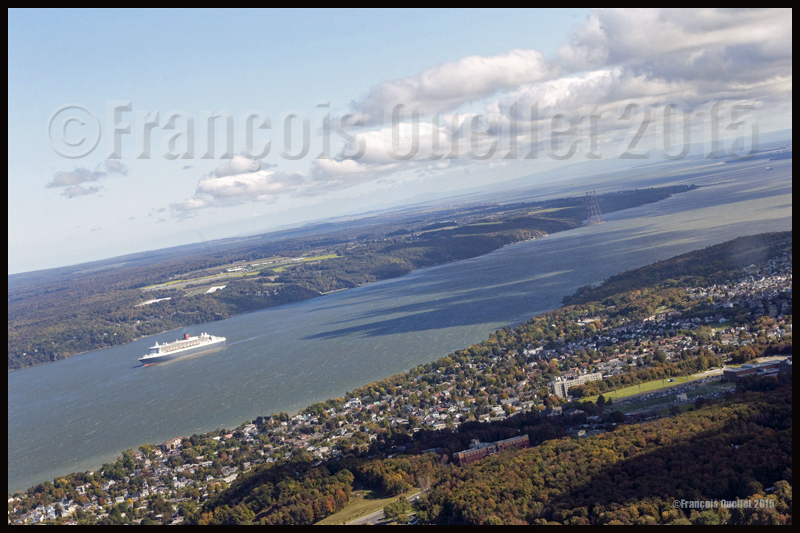
The Queen Mary II passing by Île d’Orléans enroute to Quebec in 2015
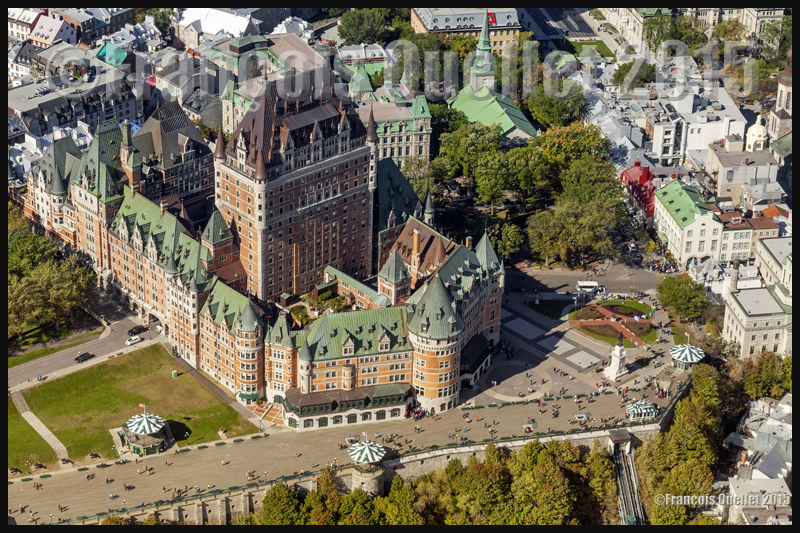
The Château Frontenac, Dufferin Terrace and a small part of Old Quebec in 2015
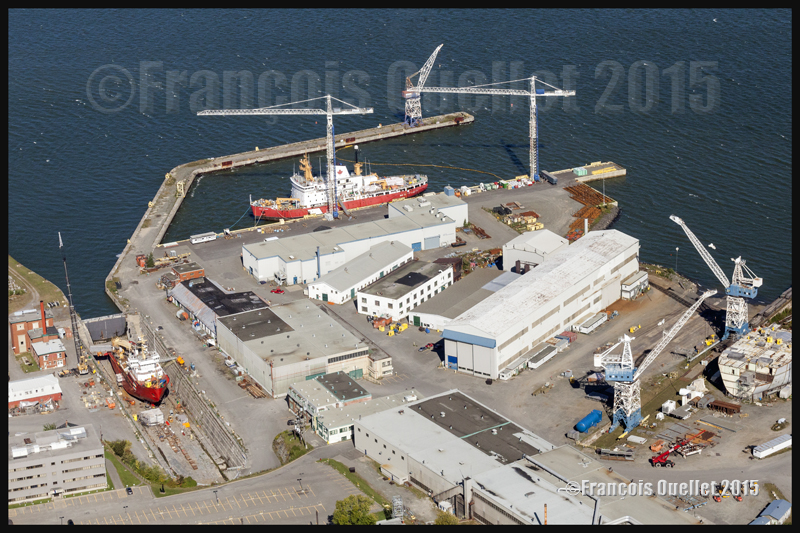
Davie shipyard in Quebec (2015)
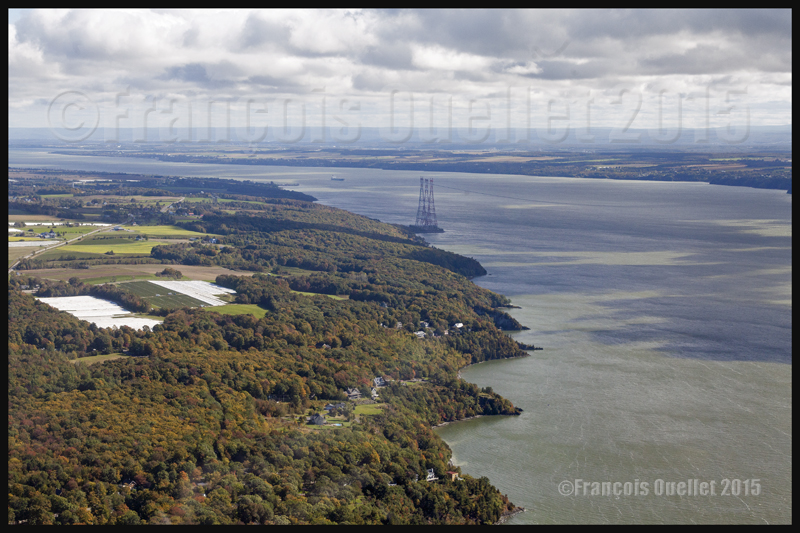
Orleans Island and St-Lawrence Seaway, Quebec, 2015
Quebec Jean-Lesage international airport in 2015. The Nav Canada installations are visible (control tower and flight information center (FIC))
I hope you liked the real life stories as pilot, flight instructor, Transport Canada student and flight service specialist in Inukjuak, Rouyn-Noranda, Iqaluit and Quebec City, as well as FSS for Nav Canada at the flight information center in Quebec City. I have included all the stories and photos on my web site www.francoisouellet.ca , in the following “real life stories” sections:
There were naturally many more stories that would have deserved to be written but, due to their particular nature, those stories had to stay confidential.
Thanks for the encouragements and comments shared in person or via electronic communication.
N.B.: All the articles published on the web site https://francoisouellet.ca/en/ are under copyright protection. All rights reserved. Thanks for your understanding.
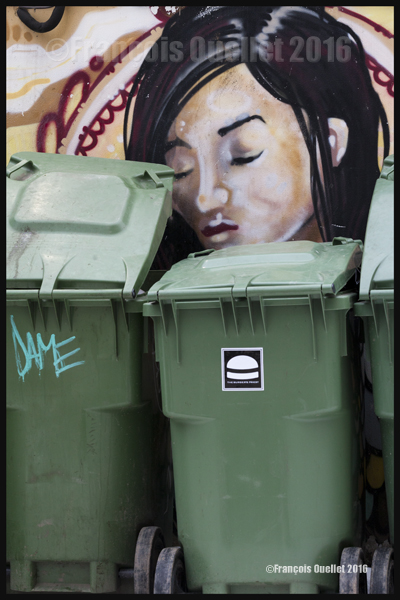
The lady on the wall seems to be annoyed by the smell coming out of those garbage cans that have been placed right under her nose. It would have been better if somebody had at least thought of closing the lid…
A safe bike…or maybe not
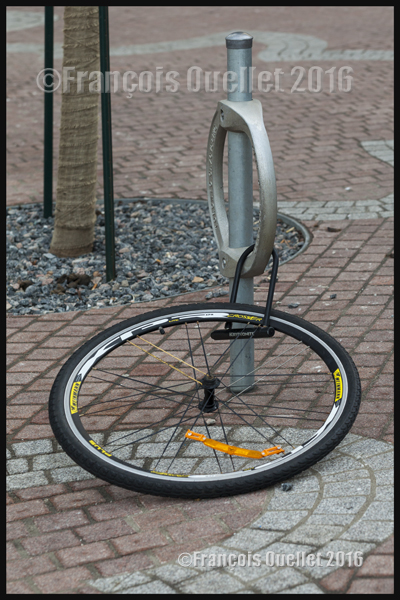
Street photography in Toronto: what’s left of a bike that was locked for more security
There are two versions for this street photography taken in Toronto, Ontario in 2016. The first one, that is the positive side of the story, shows that people are locking their bike piece by piece. It takes more time, but at least the bike is safe…
The second version, less positive, represents what is left of a bike that was locked by the front wheel only…
For other street photography pictures posted on my site, click on the following link:
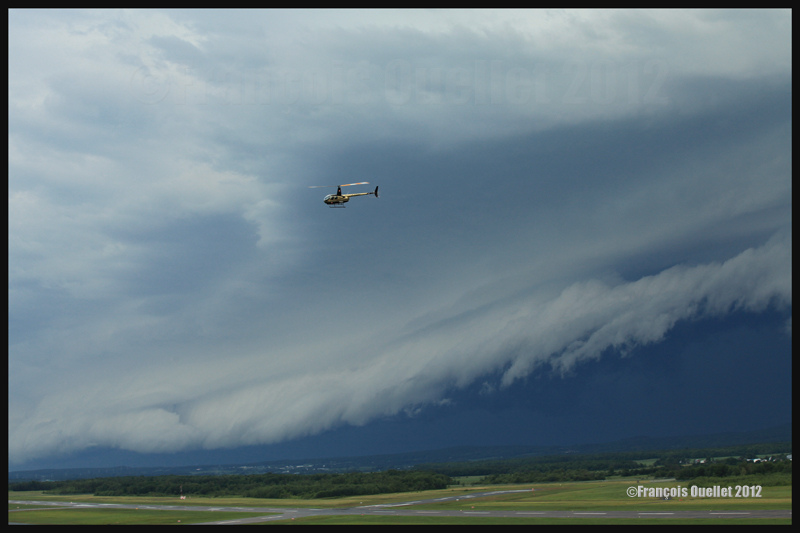
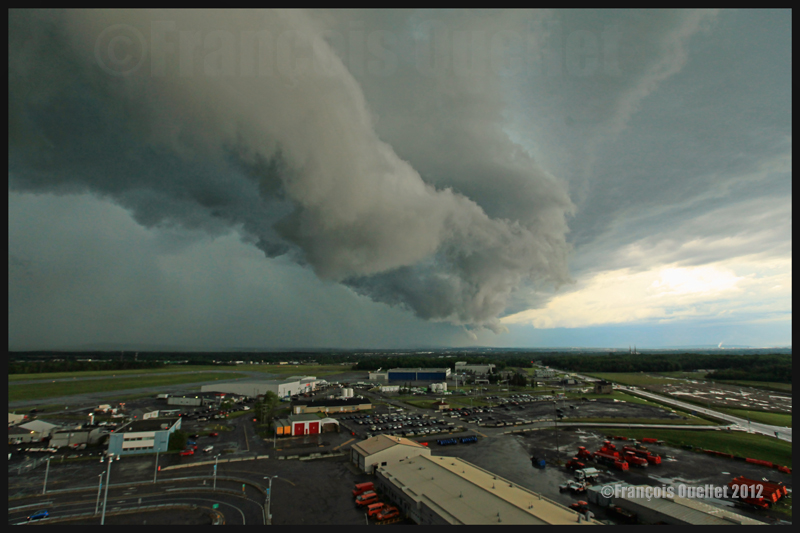
A roll arcus cloud in development ahead of a thunderstorm approaching the Quebec Jean-Lesage airport in 2012.
Summer 2012. A very active cold front had been sweeping across the province and was about to hit the Québec Jean-Lesage international airport (CYQB). Considering the winds and the temperature spread, as well as the weather radar, it was obvious that it would be a very interesting show.
The Nav Canada control tower and flight information center (FIC) being collocated, the common stairway surrounding the tower became a privileged spot from where to take pictures. As a flight service specialist (FSS) on a short morning break, I grabbed my camera and headed outside on the stairway, just in time to see a line of roll arcus clouds arrive over the mountains to the north-west.
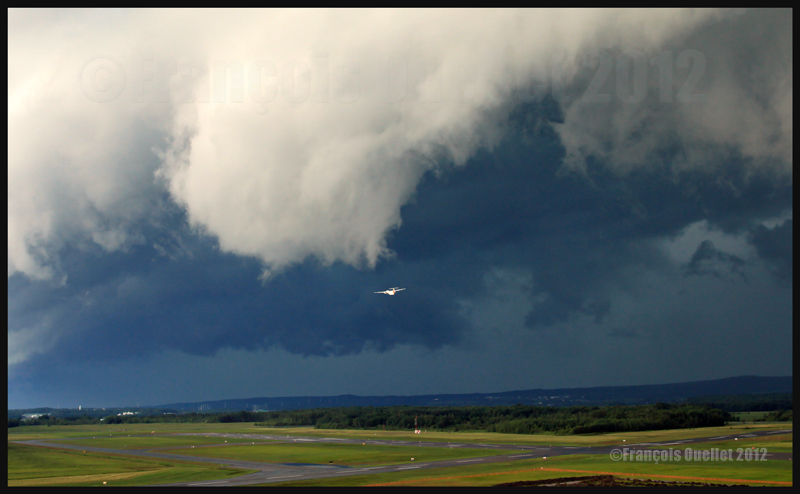
A roll arcus cloud ahead of a thunderstorm heading for Quebec City in 2012
The first showers started, quickly followed by strong gusty winds and hail. In order to protect myself from the severe weather, I just had to slightly change position on the stairway and use the tower as a shield. Satisfied with my shots, I abandoned my observation post and let Mother Nature express herself.
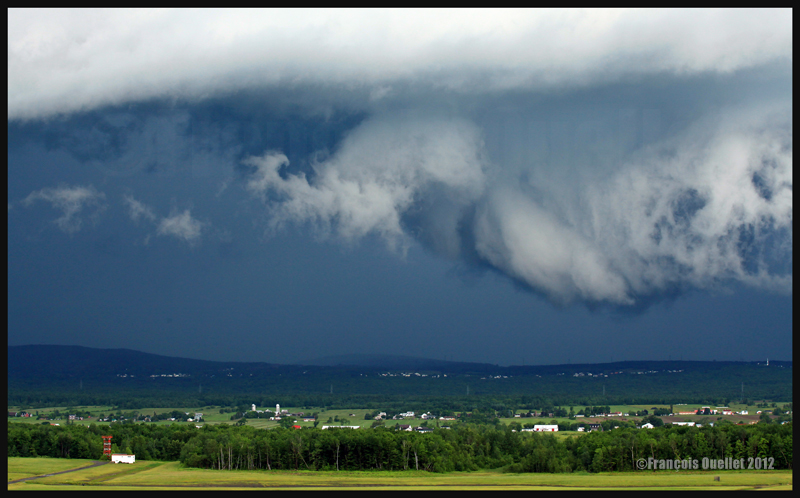
A roll arcus cloud in development ahead of a thunderstorm approaching the Quebec Jean-Lesage airport in 2012.
An arcus cloud ahead of a thunderstorm approaching the Quebec Jean-Lesage airport in 2012
An arcus roll cloud in delopment near the Quebec Jean-Lesage airport in 2012
Here is some information aimed at helping tourists visiting Toronto, who like photography and aviation, and would think of booking one day during their visit to head to the Toronto Lester B. Pearson international airport (CYYZ) for a plane spotting photo session.
Initial planning
If you can, get a scanner or download an app on your cell phone to get real time information on air traffic around the airport: you will then know in advance the type and nationality of inbound or departing aircrafts.
Search for websites giving you access to Toronto airport VHF frequencies and program your scanner if you decided to get one.
Have a look at different plane spotting websites for the Toronto airport: there are many precious advices from experienced plane spotters that will prove useful in heading to the best spots and avoiding common mistakes.
Print two or three maps of secondary routes around the airport so that you can orient yourself when there is a change in runway use due to different winds or if you use a taxi ride to move around the airport: the driver will always ask you details on how to get there since those secondary routes are not a common destination for him (and chances are that he will not know where to go if you ask him to head to threshold of runway 05. Basically, he needs road names, not runway numbers).
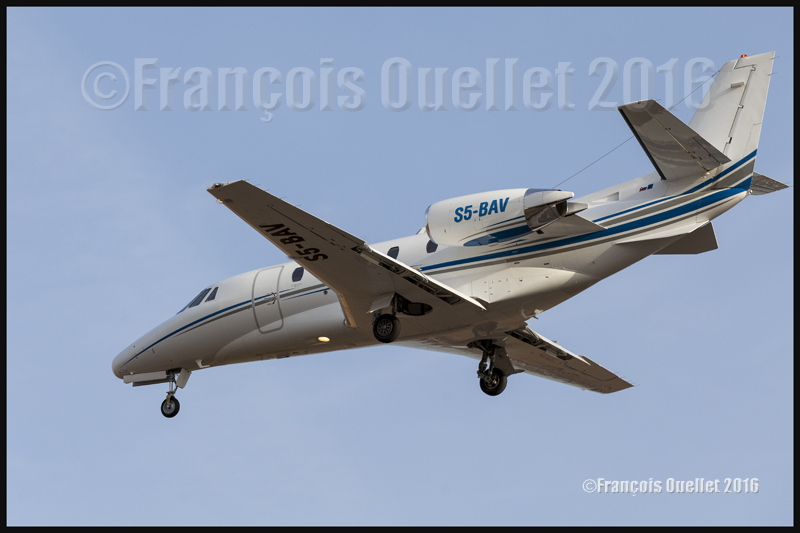
Cessna 560XL S5-BAV Toronto 2016
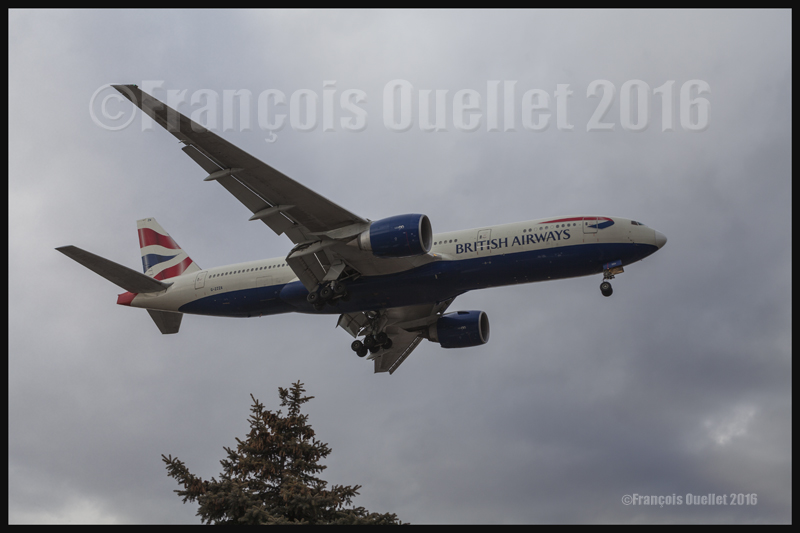
British Airways Boeing 777-236 G-ZZZA in Toronto 2016
Before leaving your Toronto hotel
Before you leave the hotel, look at the Toronto weather forecast, among them the TAF, to know the wind pattern for the day. The Nav Canada site has everything you need to know and there is a possibility to choose between coded or plain aviation language.
Don’t forget to bring many snacks as well as a bottle of water since you will possibly be at a good distance from a restaurant for many hours, depending on which runway is in use. The same goes for additional batteries and memory cards for the camera.
Don’t forget the scanner, the cell phone (to call a taxi driver or get access to the arrivals and departures information) and all the photo equipment needed, as well as an abnormally high number of clothing layers necessary in case of winter photography: eight hours almost immobile outside in February calls for an appropriate preparation if you want to appreciate your experience. If you economize on clothing, it is certain that you will have to shorten your photography session.
I chose February for its very interesting light and not for its temperature! Most of the shots in this article were taken in only one day at the Toronto airport, between 10h30am and 18h30.
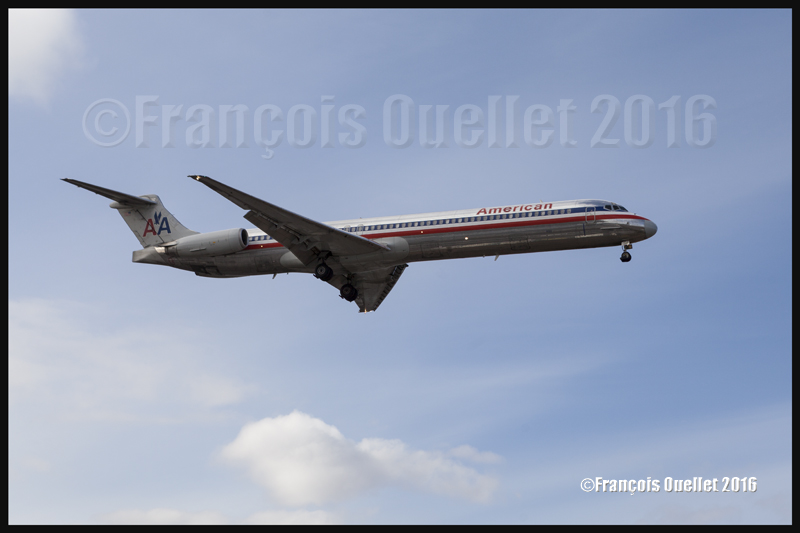
American Airlines MD-82 N482AA final 05 Toronto 2016
From the hotel to the airport
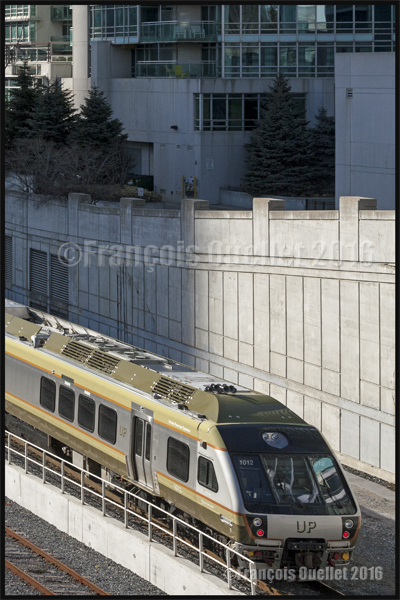
If you chose to stay at a downtown hotel in Toronto, the best way to get to the Toronto international airport is to use the UP Express train, from the Union Station on Front Street. Its use is very simple and departures are made every fifteen minutes. In February 2016, the cost was CDN $44.00 for a return trip to the airport, while a taxi ride cost $130.00.
UP Express Toronto 2016
The UP Express ride only takes 25 minutes and the train stops at Terminal 1.
It is preferable to avoid using your car around the Toronto international airport since some secondary roads are private and no stopping is allowed. You will take more time to look for police than to enjoy your plane spotting photography session.
Once you are at Terminal 1
Once you exit the UP Express at Terminal 1, get your scanner and monitor the ATIS frequency (120.825) to get the latest information on the runways in use for take offs and landings. For my photo session, the ATIS announced that runway 05 and 06L were in use, both for arrivals and departures. I took a taxi, showed the map with secondary roads to the driver and within few minutes I was where I needed to be and started the photo session.
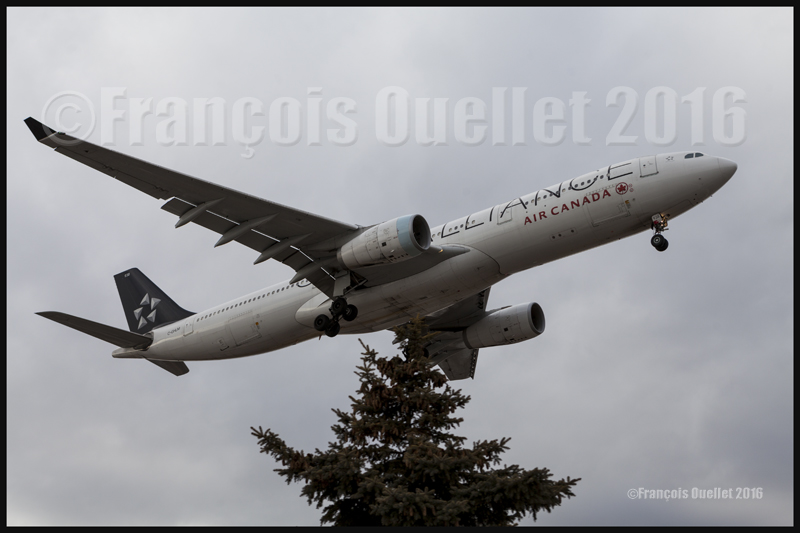
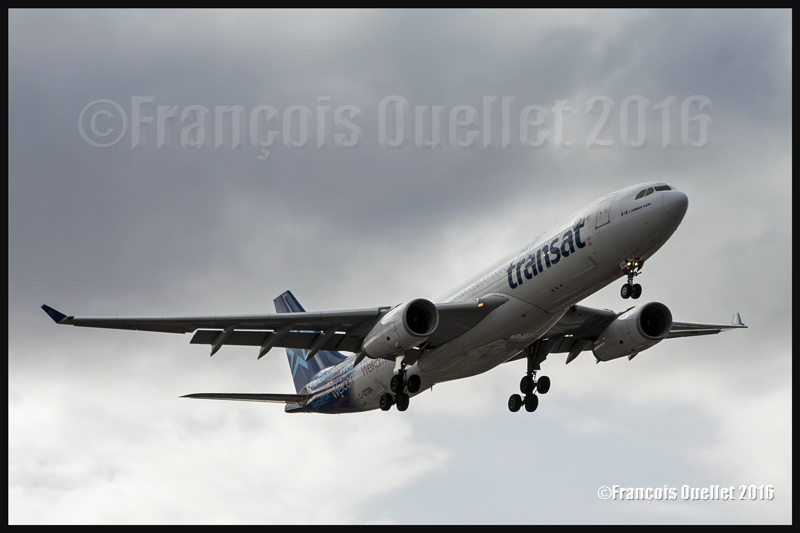
Air Transat Airbus A-330 C-GTSN Toronto 2016
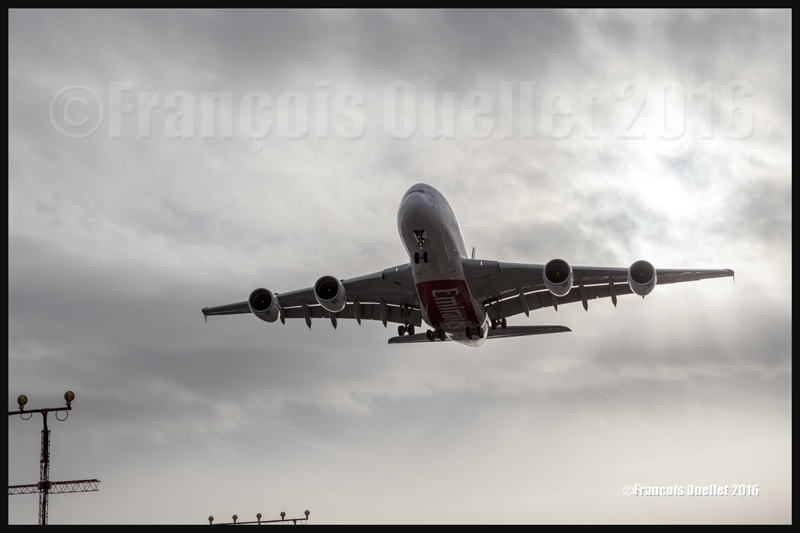
A preliminary internet search allowed to discover that heavies mostly arrive from Europe during the afternoon et that runway 05/23 is favored for Emirates Airline Airbus A-380 arrival. I thus decided to position myself near runway 05 instead of 06L.
There are two or three quite isolated spots around the airport that provide interesting point of views for aircraft photos but that can present security problems for a photographer working alone with expensive equipment. Experienced plane spotters suggest that you should be accompanied by friends if you decide to opt for those spots (see the “plane spotting” internet sites suggested at the beginning of this article).
Emirates A-380 final for Toronto (CYYZ)
Emirates A-380 on final for Toronto (CYYZ) 2016
Emirates A-380 on final 05 for Toronto (CYYZ) 2016
Technical advices
For precise photos of aircrafts in movement, I use the following parameters with my Canon 5D MKII camera:
1. Only the central AF Point of the auto focus system is selected and not the surrounding ones in order to avoid that the camera sets the focus on other objects than what I desire (trees, ILS structure, buildings).
2. The AI Servo setting is more efficient than the AI Focus or One Shot. The aircraft will be followed precisely.
3. If I want to include surrounding objects in the photo, I adjust the aperture to 7.1 or 8, instead of 11 or 13. I thus avoid increasing the ISO too much, which would affect the picture’s quality if it has to be enlarged with Photoshop.
Westjet Boeing 737-8CT C-GWSV Disneyland Livery in Toronto 2016
4. To take pictures of an approaching propeller powered aircraft, a speed adjusted to 1/125 is generally adequate. You must pivot according to the aircraft movement so that it looks like it is immobile in your viewfinder. The picture is easier to take when the aircraft is farther away but becomes more of a challenge when it gets closer and flies by you since you must constantly change your pivoting speed.
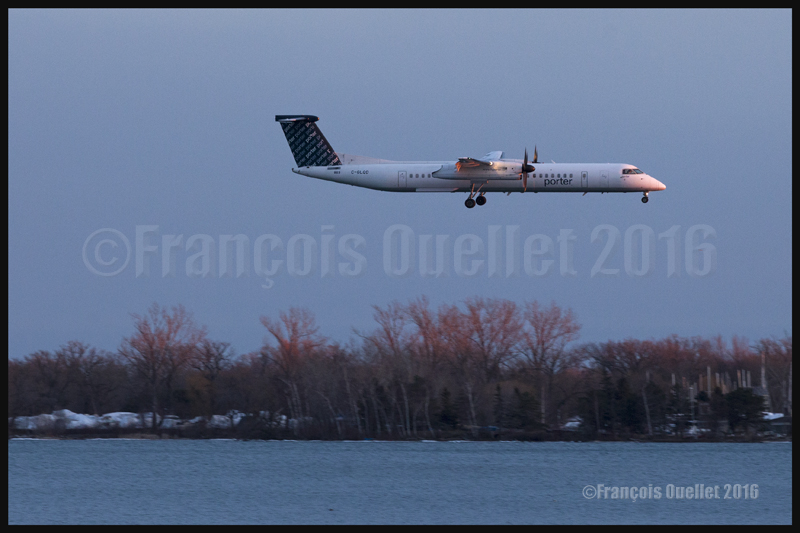
Porter Q-400 C-GLQD on final for Toronto Billy Bishop airport (CYTZ) 2016
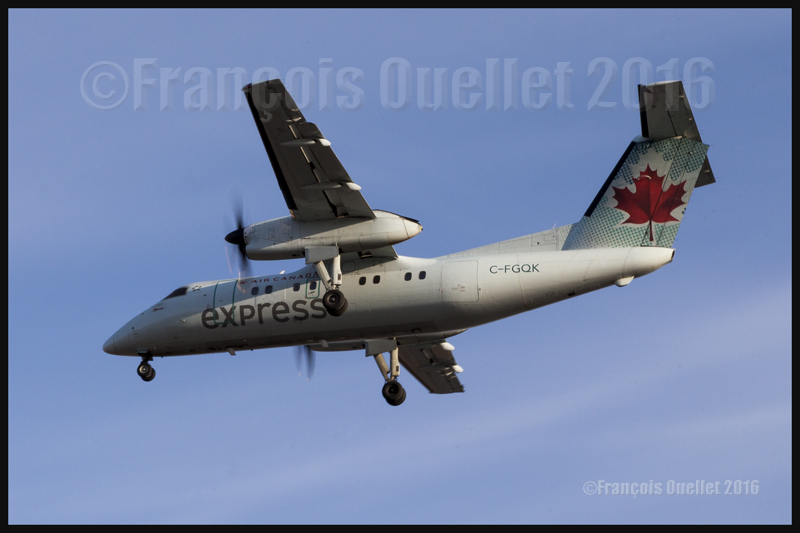
Air Canada DHC-8-102 C-FGQK Toronto 2016
5. A shutter speed that is too high will immobilize the propeller of an aircraft and make it look like the engine is not working, which will take away realism.
6. Throughout the day, position yourself so as to have the sun behind you (if there is any sun!), unless you are looking for special effects.
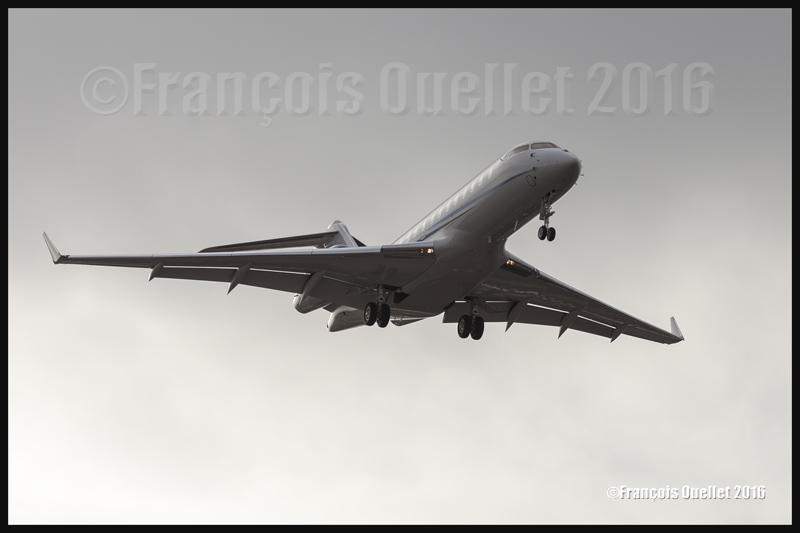
Global 5000 GL5T C-GJET in Toronto 2016
7. A very high quality lens, like the Canon 50mm 1.4, allows for beautiful pictures during the evening since there is no compromise on ISO, as the lens does not need much light. The grain size stays relatively small.
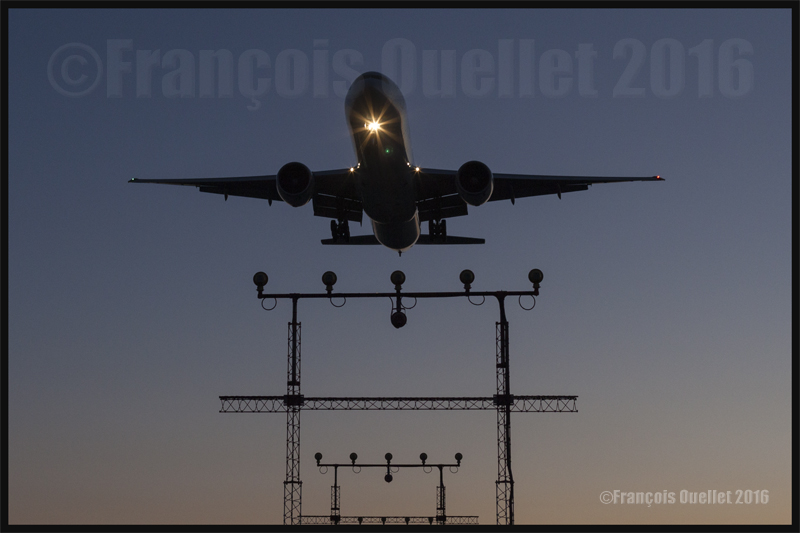
Air Canada Boeing 777 final 05 Toronto 2016
8. I use a very low ISO if the photo includes an interesting but far away aircraft, in order to be able to crop the picture with Photoshop. Since I cannot compromise on the speed to avoid a blurred picture, it becomes obvious that it is the aperture that pays the price.
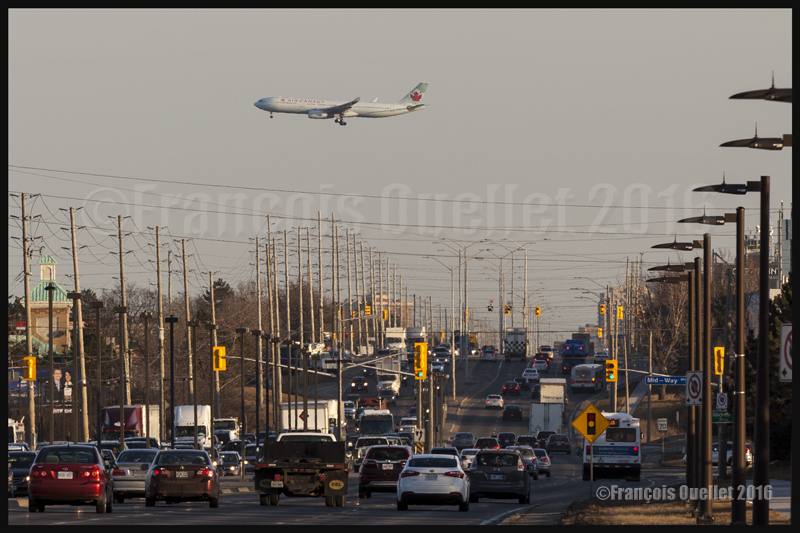
Air Canada Airbus A-330 final 06L Toronto 2016
9. If the situation allows it, add visual references other than clouds to get a bit more variety in your aircraft photo collection.
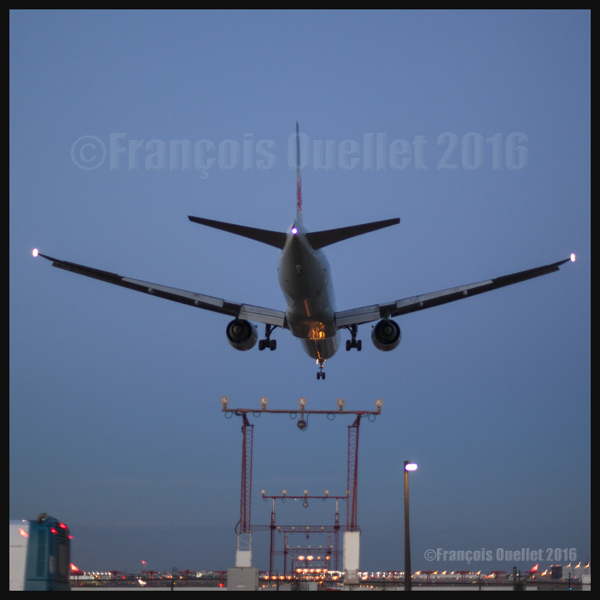
Air Canada Boeing 777 final runway 05 Toronto 2016
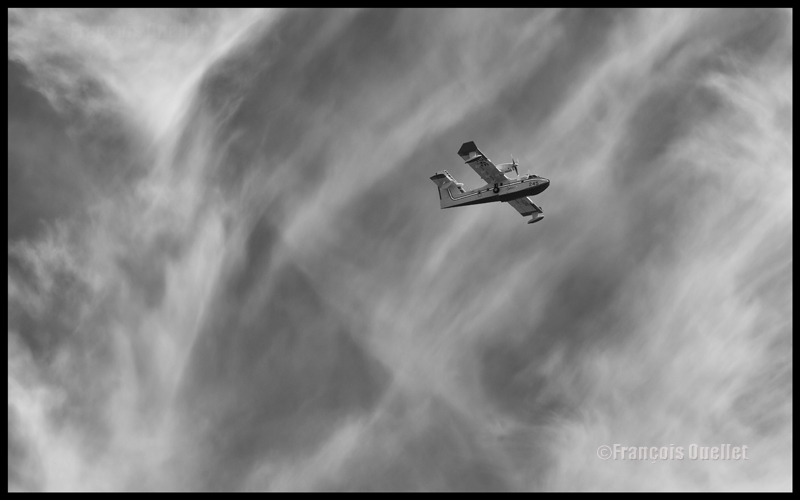
10. Try a black and white photo if the cloud formation is particularly interesting.
C-GQBG CL-415 and cirrus clouds on a black and white picture
11. RAW+JPEG files allow for important adjustments when necessary. A JPEG only photo gives you little leeway when you want to correct mistakes or during problematic lighting conditions.
12. Variable sky conditions and constant direction winds are preferable for your photo session since the runway in use will not be changed in the afternoon and your pictures will benefit from different light intensity and cloud formations.
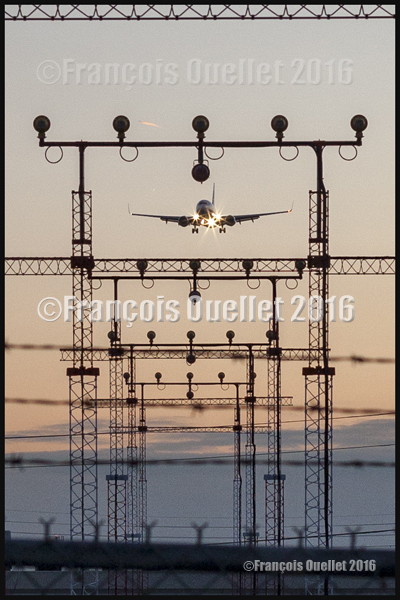
13. If you want to take the aircraft in relation to the ILS poles and you are looking for a symmetrical photo, just move few inches to the right or left while the aircraft is approaching or going away from you. You will also want to avoid that the horizontal poles of the ILS cut the plane and make it difficult to see.
Westjet Boeing 737-800 final 05 Toronto 2016
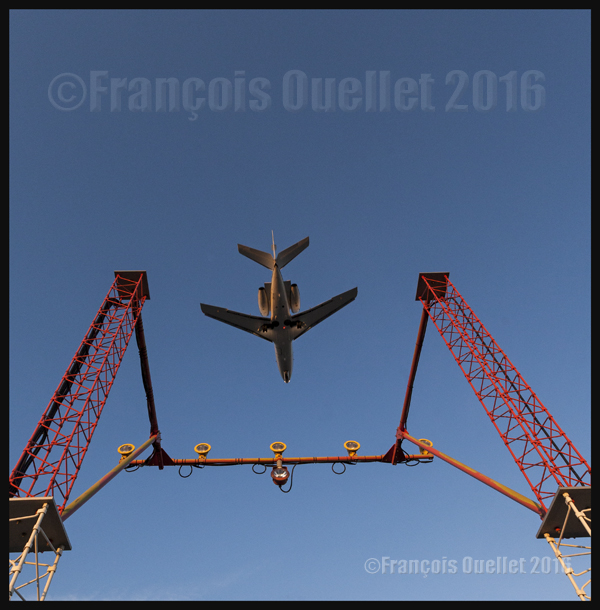
14. Have fun experimenting, like taking a shot just above your head while including other objects for added interest.
On the ILS 05 for Toronto 2016
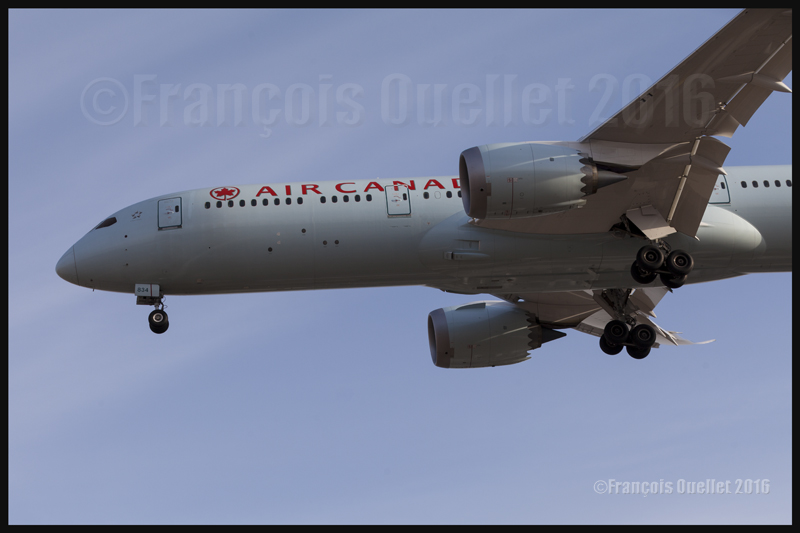
15. Instead of always showing the whole aircraft, try a close-up view.
Air Canada Boeing 787-9 C-FNOI in Toronto 2016
16. The close-up view might be such that even passengers of an aircraft on final will look at you while you immortalize them.
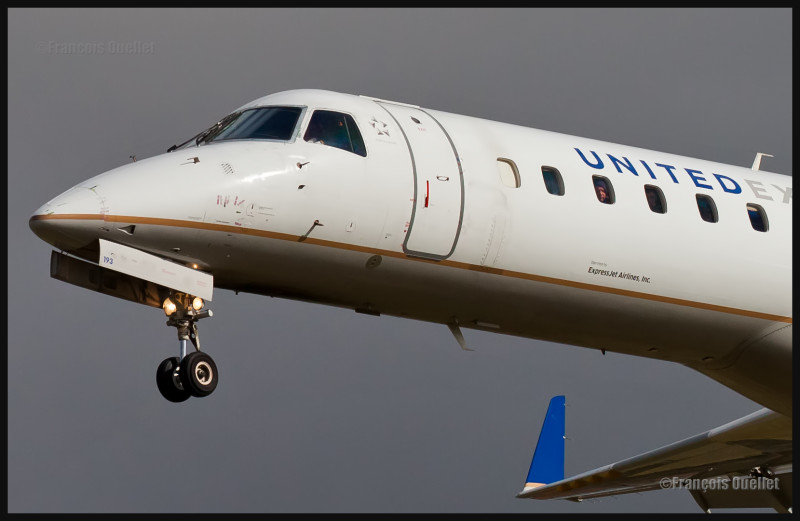
United Express on final at the Quebec Jean-Lesage international airport.
17. Chances are that you will meet other enthusiast plane spotters in the same area as yours since they also prepared themselves for a successful photo session.
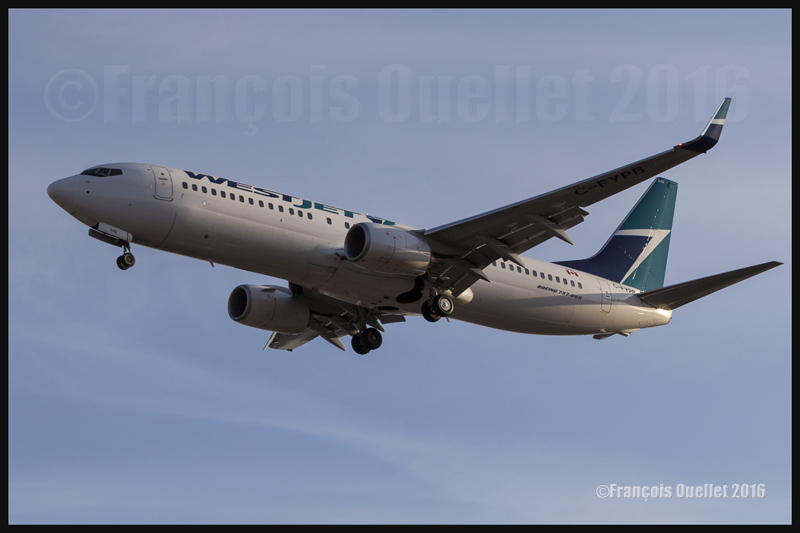
Westjet Boeing 737-800 C-FYPB in Toronto 2016
18. Since you are in Toronto, head to Toronto Harbour when you are back downtown. You will witness the air traffic surrounding the Toronto Billy Bishop airport (CYTZ), formerly known as Toronto Island, and possibly take some original shots.
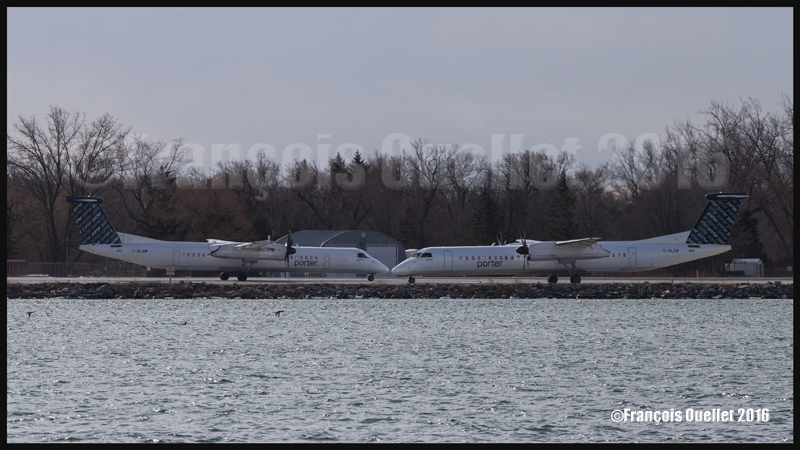
Porter Q-400 C-GLQM and C-GLQB at Toronto CYTZ 2016
19. This is the photo equipment used for my Toronto airport plane spotting session: Canon 5D MKII camera and the following Canon lenses: EF 50mm f/1.4 USM, EF 16-35mm f/2.8L II USM, EF 24-70mm f/2.8L USM, EF 70-200mm f/2.8L IS II USM. No polarizer was used that day since I wanted to increase my margin of manoeuver with fast moving aircrafts under the February low intensity light.
Air Canada Rouge Boeing 767-300ER final 05 at Toronto 2016
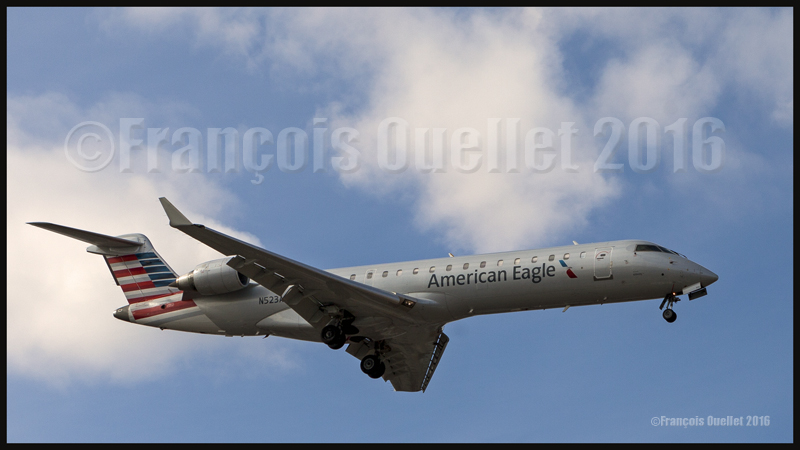
American Eagle CRJ-701ER N523AE Toronto 2016
Aviation photography requires much planning for successful photos. But all your efforts will rapidly bear fruits once you are on site and you will not see time pass! Have a great plane spotting session and give me some news of your experience if you can!
Air Canada Boeing 767-375 (ER) C-FCAB in Toronto 2016
You can have access to other aircraft photos taken at Toronto through this link on my site: photo galleries/aviation only
For other articles on aviation and photography, click on the following link: Aviation photography
« A hymn to beauty, this is what photography is for me »
Cover of Matthieu Ricard’s book “An Ode to Beauty”
Matthieu Ricard is a Buddhist monk who spent over forty-five years in the Himalayas. Throughout the years, he has produced many photography books. He is a man of immense talent and what he produces is of a very high quality. His new book “An ode to beauty” is no exception.
For thirty years, he photographed with two Nikon FM2 cameras and then switched to a Canon EOS-1Ds and a Canon EOS-5D. The Canon lenses used for his pictures range from a 12-24mm zoom to 100-400 mm. Landscape photography requires that he adds graduated neutral density filters to his lenses in order to reduce the contrasts between sky and earth.
When Matthieu Ricard comes back from a trip, he says: “I work on the images so that I can recapture the feeling, the emotion, the colors and the light that I saw with my own eyes”.
Like many experienced photographers, the author studies the work of other photographers in order to always learn something new. About Matthieu Ricard’s images, Henri Cartier-Bresson wrote: “Matthieu’s camera and his spiritual life are one, and from this spring these images, fleeting and eternal”.
“An ode to beauty” is made of human situations, facial expressions and the changing lights of landscapes. The composition is well thought through.
Matthieu Ricard is clearly an expert: technically demanding photos are very well executed. There are, on his images, numerous magical moments, where the photographer had only a very short time to react. It is the case, for example, of a photo where the sun rays hit an ideal part of a mountain chain at the same time as a rainbow colors the dark clouds in the background.
It is a unique book, made of exceptional images reproduced with great care. Most images demand a lengthy contemplation. There is no “Photoshop” effect and saturated colors here: everything is perfectly balanced.
Thanks to this book, the reader can look at the planet Earth in a very different way.
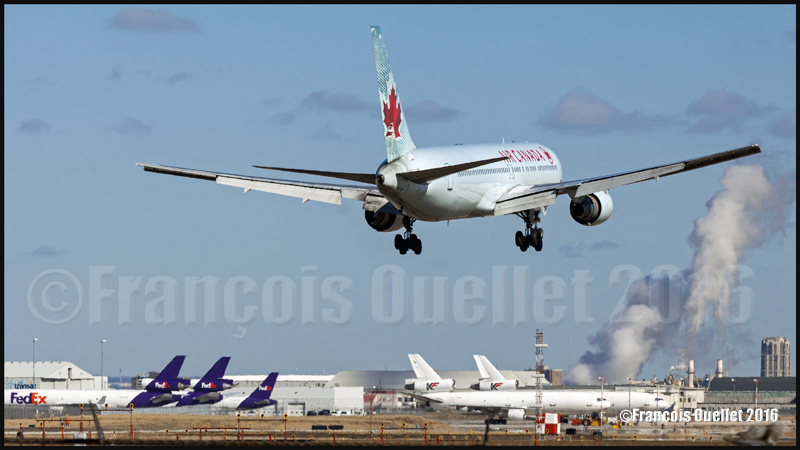
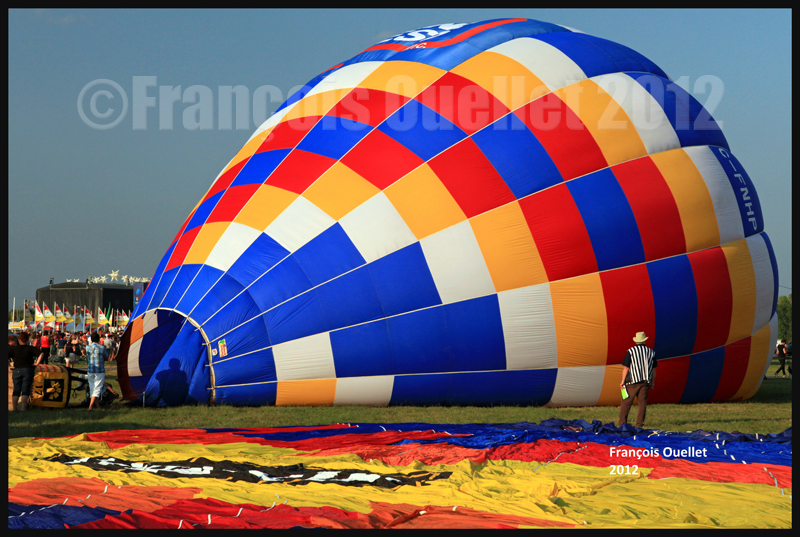
The hot air balloon C-FNHP is being inflated at the St-Jean-sur-Richelieu festival in 2012
The Nav Canada flight service specialists (FSS) working at the flight information center (FIC) at the Quebec Jean-Lesage international airport (CYQB) regularly receive telephone calls from hot air balloon pilots preparing their next flight. Actual and forecasted wind conditions are important, be it on the ground or in the air. But the FSS must also take into account the slightest possibility of a rain shower that would wet the balloon’s envelope, the variation in the convection according to the time of the day which would then affect the winds, the local effects, etc.
Although it is interesting to brief a hot air balloon pilot on the telephone, it is far better to witness their activity when getting ready for a flight. And the effect is even more striking when you position yourself in the middle of a field where more than a hundred hot air balloons lift altogether.
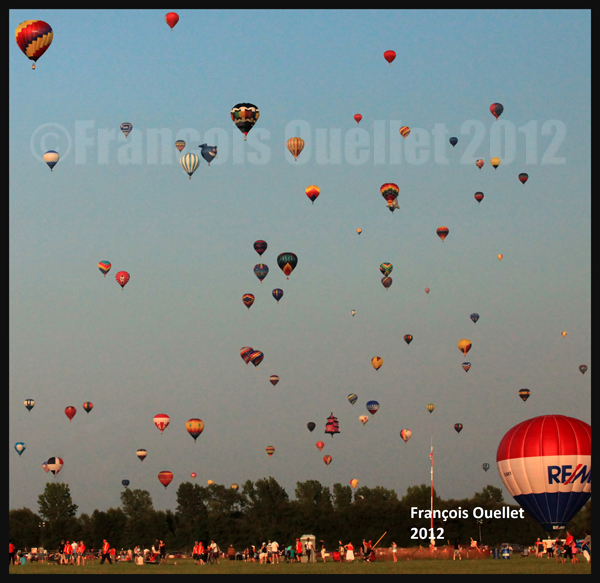
A first group of hot air balloons are autorized to lift at the St-Jean-sur-Richelieu festival in 2012
Summer 2012. A beautiful day was expected in St-Jean-sur-Richelieu. Blue sky and calm winds were forecasted for the evening. There would certainly be photo opportunities (Canon 5D MKII).
The field where the balloons were being prepared was fenced, but there were here and there openings and it seemed possible to enter the area without attracting too much attention. I made an attempt and could rapidly live the frenzy associated with the preparation and launch of more than one hundred hot air balloons.
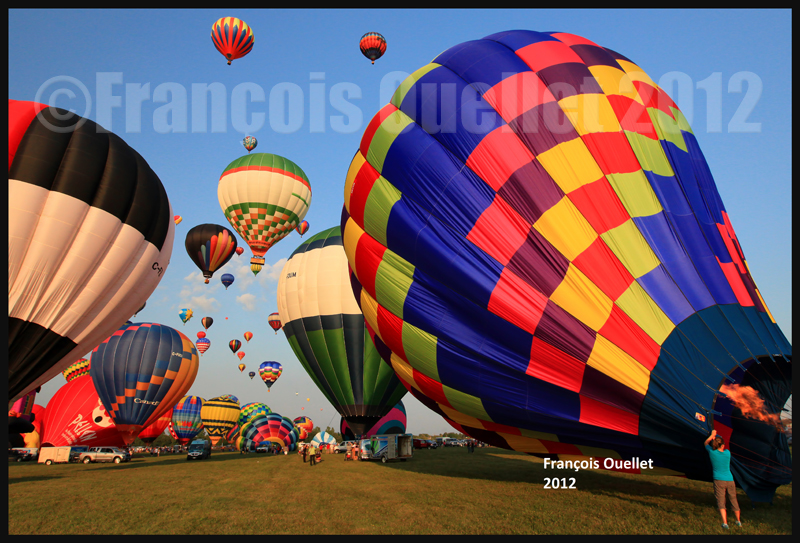
Rising hot air balloons in St-Jean-sur-Richelieu in 2012
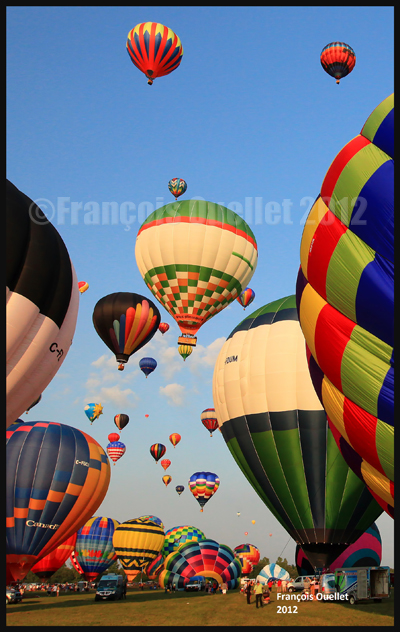
The balloons progressively took shape and it became possible to see their designs and superb colours. Each team was taking care of the last details that ensure a synchronized launch when the signal would be given. The organizer eventually gave the go ahead signal and the hot air balloons all lifted up within a very short time span. This was a magnificent show!
Hot air ballons at the St-Jean-sur-Richelieu Festival in 2012
Visitors at the 2012 St-Jean-sur-Richelieu hot air balloons festival
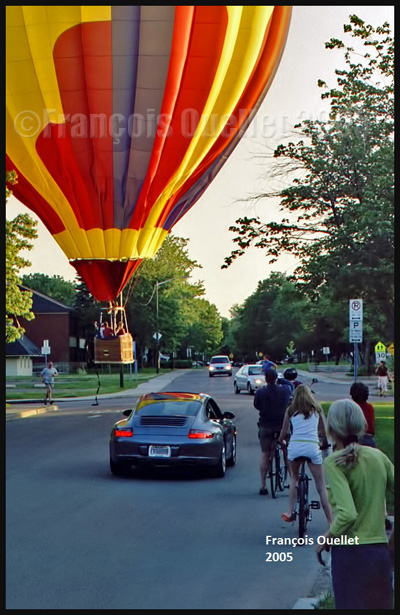
Few years earlier, during summer 2005, a hot air balloon had flown over our house in Quebec City at about one hundred feet. This was not a normal situation to witness that balloon slowly lose altitude and get closer to electrical wires. I had taken my bike and followed the balloon since it became obvious that the pilot was trying to land, possibly short of propane gas.
The pilot did not have an easy task, flying low over the city streets, close to the wires and other obstacles. The passengers must have been wondering what would be the issue of that flight. Arriving near a school, the pilot had seen a small parking lot and tried to land there, avoiding the church steeple on the other side of the street.
We were few citizens to hang to the basket and immobilize it while the balloon’s envelope was slowly deflating. I was able to take a shot of that unusual balloon’s approach…
Hot air balloon landing on a Quebec City street in 2005