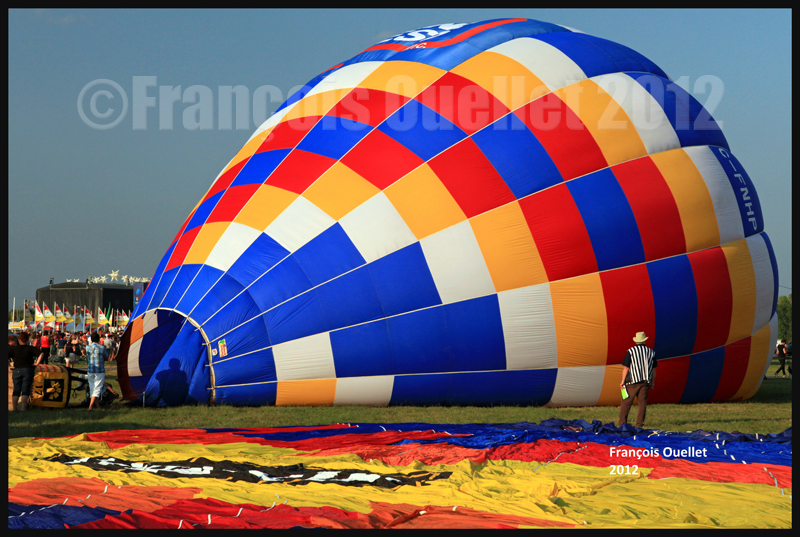
The hot air balloon C-FNHP is being inflated at the St-Jean-sur-Richelieu festival in 2012
The Nav Canada flight service specialists (FSS) working at the flight information center (FIC) at the Quebec Jean-Lesage international airport (CYQB) regularly receive telephone calls from hot air balloon pilots preparing their next flight. Actual and forecasted wind conditions are important, be it on the ground or in the air. But the FSS must also take into account the slightest possibility of a rain shower that would wet the balloon’s envelope, the variation in the convection according to the time of the day which would then affect the winds, the local effects, etc.
Although it is interesting to brief a hot air balloon pilot on the telephone, it is far better to witness their activity when getting ready for a flight. And the effect is even more striking when you position yourself in the middle of a field where more than a hundred hot air balloons lift altogether.
A first group of hot air balloons are autorized to lift at the St-Jean-sur-Richelieu festival in 2012
Summer 2012. A beautiful day was expected in St-Jean-sur-Richelieu. Blue sky and calm winds were forecasted for the evening. There would certainly be photo opportunities (Canon 5D MKII).
The field where the balloons were being prepared was fenced, but there were here and there openings and it seemed possible to enter the area without attracting too much attention. I made an attempt and could rapidly live the frenzy associated with the preparation and launch of more than one hundred hot air balloons.
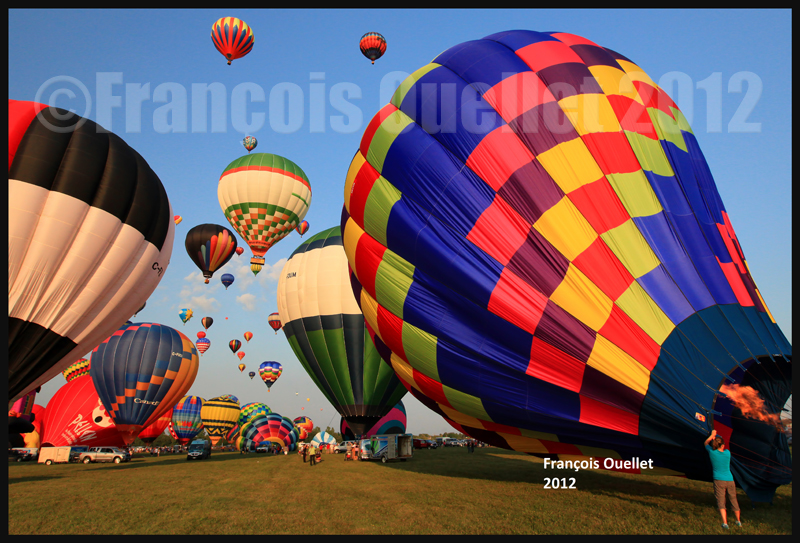
Rising hot air balloons in St-Jean-sur-Richelieu in 2012
The balloons progressively took shape and it became possible to see their designs and superb colours. Each team was taking care of the last details that ensure a synchronized launch when the signal would be given. The organizer eventually gave the go ahead signal and the hot air balloons all lifted up within a very short time span. This was a magnificent show!
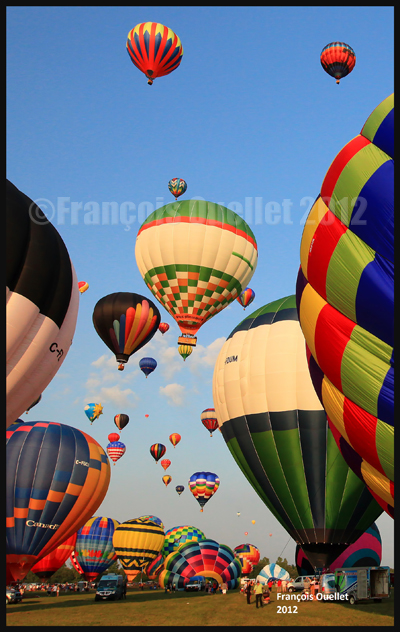
Hot air ballons at the St-Jean-sur-Richelieu Festival in 2012
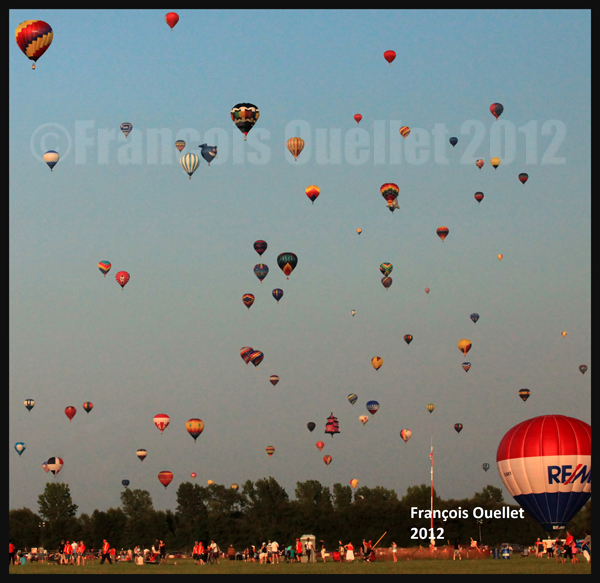
Visitors at the 2012 St-Jean-sur-Richelieu hot air balloons festival
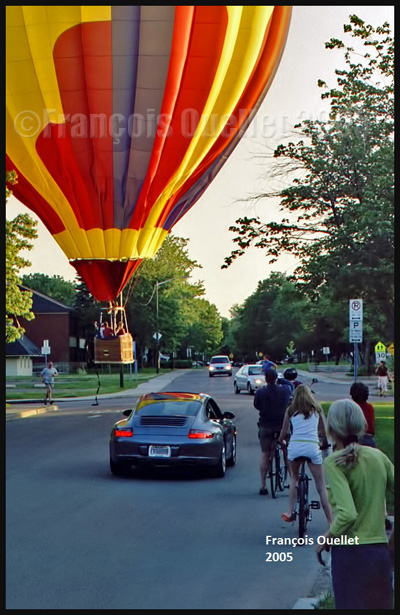
Few years earlier, during summer 2005, a hot air balloon had flown over our house in Quebec City at about one hundred feet. This was not a normal situation to witness that balloon slowly lose altitude and get closer to electrical wires. I had taken my bike and followed the balloon since it became obvious that the pilot was trying to land, possibly short of propane gas.
The pilot did not have an easy task, flying low over the city streets, close to the wires and other obstacles. The passengers must have been wondering what would be the issue of that flight. Arriving near a school, the pilot had seen a small parking lot and tried to land there, avoiding the church steeple on the other side of the street.
We were few citizens to hang to the basket and immobilize it while the balloon’s envelope was slowly deflating. I was able to take a shot of that unusual balloon’s approach…
Hot air balloon landing on a Quebec City street in 2005
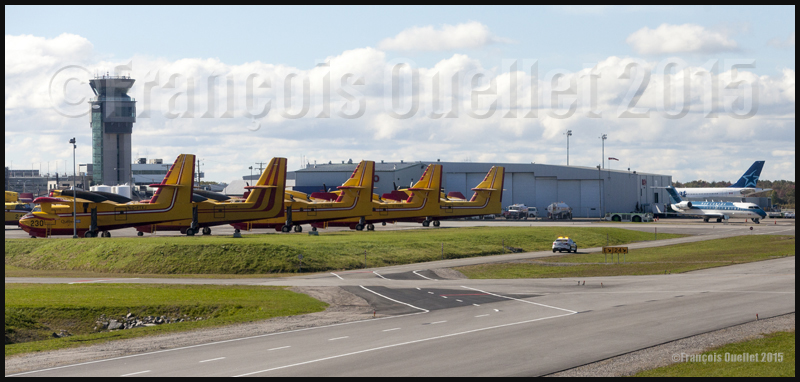
Nav Canada control tower with, in the foreground, several CL-215 and Cl-415, a Nav Canada Challenger, and an Air Transat Airbus at the Quebec Jean-Lesage international airport (CYQB).
On a stormy summer day, Air Canada called the Nav Canada flight information center (FIC) at the Quebec Jean-Lesage international airport (CYQB) on the Montreal frequency. The pilot was flying an Airbus and was about to take-off from the Montreal Pierre-Elliott-Trudeau international airport to Halifax, but there was violent weather that had to be avoided.
Normally, big airlines have their own briefing and flight planning services. However, rapidly changing weather sometimes requires last minute adjustments. In the case of the Air Canada flight, severe thunderstorms forbid a direct path from Montreal to Halifax. The pilot was looking for the best option: go around the thunderstorms by flying north over Mont-Joli then eastward to Halifax or fly southward to United States then head east to Halifax.
Both solutions were possible but the objective was to pick the route that would diminish the pilot’s chances to have to divert to an alternate airport.
Radar imagery became the essential tool to propose a solution. Knowing the time lapse between two images, it was possible to evaluate the weather system’s speed. By calculating what was the distance left for the system to arrive in Halifax, and knowing the system’s speed, the flight service specialist (FSS) was able to estimate as precisely as possible the time when the thunderstorms would move over the destination airport.
The pilot having calculated the estimated time of arrival to Halifax for both the south and north routes, and now knowing at what time the weather system would be over Halifax, he understood that the best option was the southern route through United States. If there was no last minute modification in the system’s speed, he would be able to land in Halifax between twenty and thirty minutes before the first thunderstorm cells arrive over the airport.
It is fairly uncommon to receive an official feedback from the pilot of a big company like Air Canada. But the next day, surprising the flight service specialist (FSS), the pilot called back, presenting himself as the one who had made a flight from Montreal to Halifax the precedent day. He wanted to thank the FSS who had helped him in his decision making since, as he said it, the route via the United States had been a success and he was able to land his Airbus thirty minutes before the arrival of the thunderstorms. That kind of call certainly helps any employee to start a working day on the good foot…!
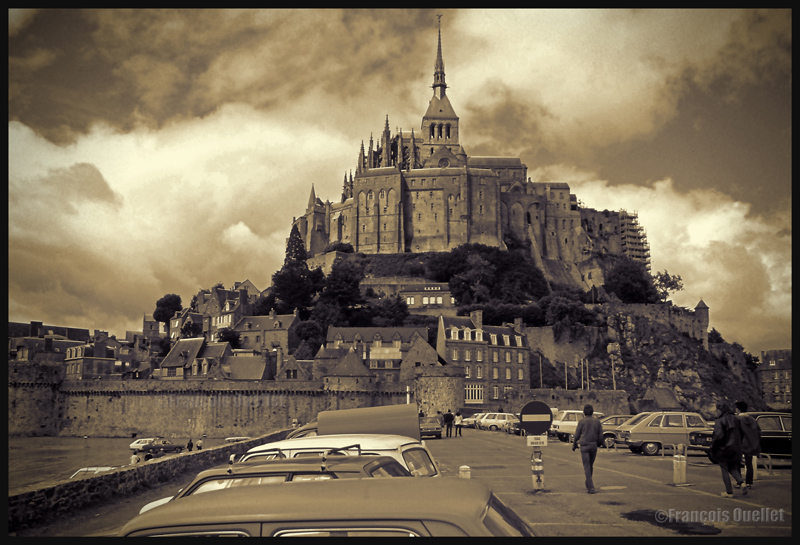
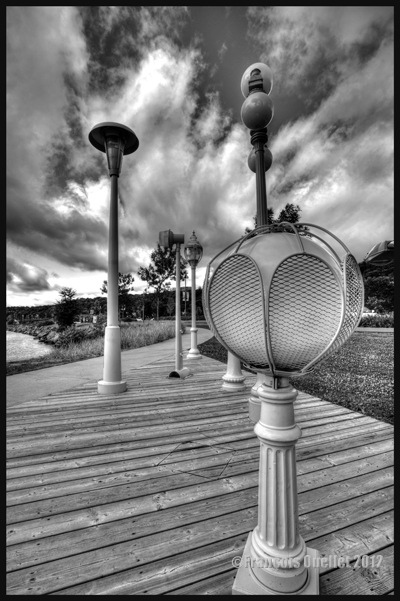
Cumuliform clouds add energy to any photo. Even photos in black and white benefit from them largely, whether it is for a normal or an HDR photo.
Cumuliform clouds add dynamism to this Abbaye du Mont St-Michel scenery. France (1978)
Black and white HDR picture of lamp posts installed along the St-Lawrence, Quebec City 2012.
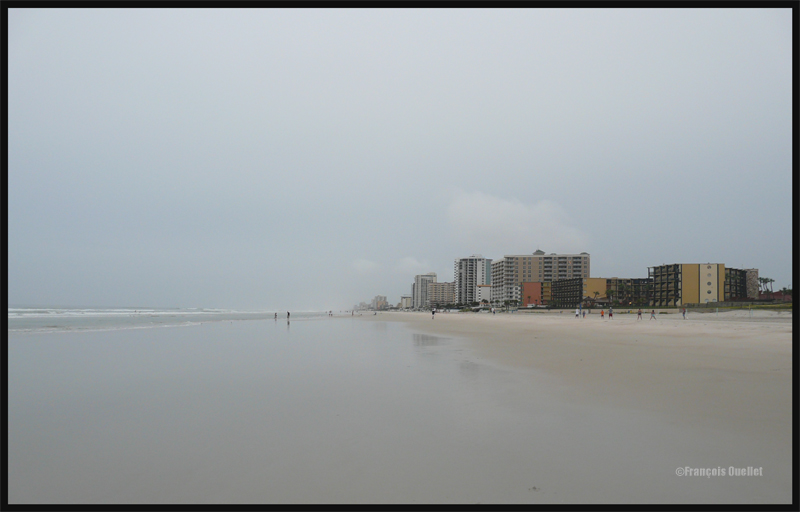
The stratiform clouds add to the tranquillity and the stability of a photo.
Daytona Beach under stratus clouds in 2011. The end of the afternoon allows the fresh air from the sea to move over the heated land, which helps create few cumulus fractus, visible near the buildings.
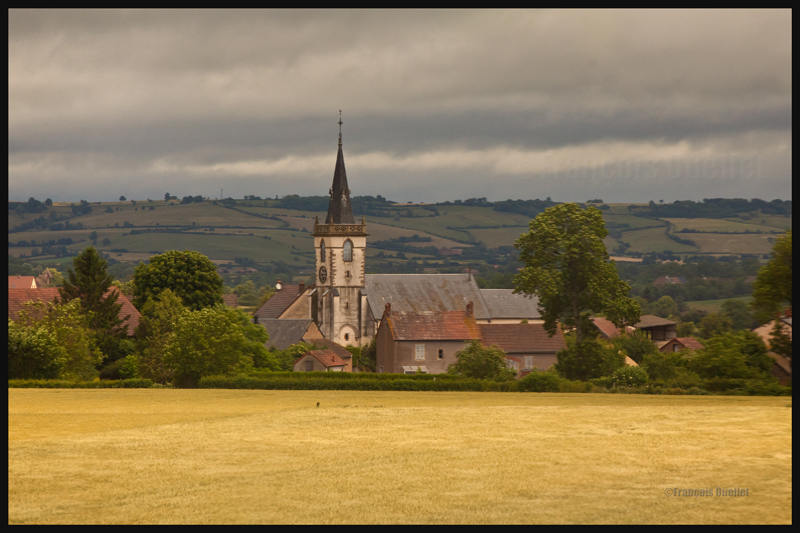
Clouds including a stratiform and cumuliform components (stratocumulus) produce an effect that is more energizing than the simple stratus, while avoiding the explosion of energy of the cumuliform clouds.
A stratocumulus adds to this otherwise peaceful scenery captured on board the Lyria train between Paris and Geneva in 2013.
The cold front
The approach of a cold front enhances the possibility of interesting photos. If it is a fast moving cold front of moist and unstable air, the photos will probably be more spectacular, as some thunderstorms will be associated with the system. A dew point of more than 15 C indicates the presence of a lot of water vapor which can be transformed into precipitation, thus releasing a lot of energy. When these conditions are combined with a really strong contrast between the new air mass which approaches and the one which goes away, the produced meteorological phenomena will certainly be intense.
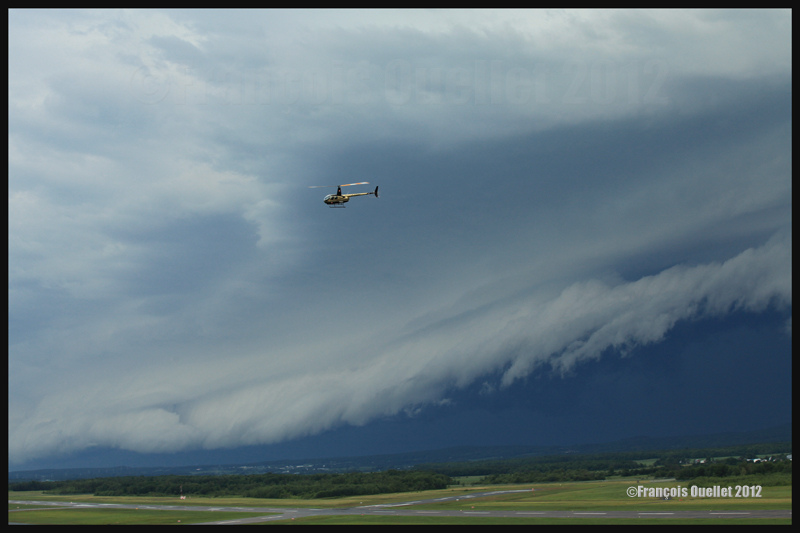
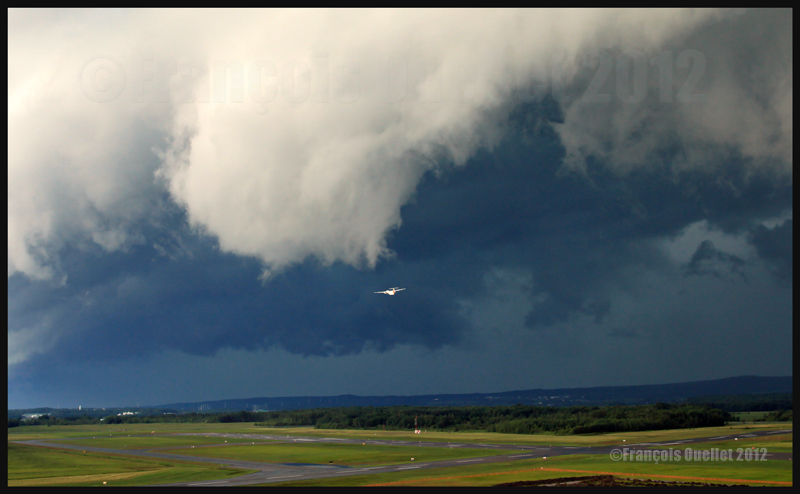
In the photos below, the meteorological system approaching the Quebec Jean-Lesage international airport also had to cross a small mountain range.
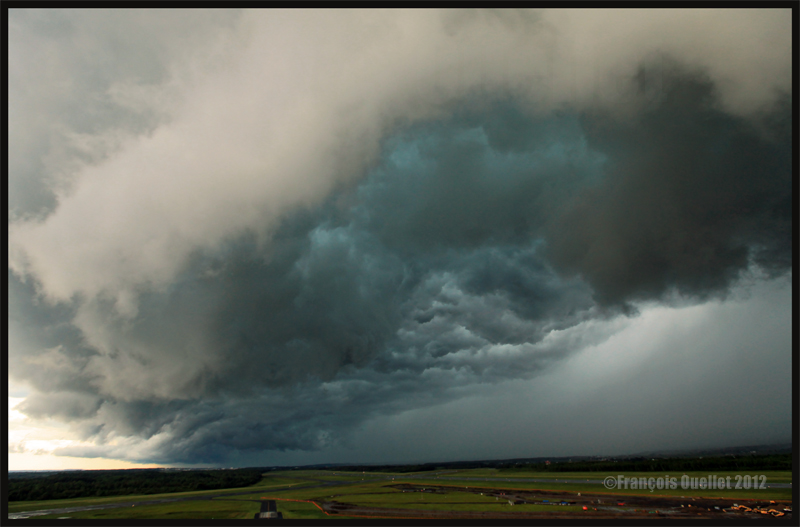
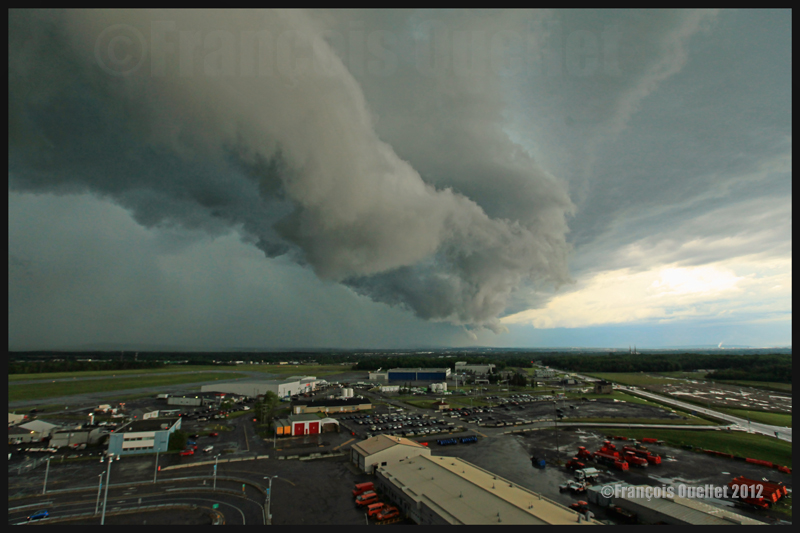
A roll arcus cloud in development ahead of a thunderstorm approaching the Quebec Jean-Lesage airport in 2012.
A roll arcus cloud in development ahead of a thunderstorm approaching the Quebec Jean-Lesage airport in 2012.
View under a developing arcus cloud at the Quebec Jean-Lesage international airport (2012)
An arcus cloud ahead of a thunderstorm approaching the Quebec Jean-Lesage airport in 2012
A roll arcus cloud ahead of a thunderstorm heading for Quebec City in 2012
The morning fog
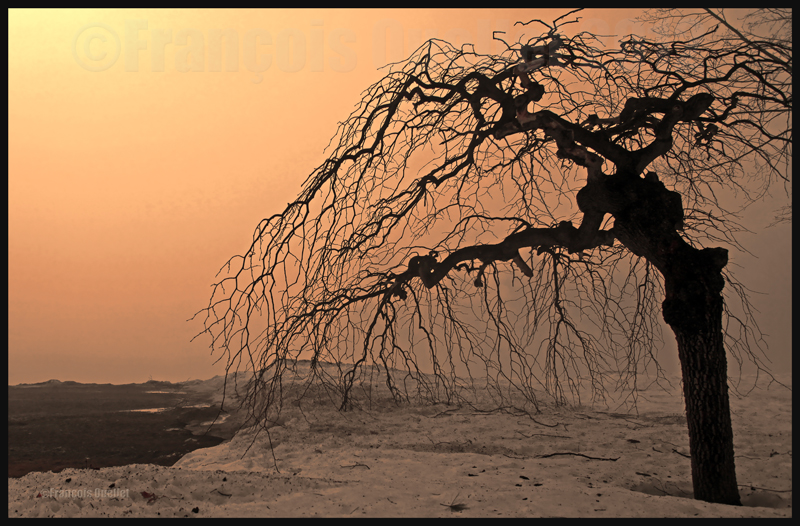
The morning fog offers many opportunities for interesting photos. You can choose an isolated tree and capture the combined effects of the morning sun and fog. Or you may choose a cluster of trees, for a completely different effect. Both photos below were taken in Domaine Cataraqui, Quebec City.
Trees in fog at Domaine Cataraqui, Quebec City 2009
Sun and fog provide for a special atmosphere at the Domaine Cataraqui, Quebec City 2009
A morning fog resulting from a cold cloudless night will persist for hours if there is no wind. The cold morning air, motionless over a slightly hotter stretch of water, creates a fog that will finally disappear just before noon, when the atmosphere has been heated enough. If there had been an overcast sky during the night, chances are that the air over the water would have remained at a higher temperature, preventing the formation of fog.
The opportunities for more interesting photos arise when you witness the first holes in the fog layer.
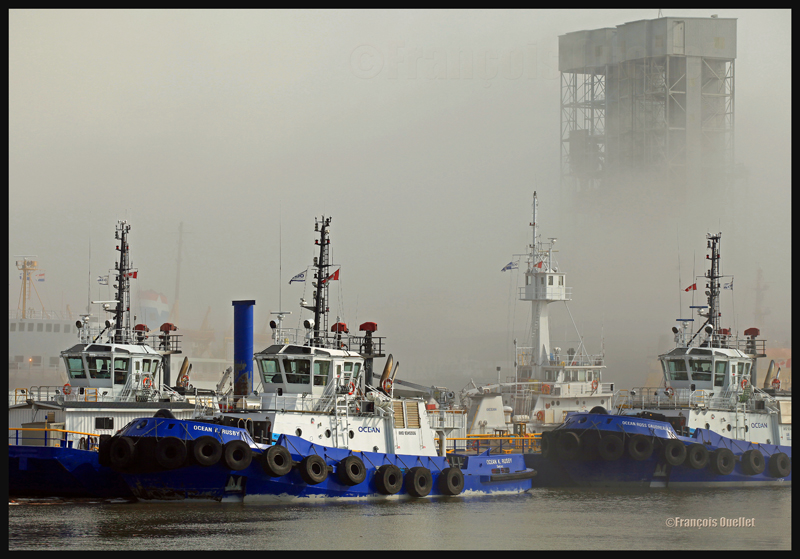
The Ocean tugboats during a dense fog in the Bassin Louise in Quebec (2012).
We can take into account the season to estimate the speed of the diurnal reheating of the lower atmosphere. A morning fog will need more time to dissipate from late autumn to early spring: that leaves more time for the photographer to prepare. The forecasts can announce the disappearance of fog while it will not be the case if, over your sector, there is an invading layer of stratocumulus preventing the morning sun from reaching the ground.
To determine if the fog is going to dissipate as expected or will remain and possibly intensify, watch the difference between the temperature and the dew point on the hourly meteorological observations issued by weather stations near your place of residence. If the temperature and dew point spread increases, the fog is going to lift. If the difference between those two decreases, the fog is going to persist and possibly intensify.
The mist
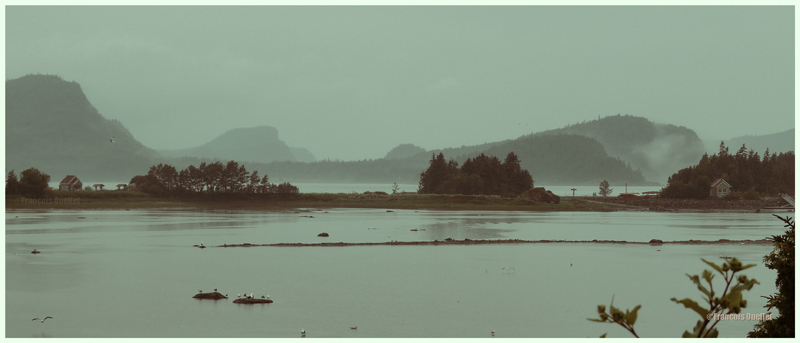
The mist can be qualified as such when the visibility is superior to ½ mile, but do not exceed 6 miles for an observer on the ground. If the visibility is of ½ mile or less, it is called fog. This photo of the Bic National Park, near Rimouski, shows the interesting effect that the mist adds to a beautiful landscape.
Mist in the Bic National Park, Province of Quebec (2009)
Hot and unstable air in winter
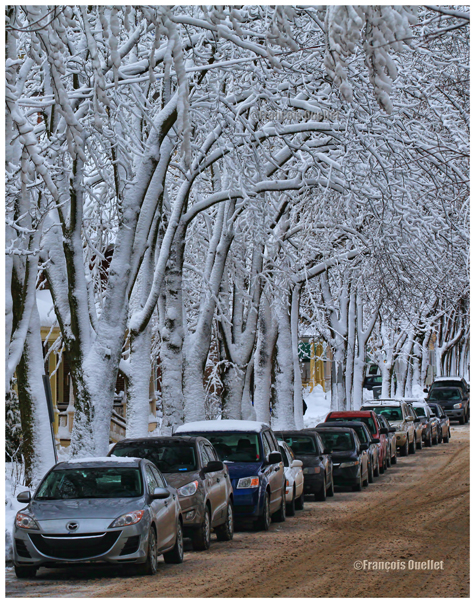
When there is a warm and unstable air advection (about 0 degrees) while winter has already settled, there are good opportunities for photos. A moderately developed cumulus produces significant snow showers and this snow sticks on all the surrounding objects. All that snow would have begun to melt on contact of objects if the latter had had a temperature superior to zero degree. But, the winter being already settled, the snow persists. It gives enough time to capture some souvenirs.
A Quebec City street after a snow shower
The local effects
A photographer might benefit from learning about the meteorological local effects influencing the regions he intends to visit. The local effects are often simple to understand and they repeat themselves regularly, according to wind and season changes. The knowledge of these effects allows the photographer to be ready and position himself even before the phenomenon occurs. It limits the comments like: “If I had known that it would occur, I would have settled down here one hour earlier!“
The local terrain as well as large size bodies of water produce predictable meteorological phenomenon that can be used by a well prepared photographer. It can consist of persistent fog, repetitive snowstorms over a small sector, strong winds, cumuliform clouds alongside the mountain summits, etc. By being positioned at the right place, at the right time, the desired photo can be realized.
A change in the wind direction
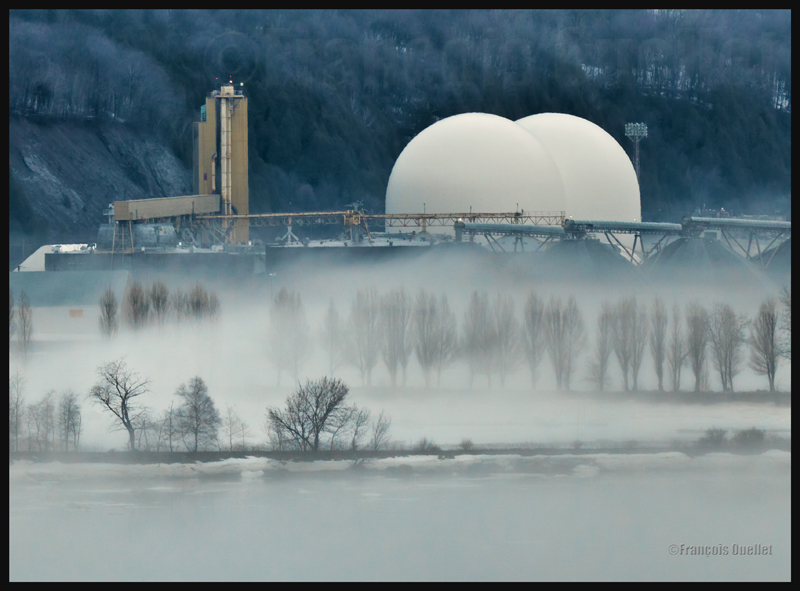
A change in the wind direction suddenly increases the opportunities of interesting photos. It might announce the approach of a cold front, a warm front, a sea or land breeze, etc. In the photo below, a bit of fresher air suddenly began crossing the St-Lawrence seaway at the end of the day, thanks to the approach of a weak cold front. The water was still relatively warm and the moisture which was present over the surface became visible due to the cool air supply. The conditions were now ideal for a short-term thin fog, as long as the wind speed would not increase. Just in time for a photo.
The new wood pellets silos in Anse au Foulon in Quebec City en 2014
Familiarization with weather radars
It can be useful to get acquainted with weather radars which, for the needs of photography, remain simple to interpret. Multiple echoes of small dimension with a steep gradient of various colors indicate precipitation resulting from cumuliform clouds. The showers associated with these clouds are often moderated or strong and will be the result of approaching towering cumulus or cumulonimbus (thunderstorms). A towering cumulus presents a dark base and a white summit to the photographer. At sunset, their vertical development can be used to emphasize the last rays of light.
The side of a towering cumulus (TCU) is benefiting from the remaining sunlight over Quebec
Large echo areas of similar colors of low intensity indicate a relatively stable air generally producing steady light rain or drizzle. This should be understood as a possibility of increased humidity limiting the visibility through mist or fog.
Hoar frost
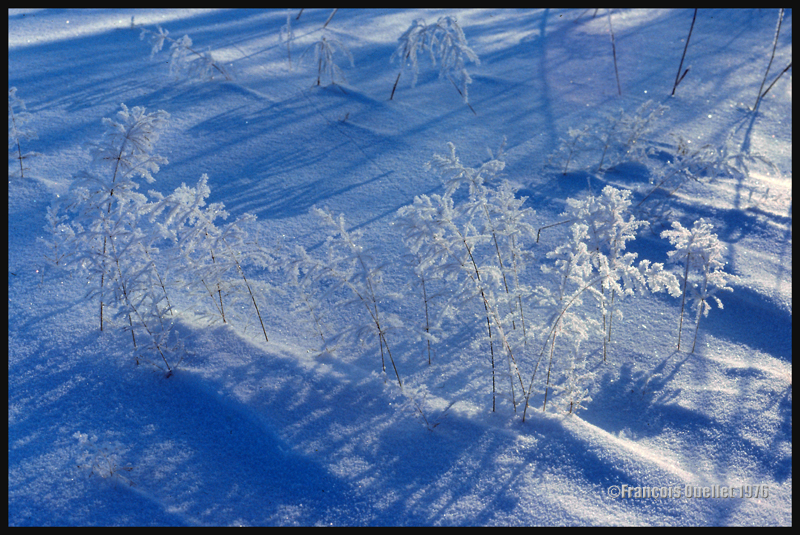
Hoar frost is a short-term phenomenon. It is thus necessary to capture the scene before the sun melts everything. The photo below shows some small twigs on which hoar frost has settled. It was taken at the beginning of the seventies. Although the quality of the photo is not exceptional, the meteorological phenomenon is well demonstrated.
A combination of snow and hoar frost observed on a Quebec field in 1976.
Forest fires
Wishing to make photos of western Canada during summer 2014, I came up against a season where hundreds of forest fires were raging. The smoke was covering some parts of Alberta and British Columbia. Some fires were important enough to require the closure of the sole highway connecting Lake Louise to Jasper. I thus decided to include the effects of those fires in the holiday souvenirs.
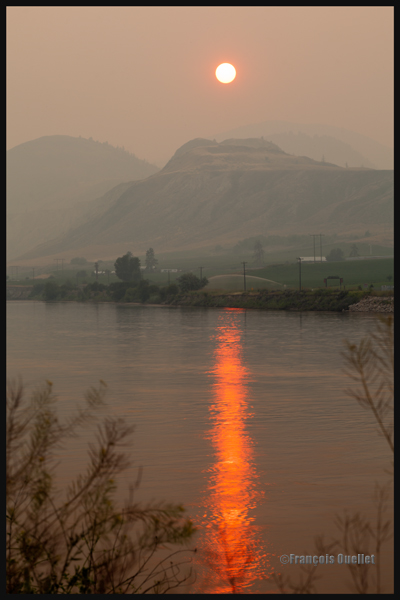
A visibility reduced in forest fire smoke allows a photographer to obtain, without special editing, sunsets with interesting colors.
Sunset and smoke from forest fires in Kamloops in 2014
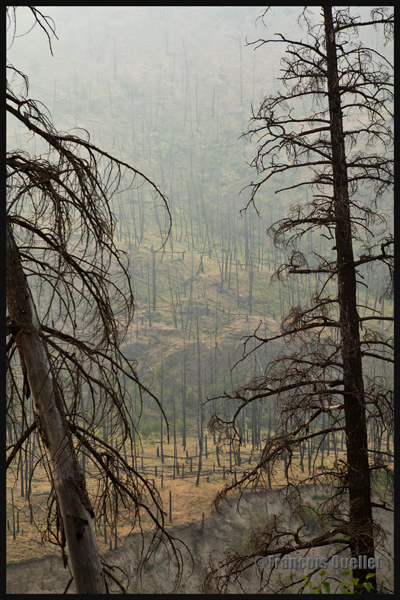
The smoke also produces an effect similar as fog, but a fog which would be impossible to obtain at the end of a summer afternoon while the sun shines and there is a 38 degrees Celsius temperature.
An area near Kamloops, Canada, that was touched by forest fires in 2014
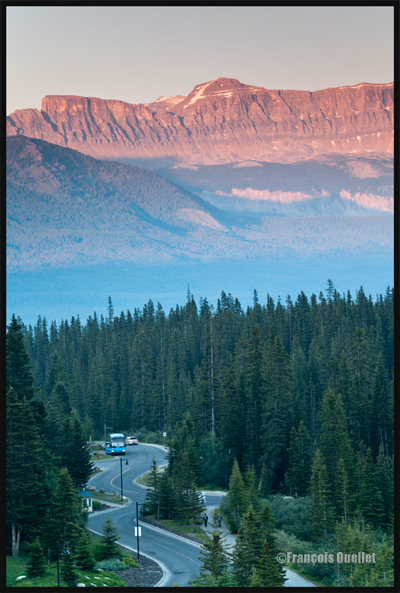
At dusk, the residual smoke is visible near tree tops while the setting sun strikes the mountain side. The effect is of two horizontal lines of complementary colors, blue and orange.
Forest fire smoke and sunset combined in Lake Louise, Alberta en 2014
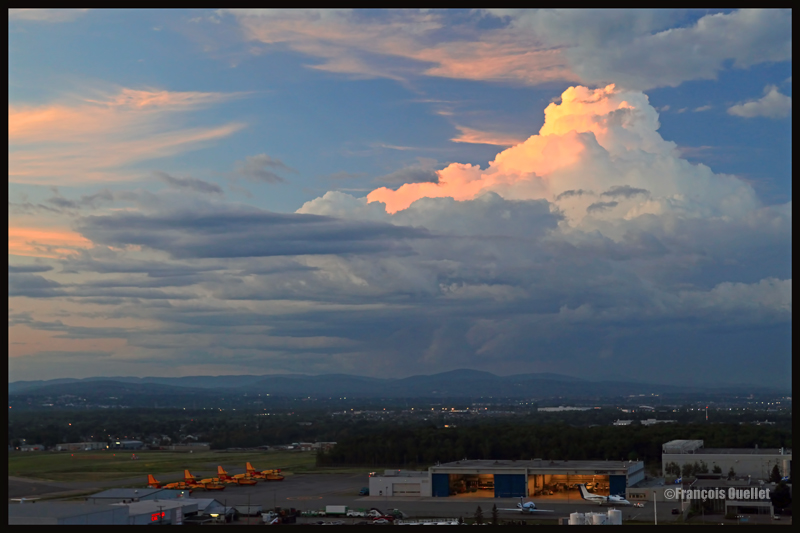
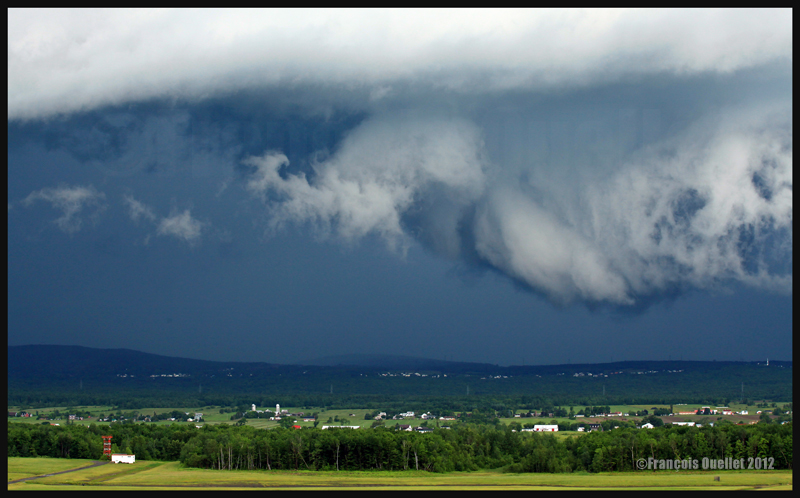
A roll arcus cloud in development ahead of a thunderstorm approaching Quebec in 2012
In the “Improve your pictures” section of this web site, there is a page titled “Photography and weather” . In few days, this page will hold about twenty pictures and information that can help photographers profit from the best that nature has to offer. The picture above represents a roll arcus cloud in development that is preceding a violent thunderstorm that was approaching Quebec City in 2012. The most interesting clouds were formed as the system was moving over the Val-Bélair hills near the airport.