Categories
Photography Books

Photography and the law: “La face cachée de la photo”.

Photography books: "La face cachée de la photo" by Francis Vachon.
Photography books: “La face cachée de la photo” by Francis Vachon.

The book “La face cachée de la photo – prendre et diffuser des images en toute légalité” is no longer available in bookshops, but it’s well worth getting a used copy, if only for the flowcharts that let you know whether the photo you want to take is legal, and whether you have the freedom to distribute it.

After all, it’s quite possible to have the right to photograph without having the right to publish. You also need to know the nuances between editorial and commercial distribution, as well as how to obtain written authorization where applicable.

There are also nuances between the privacy laws of the following two groups: the first made up of Quebec and France, and the second made up of the rest of Canada, the United States and the majority of Western countries.

In addition, a distinction must be made between the person who is the main subject of the photo and those who are merely incidental to it. The laws also change depending on whether the photo is taken from a public or private place. Finally, there are always exceptions to each category. As you can see, nothing is simple in this area…

The author uses case law to flesh out his points. He also discusses the limits of police and security officer powers, and what is legally permissible on Facebook and other social networks when it comes to disseminating an image.

He also elaborates on the difference between patrimonial, moral, integrity and authorship rights. He even expands on the changes to copyright before and after November 7, 2012. A section of the book tells you how to detect if your images are being used illegally, and how to request corrections and compensation.

Finally, Francis Vachon uses the last sections of his book to show us how to obtain photos legitimately, and sometimes free of charge. He also shows us how to protect ourselves from a lawsuit.

In short, a book full of vital information for the amateur and professional photographer, as well as for all social media users. Many of these users are full of good intentions, but can find themselves in trouble pretty quickly for inadvertent negligence.

Click on the link for more books on photography and the law on my blog.

Title: La face cachée de la photo – Prendre et diffuser des images en toute légalité.

Author: Francis Vachon

Éditions : Septembre, © 2018

ISBN : 978-2-89471-506-2
Categories
Photos of Canada Photos of Quebec

A Spring day in 2024 on Île d’Orléans.

Profiting from the strong winds at île d'Orléans 2024
Profiting from the strong winds at île d’Orléans 2024

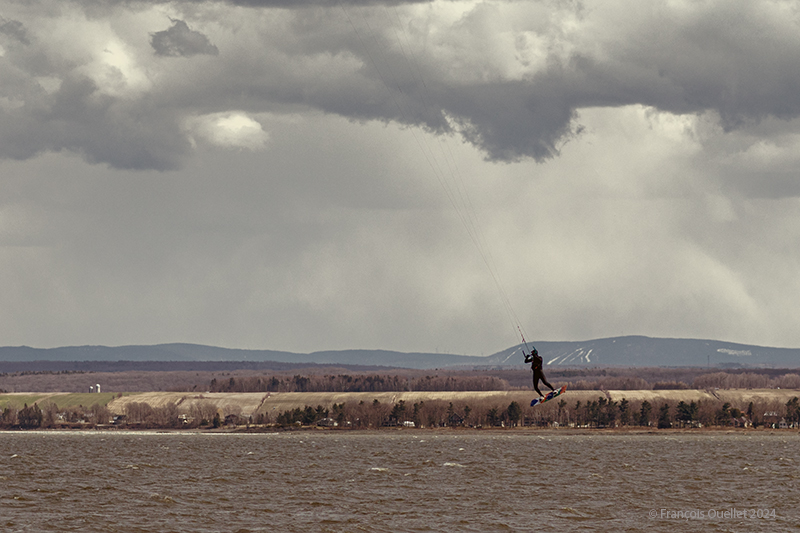
A single-day visit to Île d’Orléans for a photography session was enough to capture a wide variety of cloudy conditions in April 2024. In spring, when unstable, humid air crosses the mountain range north of the St. Lawrence River, you can expect anything on the island. Above, a kitesurfing enthusiast practises his art between localized showers. All he cares about is strong winds.

Coloured houses of Île d'Orléans. Spring 2024.
Coloured houses of Île d’Orléans. Spring 2024.

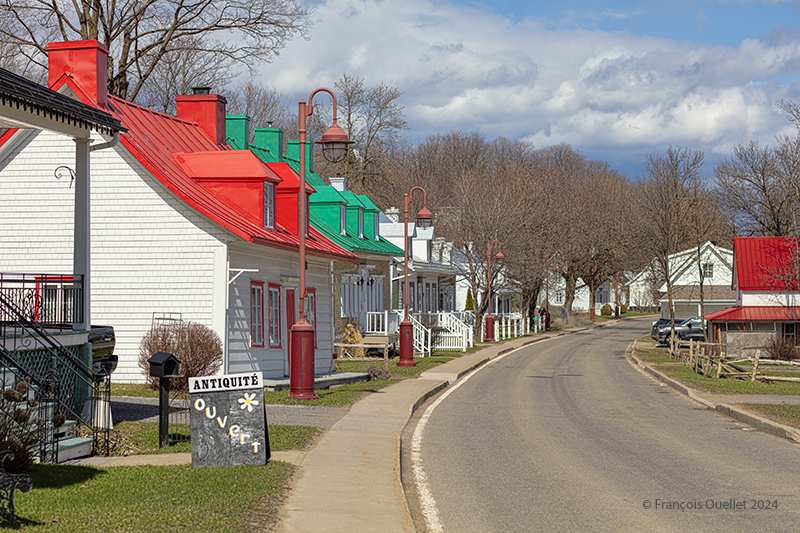
A few kilometers from route du Mitan, colourful houses and a bit of blue-sky contrast with the showers elsewhere on the island. You can see that the cloud layer in the distance is not very thick.

Looking north from île d'Orléans, Spring 2024.
Looking north from île d’Orléans, Spring 2024.

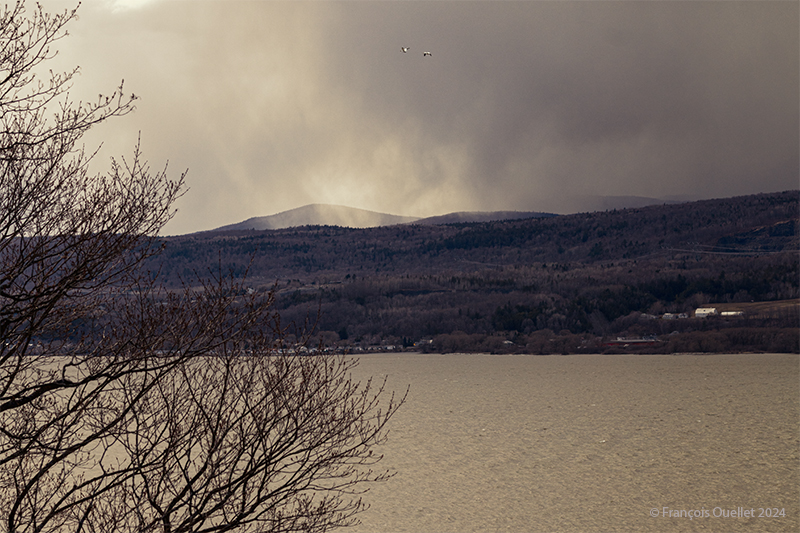
Above, a towering cumulus (TCU) approaches the St. Lawrence River in the late afternoon from the north. It is likely to cross the river towards the island, if it has not lost some of its strength, in the meantime, due to subsidence, the phenomenon that forces air to compress and warm as it is forced down a mountain range.

Sailboats on île d'Orléans. Spring 2024.
Sailboats on île d’Orléans. Spring 2024.

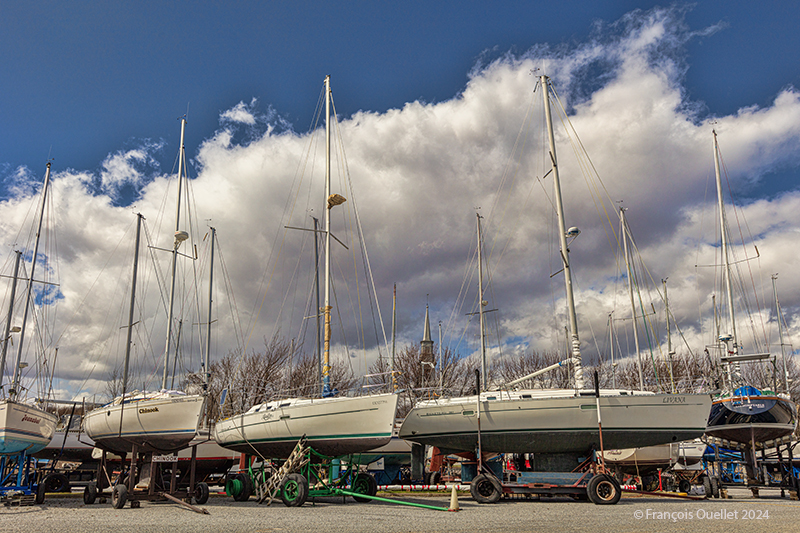
The shape of the clouds in the photo above gives a good indication of the strength of today’s winds. You can hear it whistling through the ropes and between the masts of the sailboats at the marina in the municipality of St-Jean, île d’Orléans. At the time of my visit, some owners were preparing their boats for the warmer periods of May.

A house on île d'Orléans, Spring 2024.
A house on île d’Orléans, Spring 2024.

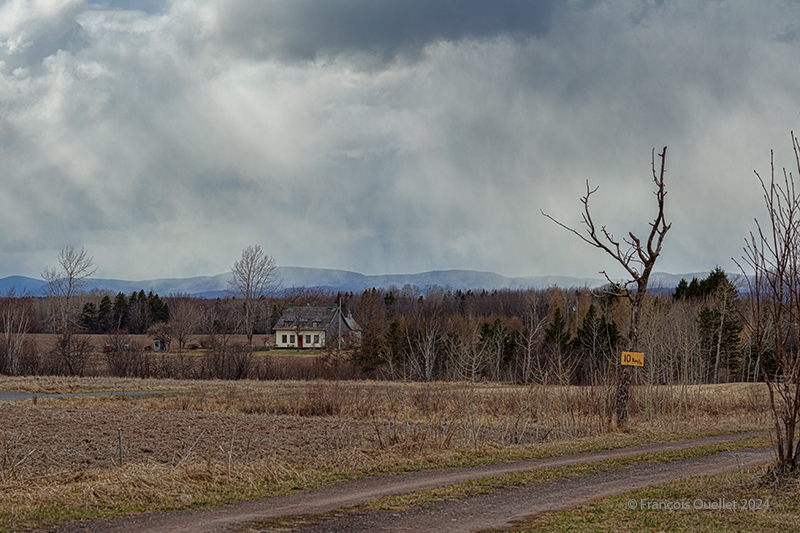
I really like the scene above, but I admit that some might find it dark, if not sinister. It was this slightly disturbing aspect that caught my attention and that I tried to capture.

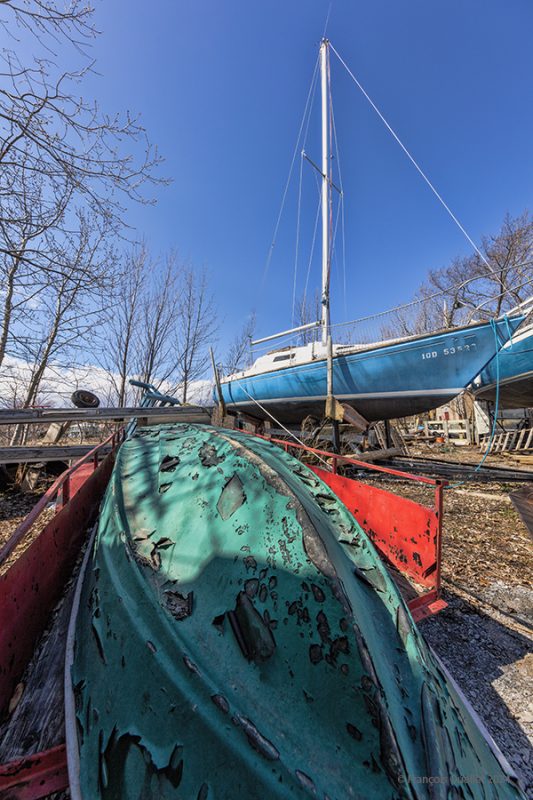
A boat requires repainting on île d'Orléans, Spring 2024.
A boat requires repainting on île d’Orléans, Spring 2024.

In this last photo, the sky is practically clear. It is then easier to obtain better contrasts. A pseudo-HDR treatment brings out the paintwork on a boat that has seen better years.

Click on the link for more photos of Quebec City and Île d’Orléans in Spring on my blog.

Categories
Photos of Canada Photos of Quebec

The Parc national de la Jacques-Cartier during winter.

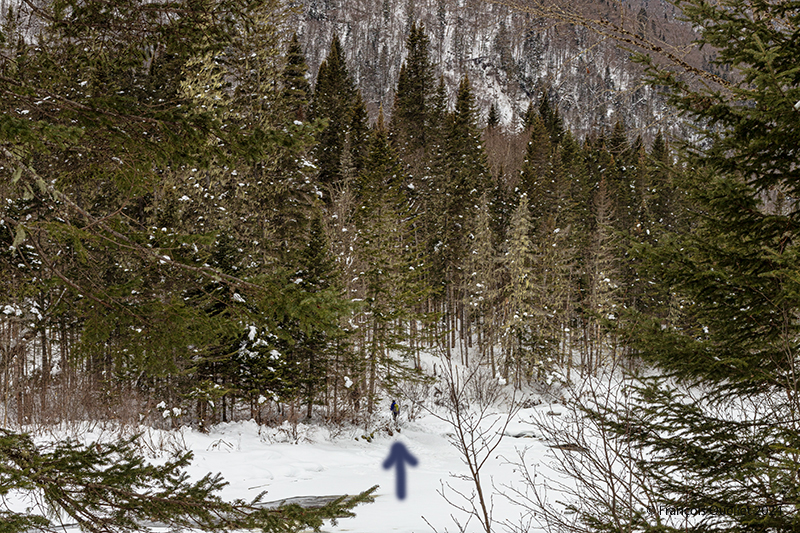
Hiker entering the Jacques-Cartier National Park's forest, Winter 2024.
Hiker entering the Jacques-Cartier National Park’s forest, Winter 2024.

The province of Québec offers in 2024 a free admission to Parc national de la Jacques-Cartier a few days a week. This means more visitors than ever before head for the park. Hikers seeking absolute peace and quiet should opt for the paid days.

Even so, if you look carefully, it’s always possible to spot a lone walker, as in the photo above. Most people take the marked trails for ease, but others, like the individual above, venture out on snowshoes near the Jacques-Cartier River, which is completely covered in snow at this time of year.

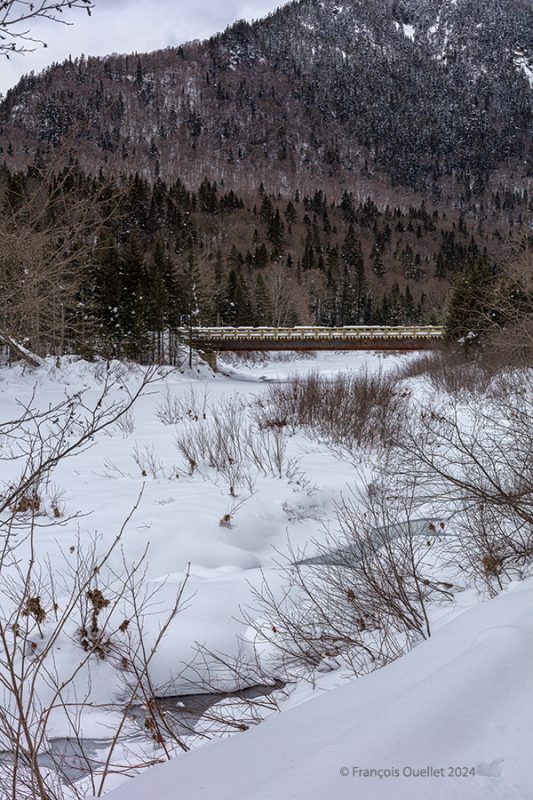
Jacques-Cartier National Park's landscape, Winter 2024.
Jacques-Cartier National Park’s landscape, Winter 2024.

Approximately three kilometres from the Discovery and Services Chalet is a bridge. From here, the hiker can capture some very beautiful scenes. In winter, an interesting effect can be achieved by positioning yourself close to the banks.

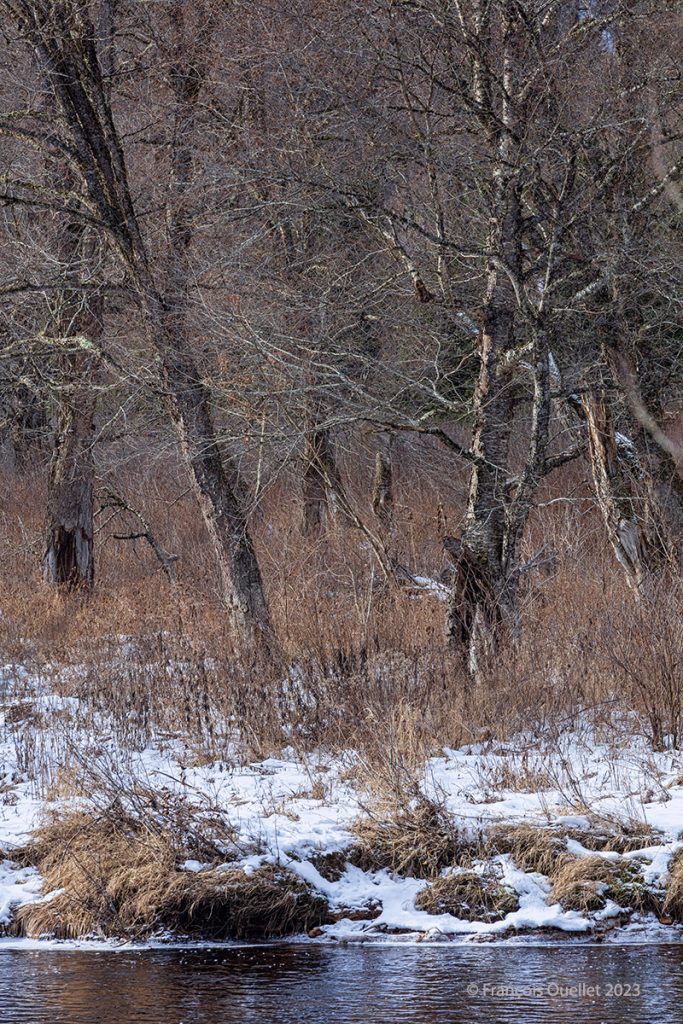
November in the Jacques-Cartier National Park in Quebec, 2023

This scenery relaxes me so much, yet there are no spectacular elements. Rather, all the components are in perfect harmony: reflections in the water, some bluish snow here and there, brushes and a few leaning trees lit from the side by a soft late afternoon light. As the large trunks occupy the majority of the scene, I chose a vertical format for the photographic composition.

Photo of the Jacques-Cartier national park, Winter 2024.

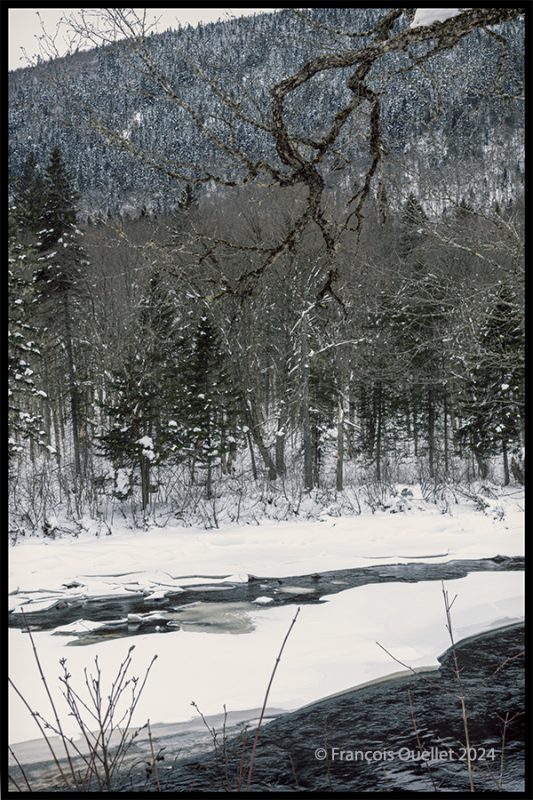
Above, the landscape attracts the eye with its combination of horizontal, vertical and oblique lines, as well as its alternating black and white in the foreground. I positioned myself to include in the scene a large branch that enters the photo from the top right-hand corner.

The foreground features open water, snow-covered ice, pure ice and snow-covered ice again. In the middle ground, coniferous and deciduous trees. In the background, a forest revealing the snow on the mountain floor. I’ve left only a hint of sky, as the latter offers no particular interest on this cloudy February day, other than to add some white to complete the alternation of colours.

Click on the link for more photos of the City of Québec and Île d’Orléans in Winter on my blog.

Categories
Graphic novels and comics

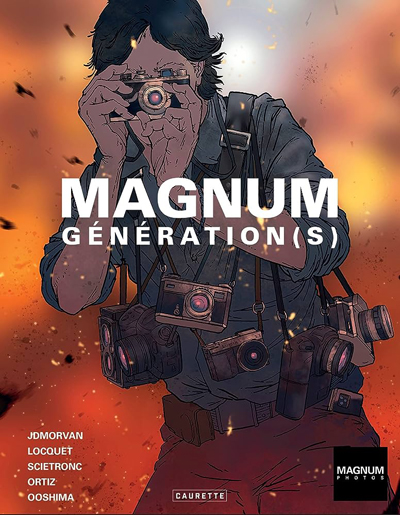
The graphic novel “Magnum Generation (s)”.

The graphic novel "Magnum Génération (s)".
The graphic novel “Magnum Génération (s)”.

Through drawings and superb photographs, this graphic novel recounts the events that contributed to the creation of Magnum, the famous international photography agency.

Before Magnum, there were only photographers trying to make a name for themselves and earn a meagre living in the face of media giants like Time. These big companies reframed original images, did not recognize copyright and made gigantic profits on the backs of photographers like Robert Capa, David “Chim” Seymour, Gerda Taro, Henri Cartier-Bresson and George Rodger. It was in reaction to this abuse that these photographers created the new agency.

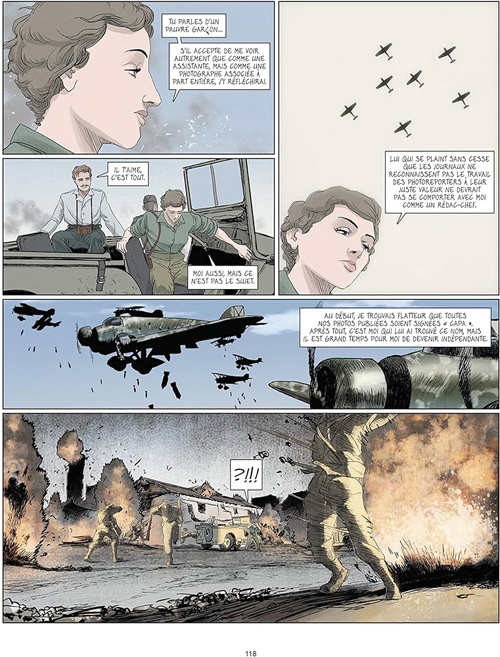
The book makes us aware of the enormous risks involved in bringing back images of the world’s various conflicts. Robert Capa and Gerda Taro lost their lives in the heat of the action.

A page from the graphic novel "Magnum Generations".
A page from the graphic novel “Magnum Generations”.

Magnum’s evolution, its internationalization and the change in its primary vocation are brought to life. From an initial focus on war coverage, photographers gradually turned to diversifying their activities, to accommodate the specific needs of both the media and film productions.

The agency now protects them from abuse. However, photographers remain mindful of the need of support from contractors to survive financially. Still, they reserve some leeway for pure creativity, depending on each photographer’s personality and the mood of the day.

Keeping this agency alive, made up of professionals with different ambitions, is no small task. There are crises, schisms and reinventions, all essential to the evolution of this internationally renowned institution.

For those who know nothing about Magnum, this graphic novel offers a very accessible first approach.

Click on the link for other graphic novels and comics on my blog.

Title: Magnum Generation (s)

Scenario: JD Morvan

Drawings: Arnaud Locquet, Scietronc, Rafael Ortiz

Colours: Hiroyuki Ooshima

Edition: Caurette, ©2022
ISBN: 978-2-38289-028-8 (French version)

Categories
Graphic novels and comics

The graphic novel “Jours de sable”.

The graphic novel "Jours de sable" by Aimée de Jongh.
The graphic novel “Jours de sable” by Aimée de Jongh.

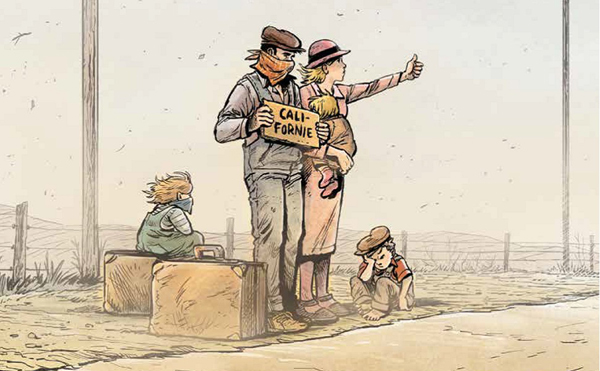
The graphic novel “Jours de sable” is a historical reminder of the famous Dust Bowl which struck the central United States between 1930 and 1940. These were ten years of misery that inspired John Steinbeck for his work “The Grapes of Wrath“.

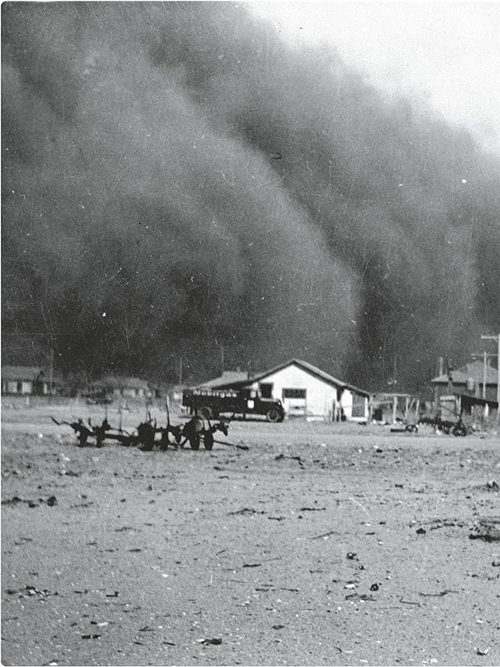
The sand and dust storms that engulfed parts of Oklahoma, Kansas, Texas, New Mexico and Colorado came from a multitude of combined causes, including farmers’ overuse of the soil and repeated droughts.

The American Dust Bowl.

Add to these factors linked to the economic crisis and multiple epidemics, and we can understand the mass exodus of American households. They left everything behind, including many family members who died of dust-related respiratory complications. Most headed for the West Coast, but this massive influx of people only served to increase the region’s already high unemployment.

A page from the graphic novel "Jours de sable".
A page from the graphic novel “Jours de sable”.

The strangest thing is that, decades later, the climate changes experienced today in these same states could help to repeat the phenomenon, without it necessarily covering such a long period.

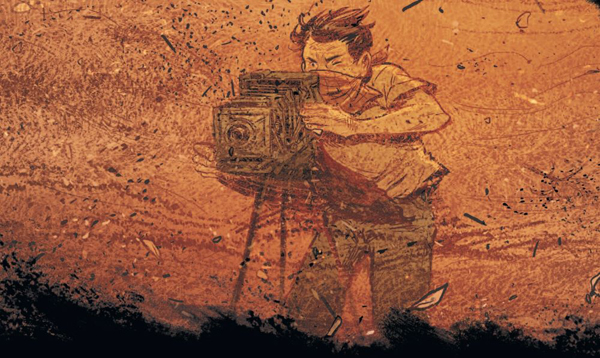
Author Aimée de Jongh uses fictional characters, but the scenario respects the reality experienced by the population. In her story, a young photographer leaves New York in 1937 to report on the Dust Bowl. He has been briefed on the subjects to be covered, but soon realizes that he is dealing with a human tragedy of unsuspected proportions.

The main character in the graphic novel tries to do his job in the sandstorm.

Asking suffering people who have lost everything to pose for the New York media was not as simple as he had thought. The situation becomes even more complicated when he gets to know these people and experiences their difficulties first-hand.

In addition to the deftly drawn panels that delight the reader, there are plenty of period photos gleaned from various museums, as well as official historical content. I loved this award-winning book.

Click on the link for more graphic novels and comics on my blog.

Title : Jours de sable

Author : Aimée de Jongh

Edition: Dargaud, 2022

ISBN: 978-2-5050-8254-5

Categories
Photos of Canada Photos of Quebec

Pointe-au-Père and L’Islet 2023

Musée maritime du Québec in l'Islet 2023
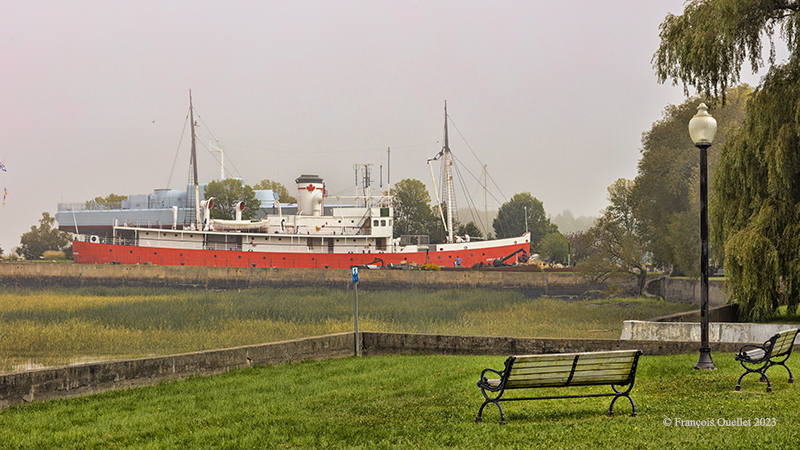
Musée maritime du Québec in l’Islet 2023

While in L’Islet, a stop at the Musée maritime du Québec is a must. Above, the icebreaker Ernest Lapointe, responsible for clearing the St. Lawrence River between Montreal and Trois-Rivières for 37 years.

The Bras d'Or hydrofoil at the Musée de l'Islet
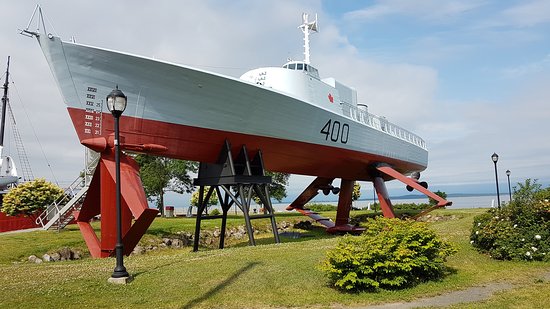
The Bras d’Or hydrofoil at the Musée de l’Islet

Also on the grounds is the famous HMCS Bras d’Or. This hydrofoil was created in Canada during the Cold War to monitor Canadian waters against possible Soviet submarine intrusion. As this museum boat explains, “it was compulsory to have a dual pilot’s licence for aircraft and navigation in order to operate this self-supporting winged craft“.

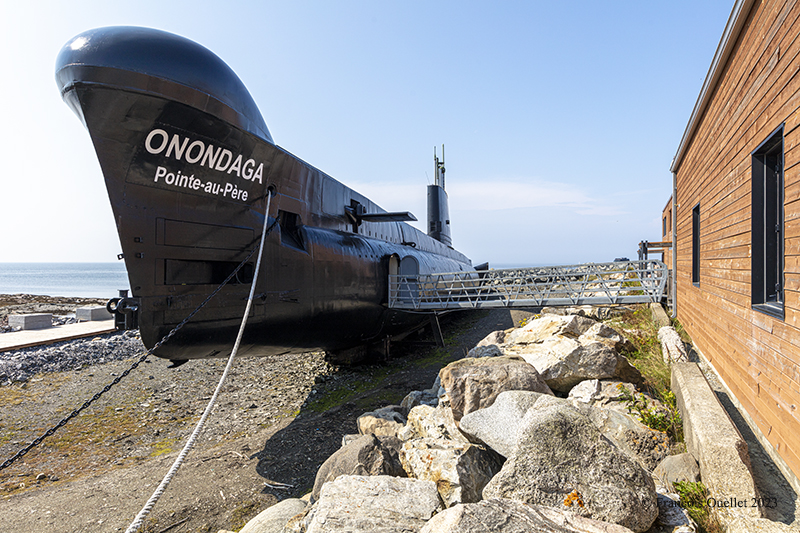
HMCS Onondaga submarine museum in Pointe-au-Père, Québec 2023

A little further east, we reach Pointe-au-Père, in the Rimouski region. Here you’ll find Canada’s only submarine museum.Visitors can tour the interior of the HMCS Onondaga, used until 2000. Travelers pass through 17 stations to learn about life aboard a submersible.

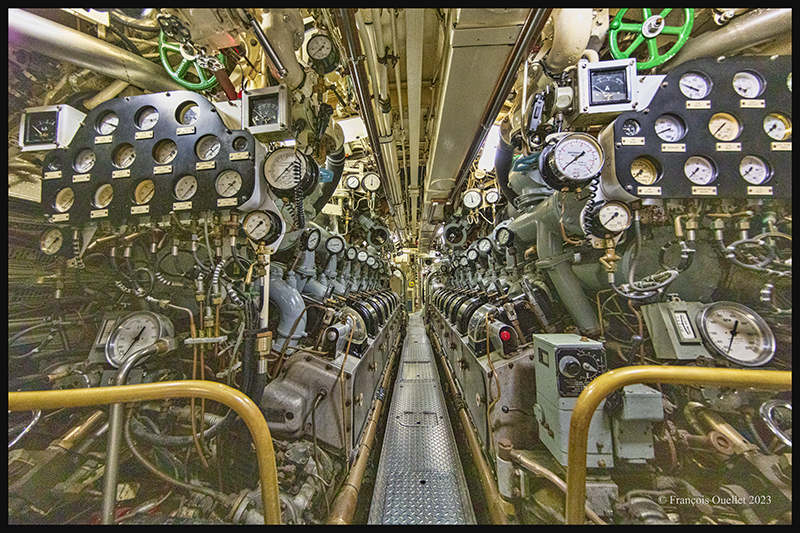
Inside the canadian submarine HMCS Onondaga in Pointe-au-Père

The mechanic worked for periods of two months at a time, monitoring the engines in this noisy, diesel-smelling environment. A German spy disembarking from a submarine at night in Gaspésie was spotted in a bus because it smelled strongly of diesel.

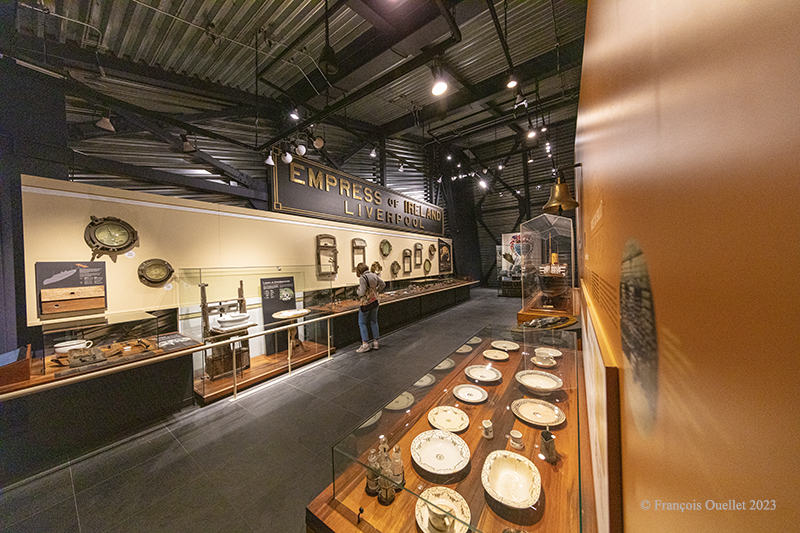
Empress of Ireland museum in Pointe-au-Père, Québec 2023

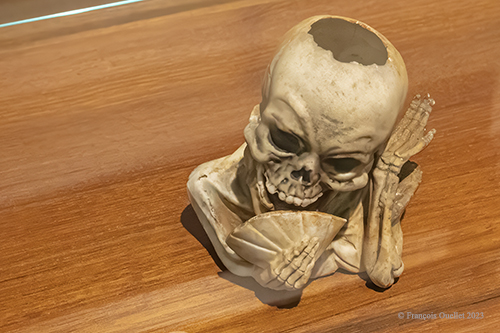
Above, a shot of one of the rooms in the Museum of the Empress of Ireland. Her sinking in the St. Lawrence River was the second most costly in human lives after the Titanic. Among all the objects recovered from the wreck is this porcelain skeleton that one of the passengers had in his cabin.

Skeleton head found in the Empress of Ireland

Click on the link for more photos from the province of Quebec on my blog.

Categories
Photos of Canada Photos of Quebec

Rivière-du-Loup region 2023

Kamouraska and the St.Lawrence river 2023

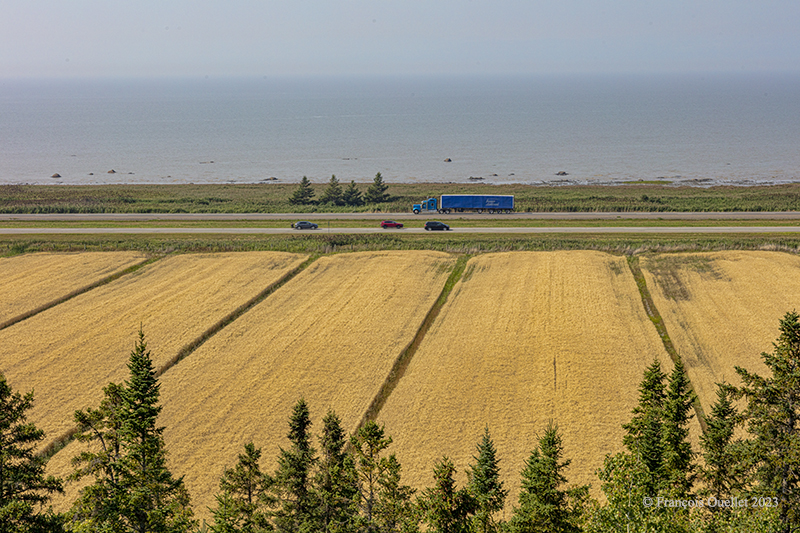
The photograph shows a view of the fertile land along the St. Lawrence River in the Kamouraska region. A public observatory allows visitors to admire the panorama.

Sea kayaking on the St.Lawrence Seaway near Rivière-du-Loup

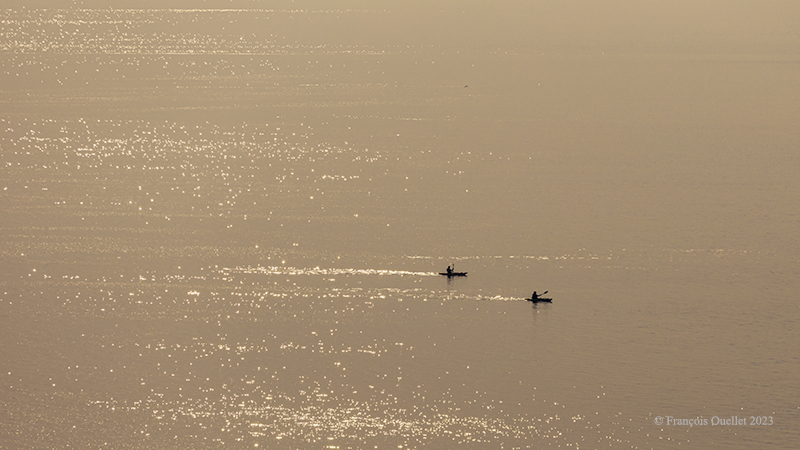
In the evening, in Rivière-du-Loup, these two kayakers enjoy the tranquility of the St. Lawrence River as they indulge in their favorite sport.

The St.Lawrence Seaway seen from Rivière-du-Loup

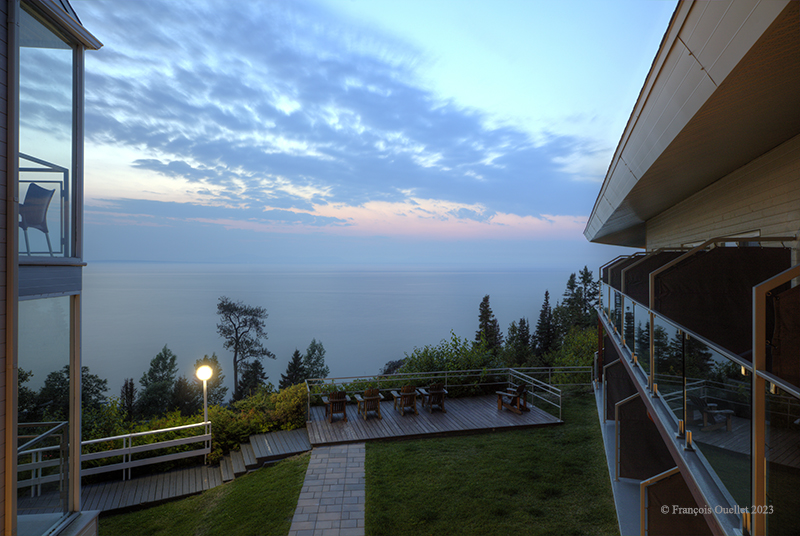
This HDR shot of a unit at the Auberge de la Pointe in Rivière-du-Loup features seven superimposed photos, for a total of 354 megabytes of data. This ensures that the sky is correctly exposed and that the rooms in the foreground are not completely obscured.

Orange rocs in Rivière-du-Loup

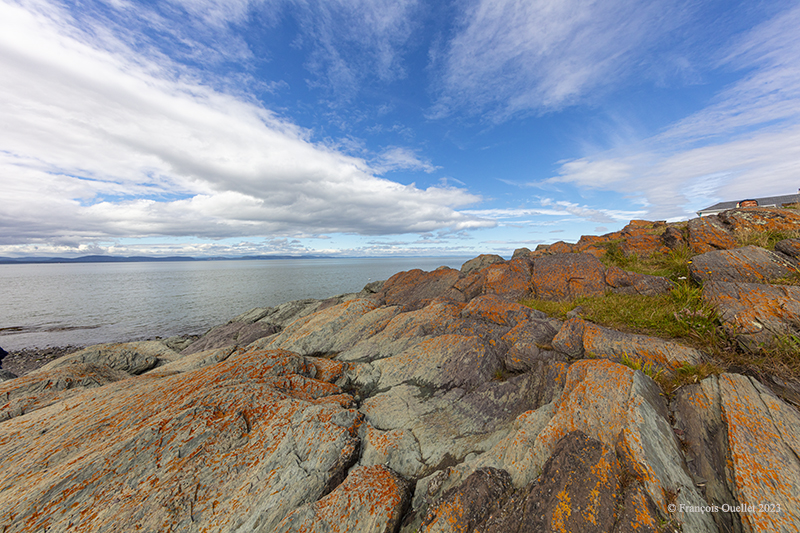
Near the Rivière-du-Loup – Saint-Siméon ferry, the rocks here and there take on an orange hue. It’s a nice contrast to the blue sky.

Ferry towards St-Siméon in the province of Québec 2023

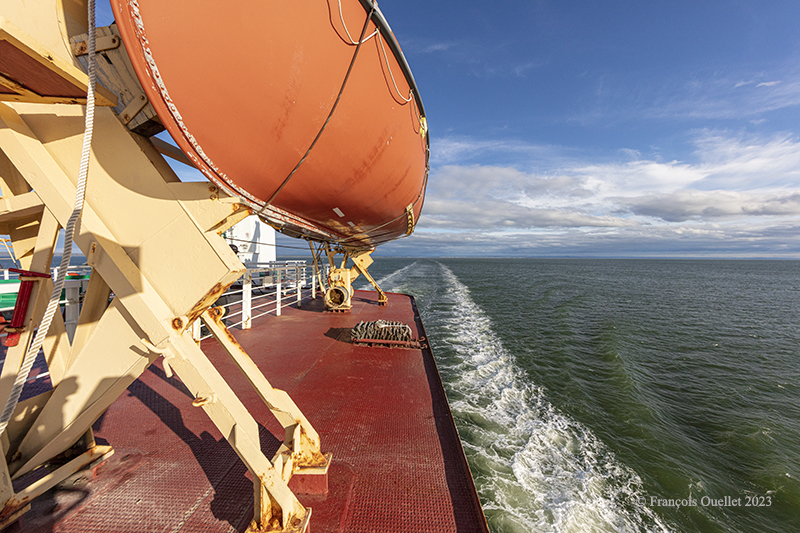
The journey takes us to Saint-Siméon on a calm seaway. A Canon EF 11-24mm F/4 USM wide-angle zoom lens captures the scene without exaggerated distortion.

Île-aux-Lièvres and the St. Lawrence river, Québec 2023.

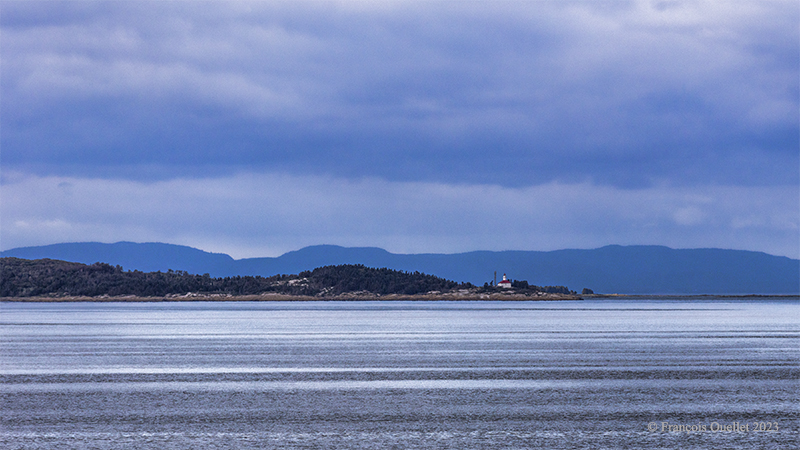
Above, Île-aux-Lièvres from the ferry. The multiple cloud layers create streaky effects on the St. Lawrence River.

Auberge la Châtelaine Saint-Laurent, La Malbaie 2023.

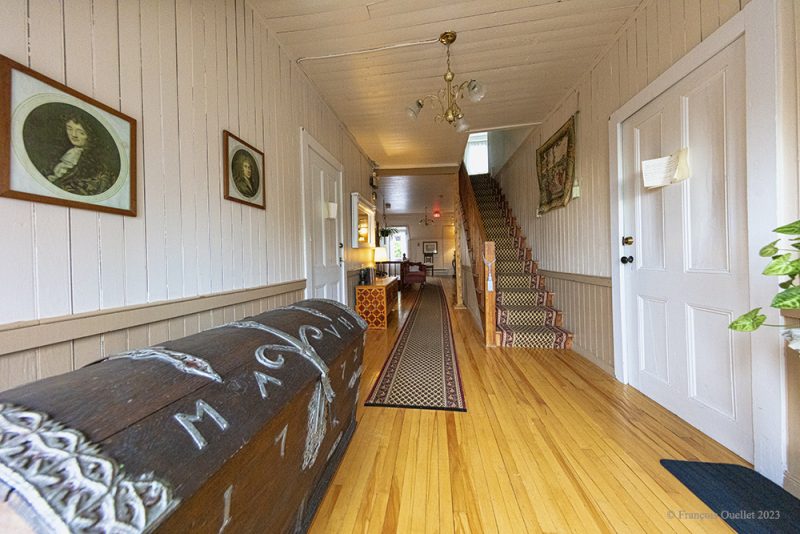
Here’s a shot of one of the corridors of the Auberge Châtelaine, in La Malbaie. One of the reasons to stop by is the excellent breakfast included after a good night’s rest. No fat bacon or greasy potatoes here: just homemade bread and jams.

Click on the link for more photos from the province of Québec on my blog.

Categories
Photos of Quebec Ship photography

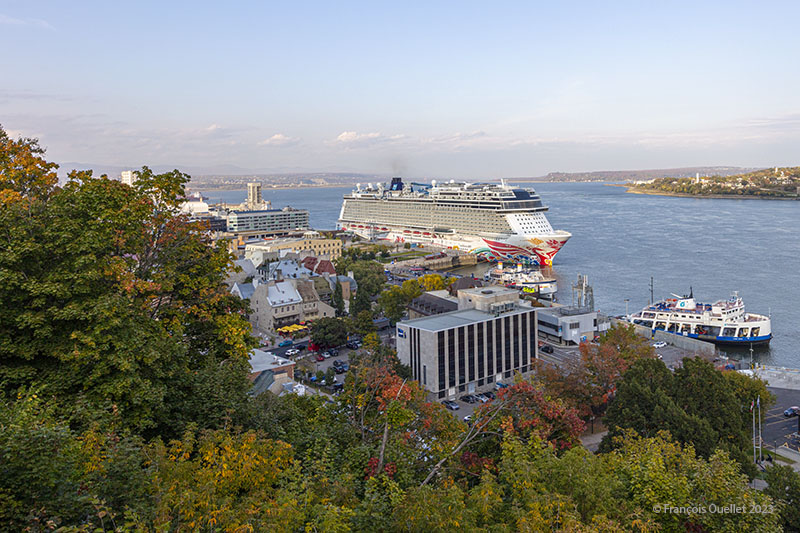
The Norwegian Joy in Québec City

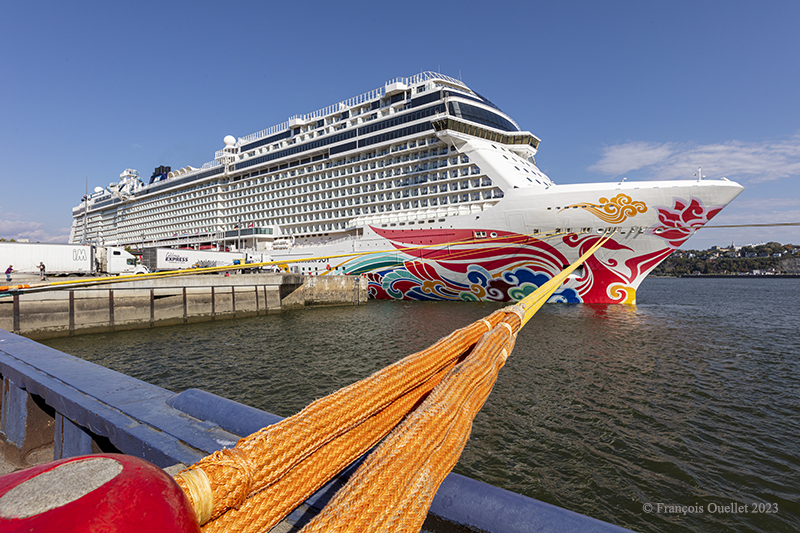
The Norwegian Joy cruise ship docked at pier 22 in Quebec City in 2023.

The Norwegian Joy cruise ship, which weighs close to 168,000 tons, is one of the biggest ships to dock in Old Quebec in autumn.

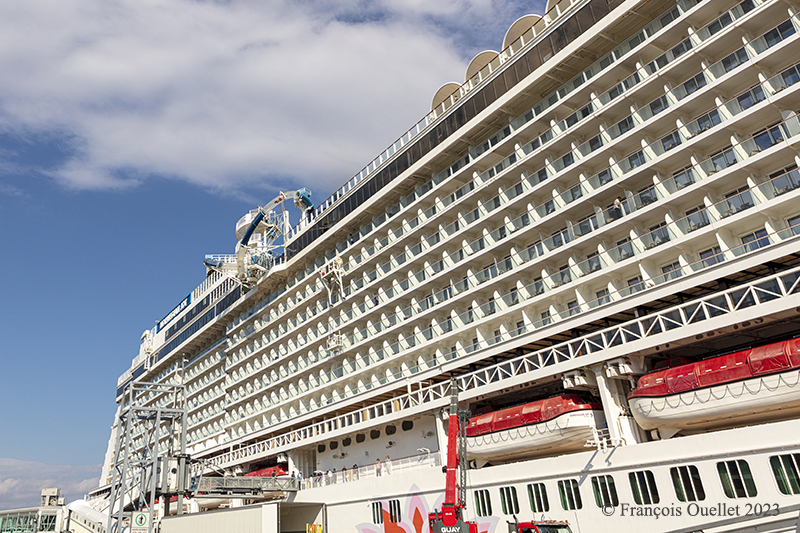
The Norwegian Joy cruise ship docked in Quebec City in 2023
Le navire de croisière Norwegian Joy amarré à Québec à l’automne 2023.

It can accommodate 3,852 passengers and, for onboard service, there are 1,851 crew members – almost one employee for every two holidaymakers. The ship was built in 2017. Despite its young age, it benefited from renovations in 2020.

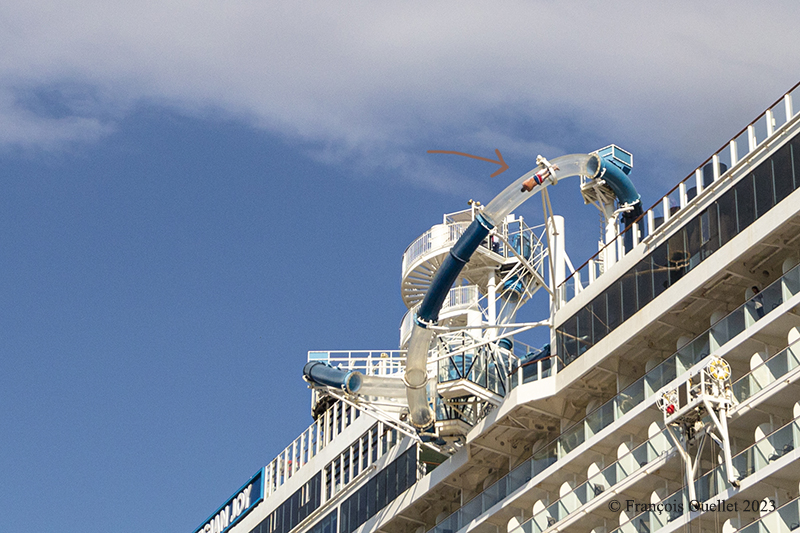
Sliding down the tube on the Norwegian Joy cruise ship

Sliding down the tube on the Norwegian Joy cruise ship

In the photo above, you can see a transparent tube raised above the upper deck in the top left-hand corner. With an enlarged photo, you’ll see that people are sliding down this water slide upside down. The shot below will help you get a better look at the guy in the red and blue swimsuit speeding by. The camera’s shutter speed had to be set to 1/2000 to avoid motion blur.

Sliding down the tube on the Norwegian Joy cruise ship 2023

That day, I was only carrying a Canon EF 11-24 mm f/4 USM zoom lens. I had to crop the photo a little to enlarge it, but you can still see the scene quite well. Part of the tube gives the sportsman the impression of suddenly plunging to the ground, as the installation protrudes over the sides of the ship.

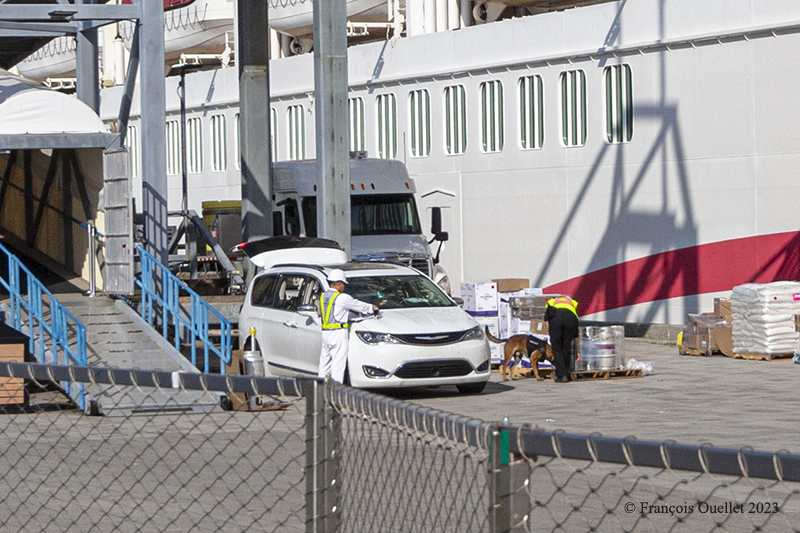
Looking for dangerous goods on the Norwegian Sky cruise ship in Quebec City

While people are enjoying themselves on the upper deck, a whole team is busy refueling the ship and ensuring its safety. In the photo above, a dog can even be seen going around the pallets to detect any dangerous or illicit products.

The Norwegian Joy cruise ship in Québec.

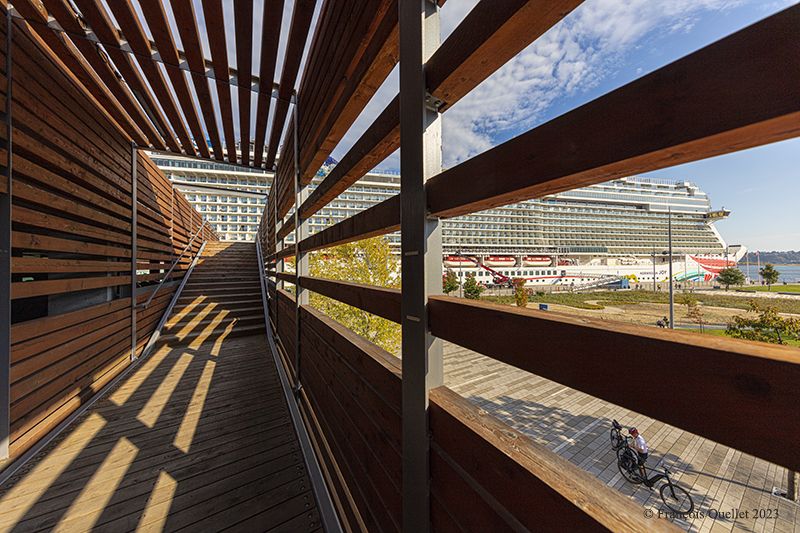
Here’s a final photo of the Norwegian Joy, taken from inside a recently built cedar gangway near Quay 22 in the Port of Quebec. The sun filtering through the rungs provides a beautiful play of light, all captured by a Canon EF 11-24 mm f/4 USM zoom lens set to 11 mm. The effect is further enhanced by the pseudo HDR mode offered by digital processing software.

Click on the link for more photos of Quebec City and Île d’Orléans in Autumn on my blog.

Categories
Photos of Canada Photos of Quebec

Photos of Quebec City in summer

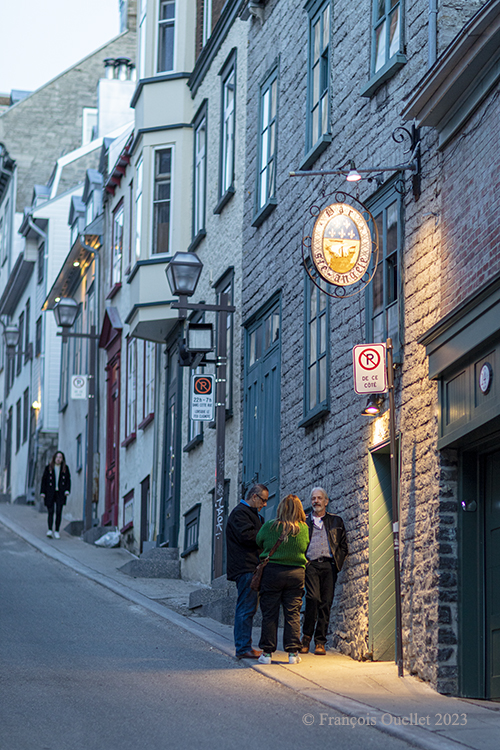
The bar Ste-Angèle in the evening in Old Quebec.

On a late summer’s day, these citizens from Old Quebec chat peacefully under the Ste-Angèle bar’s wall-mounted luminaire.

Citizens of the Saint-Jean-Baptiste district en route to the opening of the Festival d'été de Québec 2023
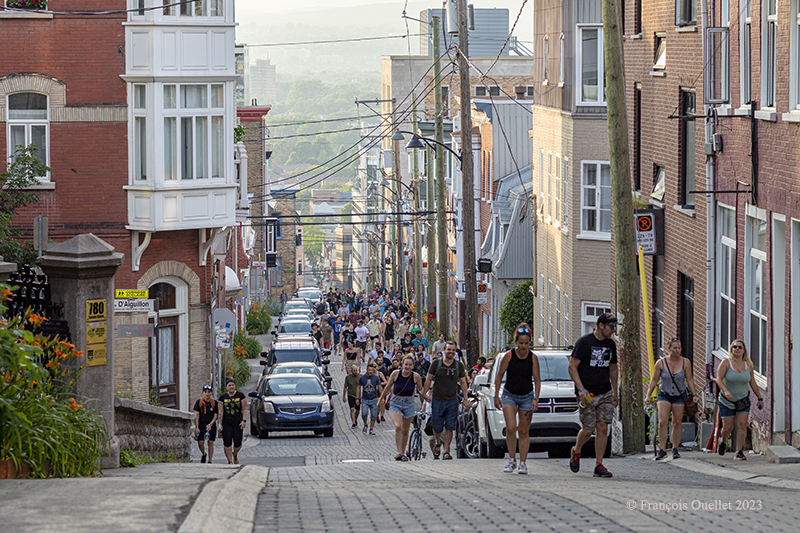
Citizens of the Saint-Jean-Baptiste district en route to the opening of the Festival d’été de Québec 2023

As the day draws to a close, many residents of the Saint-Jean-Baptiste neighbourhood head to the Plains of Abraham for the 2023 Quebec City Summer Festival.

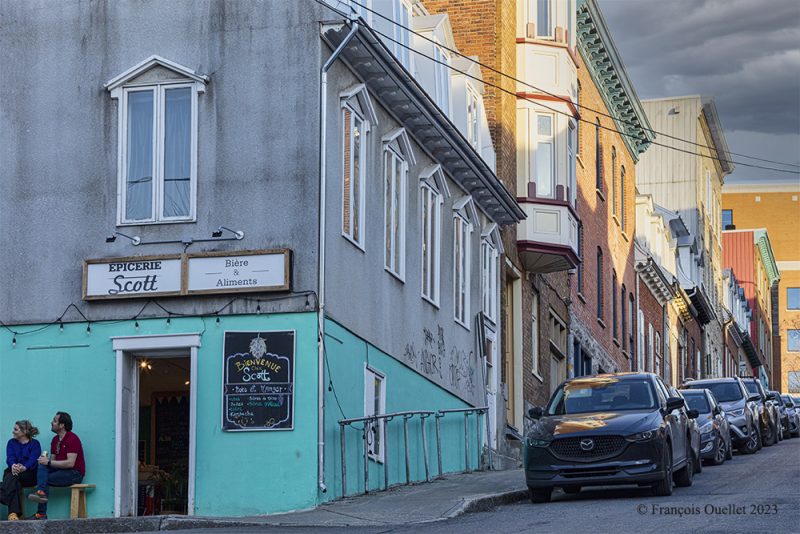
The Scott grocery store in Old Quebec.

The setting sun hits the side of these Quebec City buildings, creating two areas of very distinct luminosity. Such extremes pose challenges for the camera. By using a Raw file rather than a JPEG, it’s much easier to correct the brightest and darkest areas.

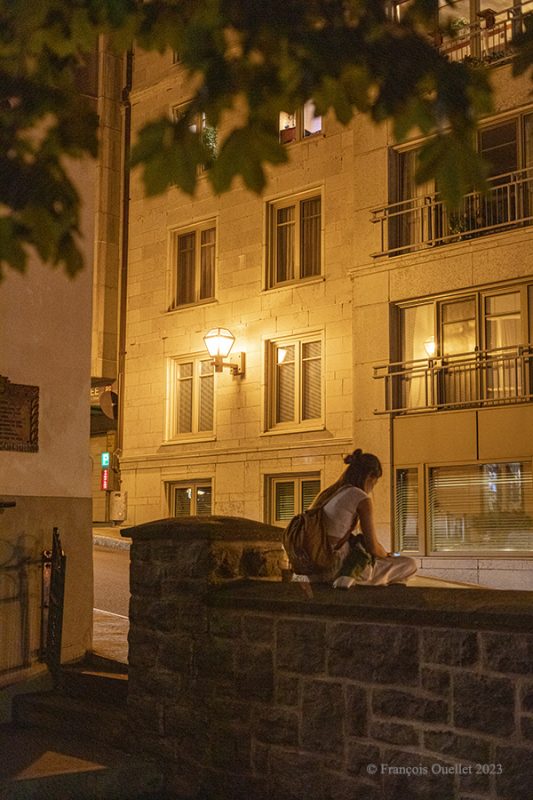
Relaxing in Old Quebec.

In the summer of 2023, a South Korean tourist takes a short break in Old Quebec after a busy day of walking inside the ramparts of the old city.

Click on the link for more photos of Quebec City and Île d’Orléans in Summer on my blog.

Categories
Photography Photos of Quebec

Photographing Old Quebec.

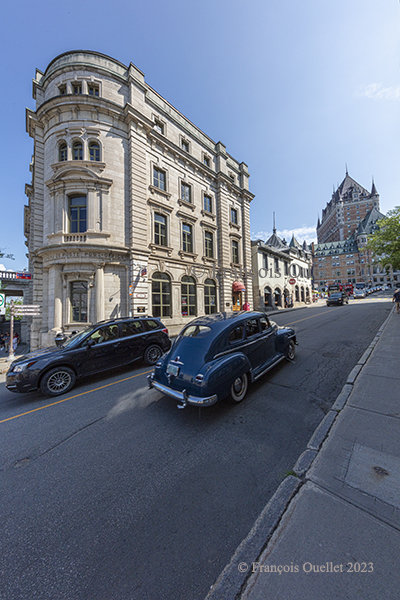
An Old Quebec view with the Château Frontenac in the distance using a Canon 11-24mm zoom lens.

Luck plays a significant role in the acquisition of an original shot. To put chance on our side, we need to go on photo expeditions frequently, whatever the weather, and seize opportunities when they arise.

For this outing in Old Quebec, I thought I’d use a Canon 11–24mm f/4L USM super-wide-angle zoom lens. It allows you to get very close to a tall building and obtain vertical lines without the top of the structure disappearing.

Indeed, many high-performance zooms require the utilization of image-processing software to produce an almost perfect vertical effect. But doing so cuts off the top of the edifice.

So, I was looking for a different perspective to shoot the Château Frontenac. I saw it more in the background, as a point of arrival for the eye, rather than taking up all the space. Even as a small edifice in a photo, you recognize it before any other structure.

To do this, I chose an architecturally interesting building as my starting element. It reminded me vaguely of the Flatiron Building in New York. Naturally, it’s not as high and offers that rounded effect when captured in wide-angle format.

I’ve observed a lot of representations of Old Quebec so far. However, I don’t recall previously noticing the street and the old edifices in this way. Usually, the building in the foreground is partially visible.

Lost in the analysis of the ideal angle, I heard a strange engine sound. On my left, a vintage car was moving slowly and would pass in front of the Canon 5DSr lens in a few seconds.

I quickly lifted the camera and placed it in the right spot. The auto was already gaining speed and I had to seize the opportunity. This vintage car blended perfectly into the scene. Only the slightly more contemporary station wagon indicates a more recent picture.

Modernity and the past still come together in harmony in a developer-protected Old Quebec. To capture interesting pictures, you need to get out into the old town frequently.

Click on the link for more Summer photos of Quebec City and Île d’Orléans on my blog.