Categories
Photography

Flowers and plants photography

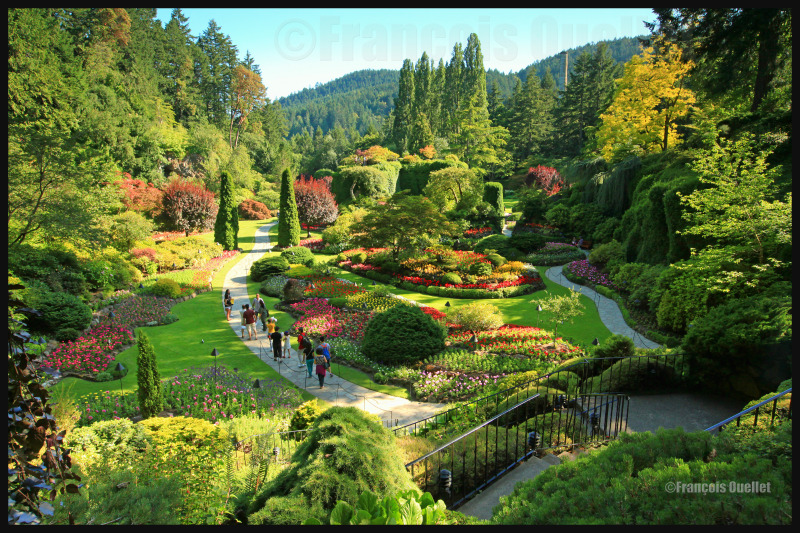
Butchart Gardens, British-Columbia, 2012.

Facing a field of flowers, a photographer has to choose among many possibilities. Here are just a few:

1) He can choose a really beautiful flower and make it the sole point of attraction. In that case, he must decide if the background will be free of any distractions.
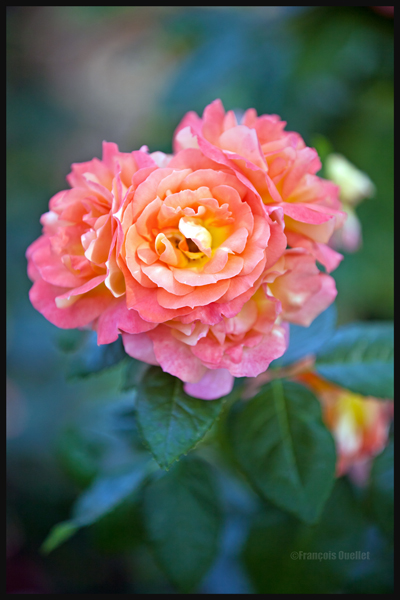
A rose from the English Garden in Geneva, 2013.

2) He can profit from a blurred background that is of a color dramatically opposed to the color of the chosen flower.
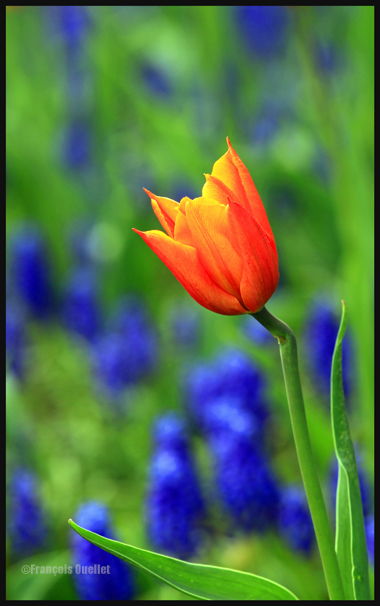
A tulip in the Bois-de-Coulonge, Québec City.

3) He might favor an overhead or a low angle shot. As this choice of the angle of view does not apply only to flowers, I found in my archives a low angle shot of a pear tree located in St-Nicolas, Québec. Here it is, so that you can see what kind of effect can be obtained.
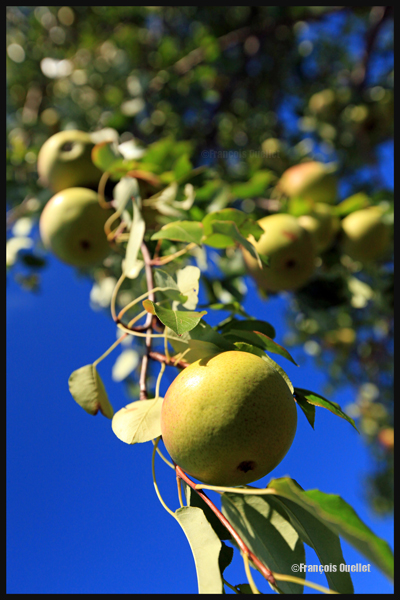
Pears from Saint-Nicolas, Québec.

4) He can decide to show many flowers on the same picture, considering the interesting impact produced by all the color dots.
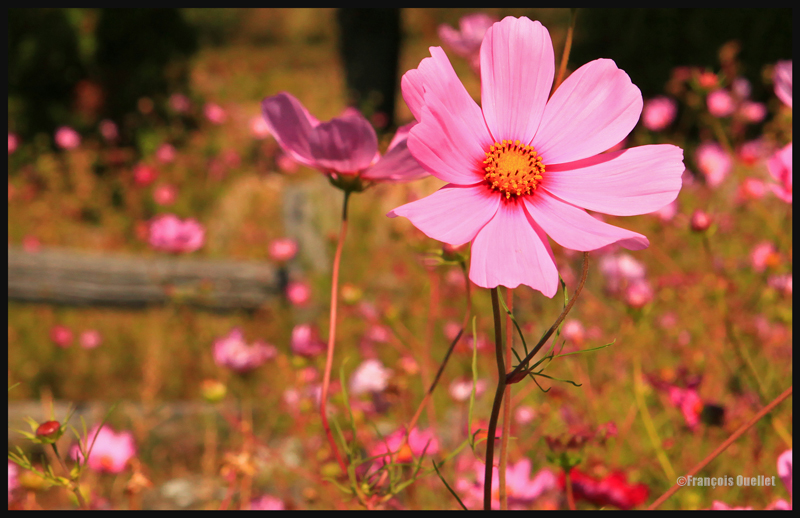
A field of flowers in Saint-Nicolas, Québec.

5) He might also use the flowers as accessories to direct the eye of the viewer to another point of interest like, for example, a building with special architectural characteristics.
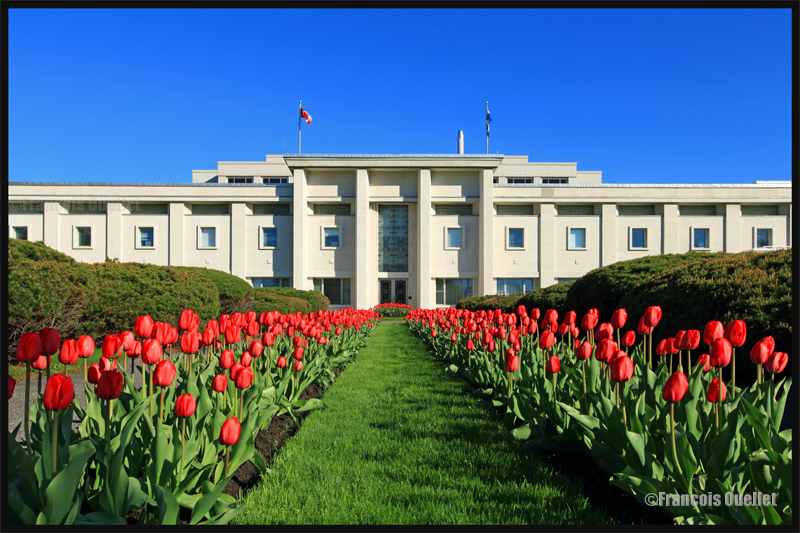
Industrielle Alliance building, Quebec City, 2012

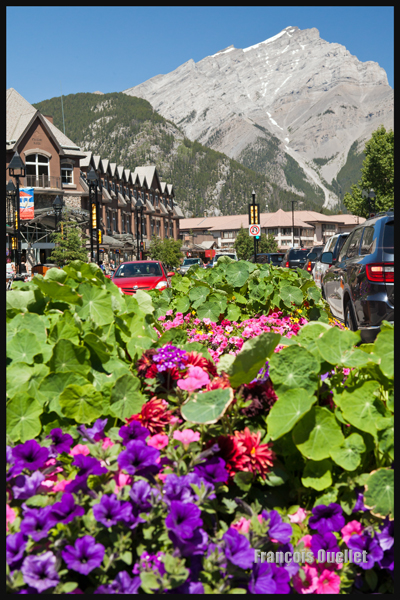
Flowers as accessories to improve a beautiful landscape in the background.
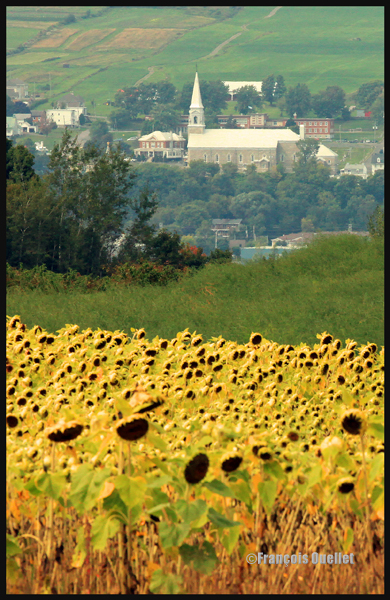
Sunflowers on Île d'Orléans
Sunflowers on Île d’Orléans
Photo of a part of Banff downtown, Alberta, Canada 2014

The flowers and the bumblebee are two interesting subjects; they complement each other in this picture. It would be hard for me to decide which one I prefer.
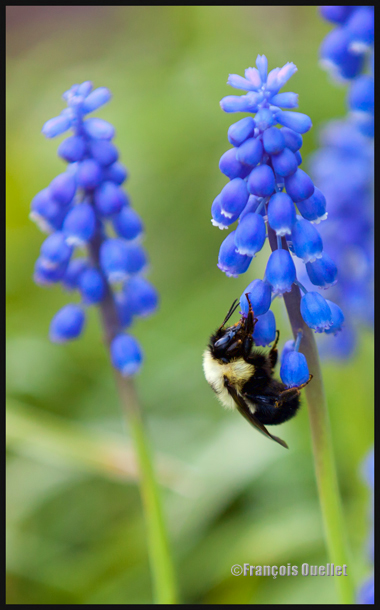
Bumblebee on a flower in the Parc du Bois-de-Coulonge, Québec City

Unless there is no other possibility, it is better to avoid shooting flowers under full sun as there will be considerable reflection on their petals. If you have no choice, use a polarizing filter, well adjusted, to reduce the undesirable effects of direct sunlight.

The ideal day to get out and take pictures of flowers is a day without wind, where there is a bright light but dimmed by an overcast sky.

The quality of colors and contrasts will be maximized if the pictures are taken during the morning or at the end of the afternoon.
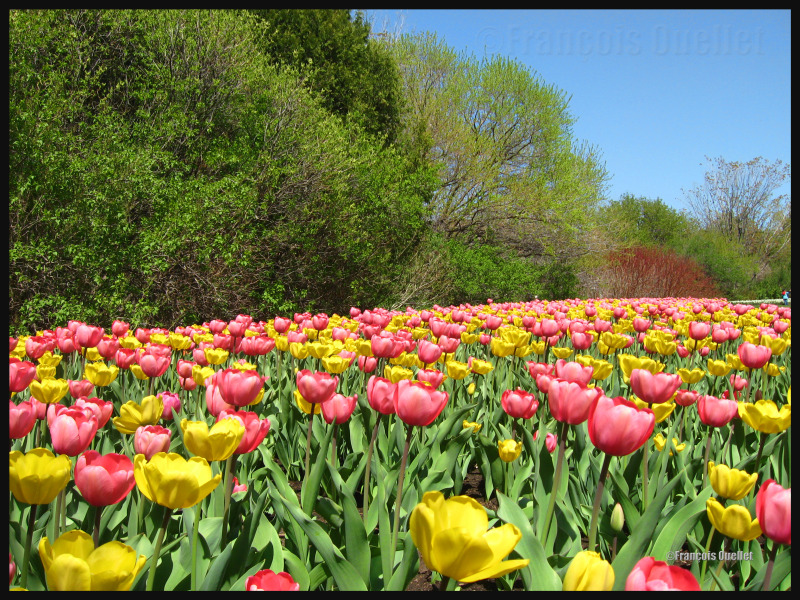
2008 0505 Ottawa watermark eng

Aperture has a definite impact on the final result. With a wide aperture (smaller numbers like F2.8 or F4.0) you will get a sharp subject with everything blurred around it. This will make your flower stand out. With a small aperture (bigger numbers like F14, F16), both foreground and background will be sharper, with an even better result using a wide-angle lens. Your flower will lose a bit of its impact as all the elements in the picture will now shine. Below is a picture taken in Ontario, during the Ottawa Tulip Festival.

Macrophotography:
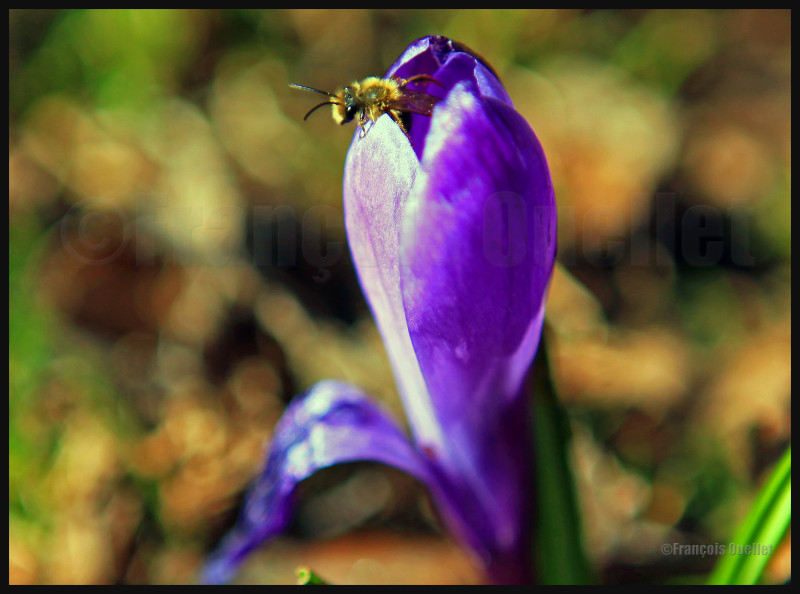
April 2012 on the Plains of Abraham: A bee makes its way out of a crocus.

1) Remove any dirt from the plant you want to capture and choose a plant whose petals are in perfect condition.

2) Use a tripod, a remote control release and the mirror lock-up (MLU) function for better results.

3) The camera should ideally be used with manual focus, for improved sharpness. In order to verify if the picture will be in focus, look at the LCD screen and enlarge the picture (5X or 10X). You will immediately see if a minor adjustment is needed to get a sharp photo or to improve the depth-of-field.

The histogram should be checked upon taking the picture to immediately compensate for the necessary amount of light.

You can use a flash to reduce aperture. You must adjust it so that it’s not shooting at full power otherwise there will be too much reflection and you will lose all the delicate nuances of colors and contrasts.

A method that will produce surprising results is called “zoom burst”. You slowly move the zoom of a lens on all its focal length while the shutter remains open during the process. You must select a speed that is slow enough to accommodate the full deflection of the zoom. You should know that many shots are normally needed before you get a satisfying image.

Every lens offers different possibilities:

1) The macro lens is useful if you wish to capture very precise details on the flower. To add an interesting effect, you can even spray the flower lightly with water so that a few droplets remain on the petals.

2) The wide-angle lens allows you to transform an image and give it an original perspective. The effect will be more important if you shoot the flower from a special angle like, for example, from the ground up. If you must lie on the ground, use a little carpet to keep yourself clean and dry. I bought a right-angle finder to ease the workload when shooting under complicated angles. This could be a potentially interesting addition to your equipment.

3) Finally, the telephoto allows you to pick a particular flower and, because of compressed perspective, offers you a background filled with multiple colors.

Let’s end this section with a mushroom picture. The same principles apply with regards to simplicity, settings and angles of views. I could have chosen to show only an oversize shot of a mushroom, or take only part of it, but I preferred an approach that would allow me to show the radically different shapes of the specimens found at the Laurentian Forestry Center in Québec.
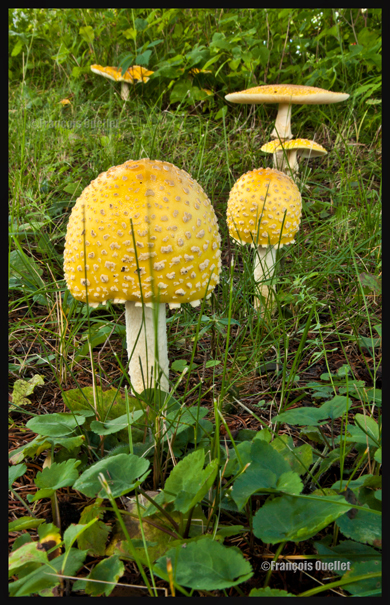
Mushrooms around the Canadian Forestry Service building , Québec 2014.
Categories
Photography

The Coriolis II in Bassin Louise, Quebec

The Coriolis II in Bassin Louise, Quebec, 2015.

The Quebec Harbor is an excellent site to find interesting ideas when it comes to photography. Fog, ice, tugboats and other ships constantly provide new opportunities. In March 2015, during a beautiful day, I was able to capture this scene with the Coriolis II in the Bassin Louise. The use of a Canon 14mm 2.8L fixed lens was necessary to avoid any alterations in the quality of the picture of this wide angle shot. The camera used was a Canon 5D MKII.

Categories
Updates

Remembering Europe

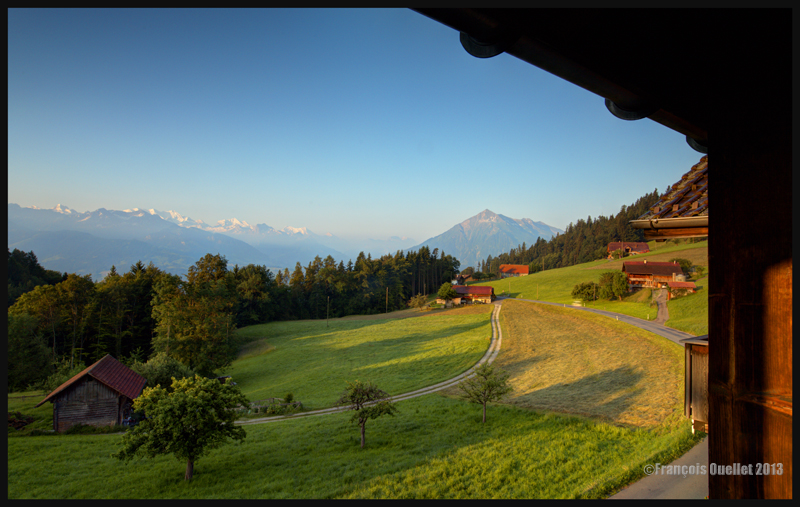
View from our hotel room in Schwanden, Switzerland 2013

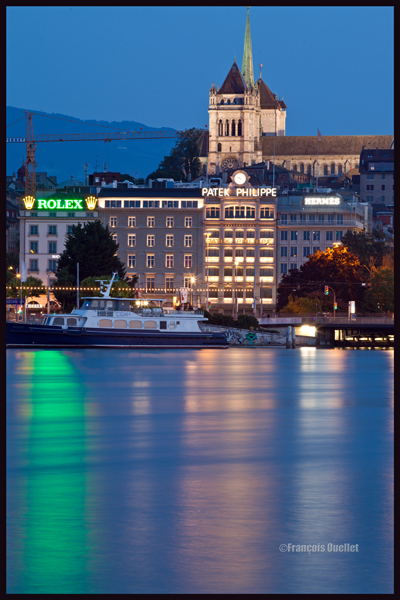
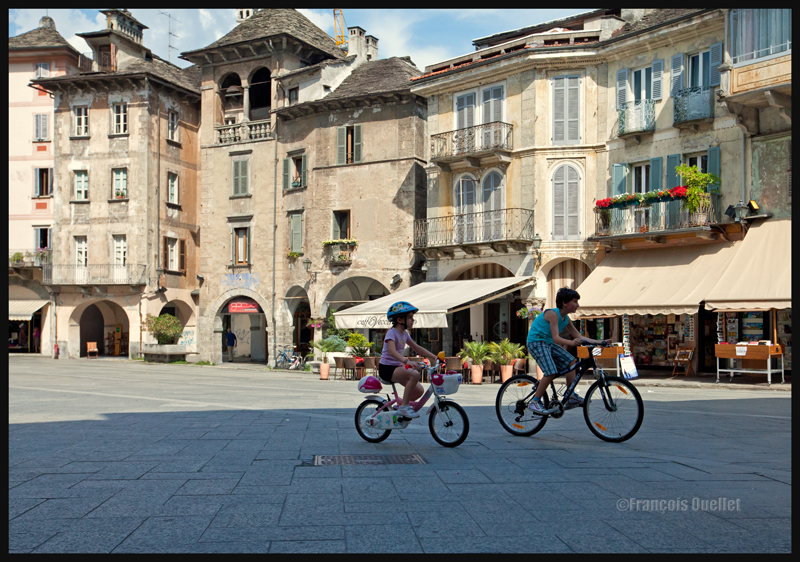
Here are some of the pictures recently added to the Europe photo gallery. Schwanden, in Switzerland, was a superb discovery as the hotel was in the countryside but at a very reasonable distance from a big city like Bernes. This is an HDR picture, as the contrasts were just too important between the shadows under the balcony and the natural light of the sky. The Schwanden picture represents in fact five shots each taken with a different exposure. Photomatix is the software used to mix together all the pictures. Have a good visit in the photo galleries!

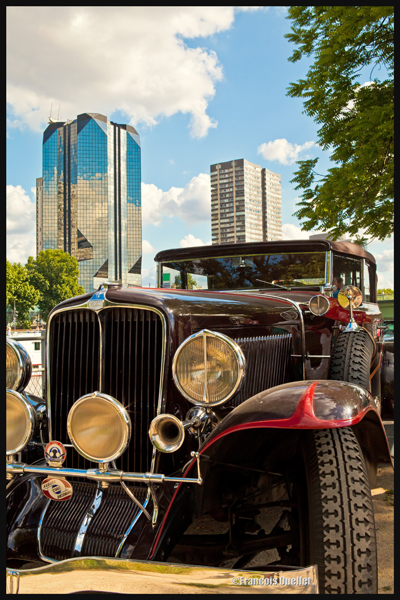
Paris, France 2013
Paris, France 2013
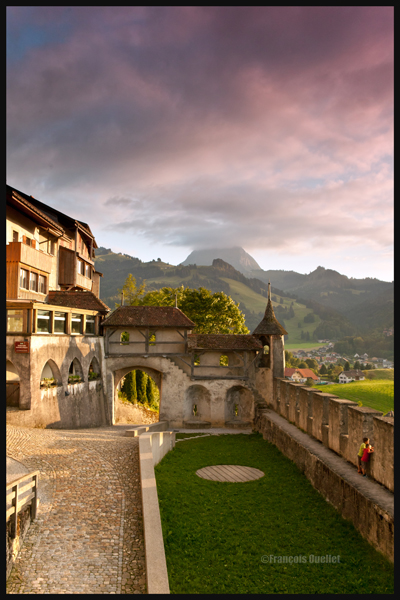
Gruyères, Switzerland 2013
Geneva, Switzerland 2013
Domodossola, Italy 2013
Categories
Photography

Last opportunity for a picture in Montreal

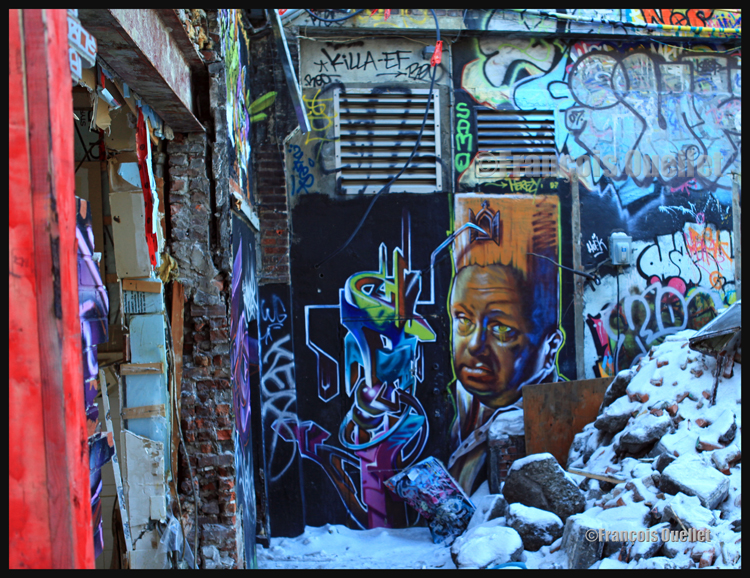
Montreal, 2012. Juste à temps pour prendre cette dernière photo, avant la démolition du bâtiment
Montreal, 2012. Juste à temps pour prendre cette dernière photo, avant la démolition du bâtiment.

I was lucky to be able to take this picture. Being in Montreal for a winter photography session with a Canon 5D MKII, I went by a street where some employees were busy demolishing a building. There was an interesting scene to be taken but I had to get much closer before I could start shooting. The site was fenced and under surveillance while workers were active, so the access was forbidden.

As lunch time was approaching, I decided to wait a bit, hoping that the workers would leave the site for a quick bite. I was expecting the security guard to accompany the group and forget about locking the fence. That’s exactly what happened. As soon as the last employee had disappeared, I was on the site with my photo equipment. By the end of the afternoon, nothing was left of the building. I hope that you like this picture, as much for the scene as for the small murale done by the unknown artist, murale that is today only a souvenir.

Categories
Updates

Update October 5, 2014

Hi,

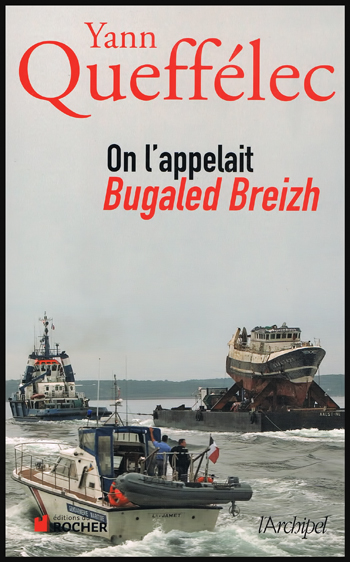
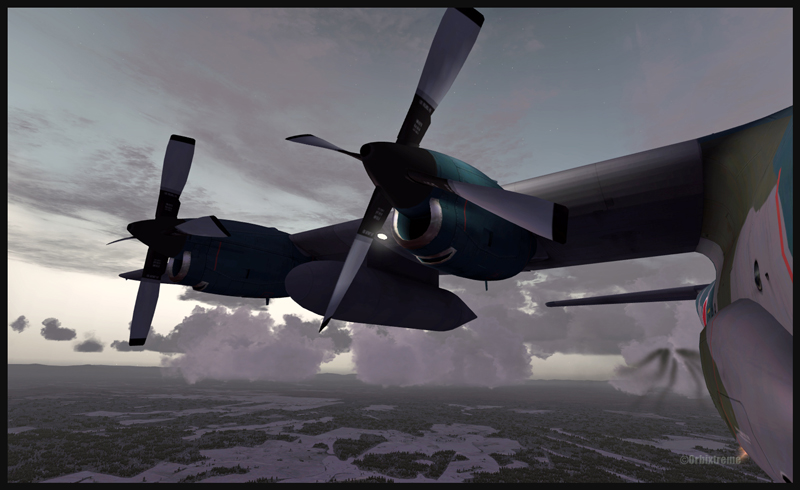
There has been few additions in the past weeks, especially in the photography section, under Province of Quebec. A book about the Bugaled Breiz affair has been presented. There has also been, in the flight simulation section, under FSX, a C130 experimenting a double engine failure while enroute from Smithers to Prince George, Canada. The real life stories  continue and soon I will be able to start posting the stories that happened up north, in Inukjuak and Iqaluit.

Have a good visit!

St-Adolphe
St-Adolphe
Yann Queffélec - On l'appelait Bugaled Breizh
Yann Queffélec – On l’appelait Bugaled Breizh
C130 Smithers - Prince George, Canada
C130 Smithers – Prince George, Canada
Categories
Updates

Autumnal Ride in Baie-St-Paul

Hi,

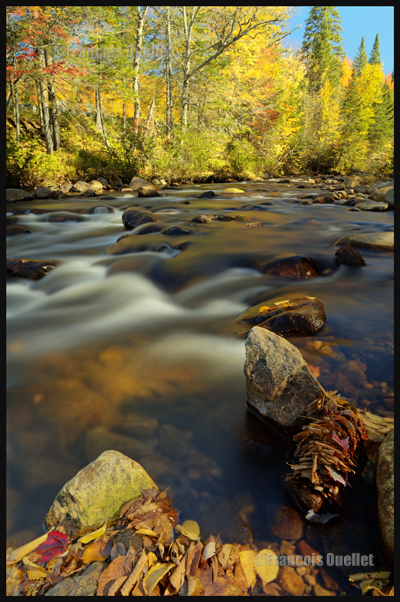
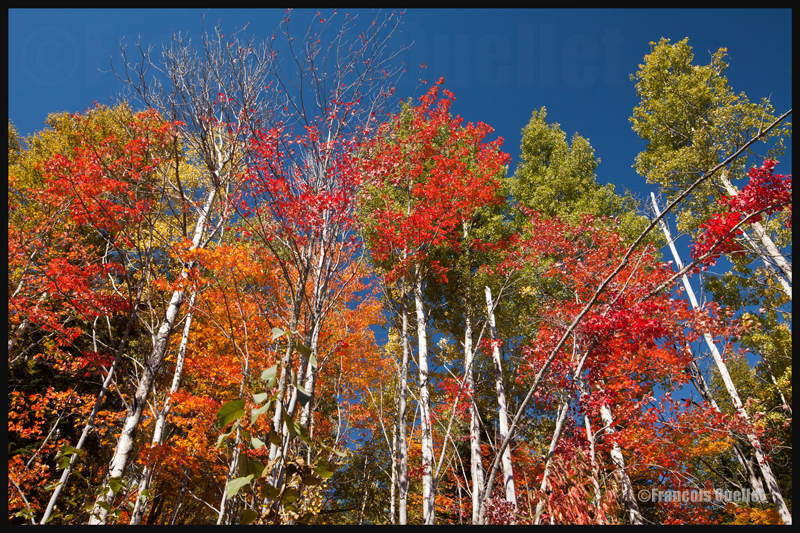
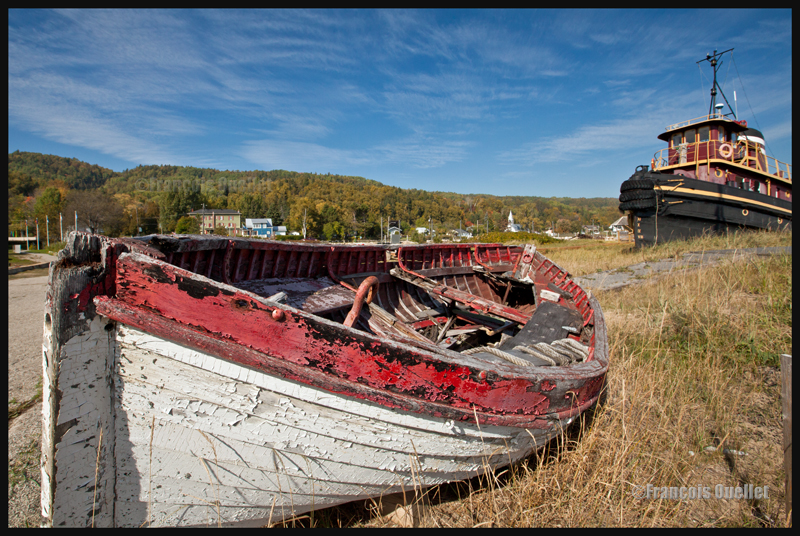
There has been many additions since the last update, as much on the flight simulation section than on the photography side of the site. Profiting from an end of September beautiful autumnal day, I visited Baie-St-Paul and the Maritime Museum of Charlevoix to take few pictures. Here are some shots that have been added recently in the Photography section, under Province of Quebec. Have a good visit!

François

Autumn colors near Baie St-Paul
Maritime Museum of Charlevoix, 2014.
HDR picture of an autumnal scene taken at St-Joseph-de-la-Rive, 2014
HDR picture of an autumnal scene taken at St-Joseph-de-la-Rive, 2014.
Categories
Updates

Update August 29, 2014

The content of the “photography” section is now similar in both languages of the site. The same applies for the virtual links of the “flight simulation” section. This picture, taken during the summer of 2014 in Victoria, British Columbia, is now part of a collection that will increase progressively.

Trépied, lentille 16-35mm et filtre polarisant ont été nécessaires pour la prise de cette photo.
Tripod,16-35mm lens and polarizing filter were necessary in order to take this picture.

Categories
Updates

Hello Everybody!

Welcome to my new web space. It’s a very humble site for the moment as I am developing it at the same time that I am learning WordPress. Once my site is completed, you will find quality photos and insights into improving your photography skills. This site will also contain information about aviation, flight simulation, weather and flight information services (FSS). I will be uploading real life stories about flight information services spanning over thirty years of experience in Quebec and Canada’s North. These stories will be accompanied with photos that I took over the years. I will also share my passion for books.

I am looking forward to your visit in the coming weeks.

François