Categories
Aviation photography

The Patrouille de France and the Alpha Jets over Quebec City.

Alpha Jets from the Patrouille de France flying by Quebec City July 2026

In July 2026, the Patrouille de France arrives from the United States and makes a stopover in Montreal and Quebec City for the last time with its Alpha Jet twin-engine jets. These aircraft will be replaced by Pilatus PC-21s starting in 2030.

Photographing the flyover of Quebec City requires choosing between a close-up of the Alpha Jets—aircraft we will never see again—or a wide-angle shot showing the contrails in the colors of France as the pilots fly over the Quebec Bridge.

The Alpha Jets are moving quickly over the St. Lawrence River. The photographer cannot change lenses to capture both a close-up and a super-wide-angle shot in a single pass. He must choose…

A telephoto lens is ideal for capturing the details of aircraft as they fly by. The Canon EF 70-200 mm f/2.8L IS II USM will do the trick. Set to ISO 200 and mounted on a Canon 5DSR full-frame camera, it allows for significant cropping without any loss of quality when zooming in. The excellent light conditions allow for a fast shutter speed.

But every choice involves a trade-off. So, I have to forgo a high-quality super-wide-angle shot taken from the base of the bridge. It would have shown the entire metal structure along with the planes flying by. But the planes would have been too small to be identified.

The Quebec Bridge cannot be overlooked, as it is the world’s largest cantilever structure. Furthermore, the structure—which is over a century old—collapsed twice during its construction.

The Patrouille de France flying over the Québec bridge in 2026

The telephoto lens will allow for a decent photo of the Patrouille de France and the Quebec Bridge in the distance, but nothing more. Viewers will have to settle for a scene full of compromises where neither the planes nor the bridge are clearly visible. However, it did allow for some impressive close-ups of the Alpha Jets, as shown in the first photo.

Click on the link for more photos of airplanes on my blog.
Categories
Flight Simulation

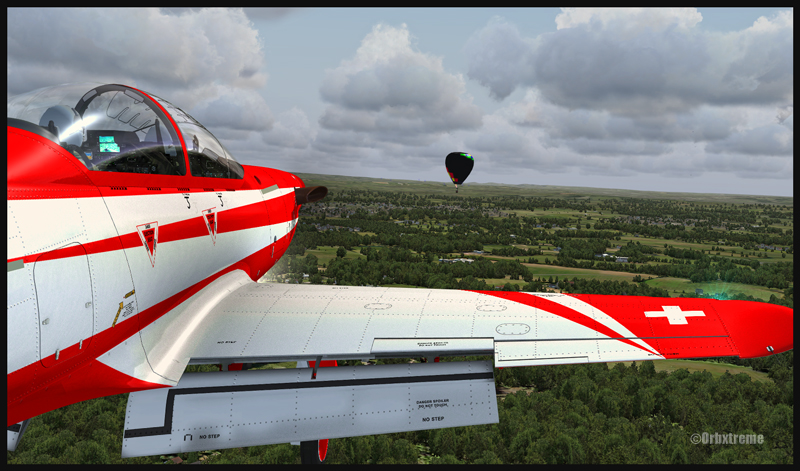
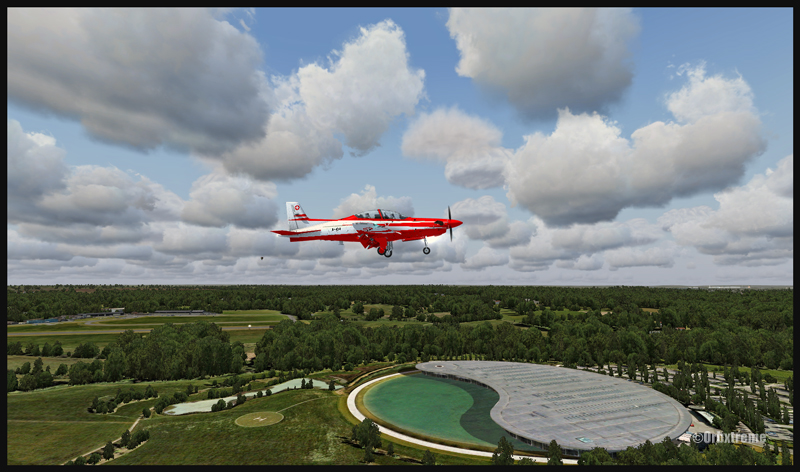
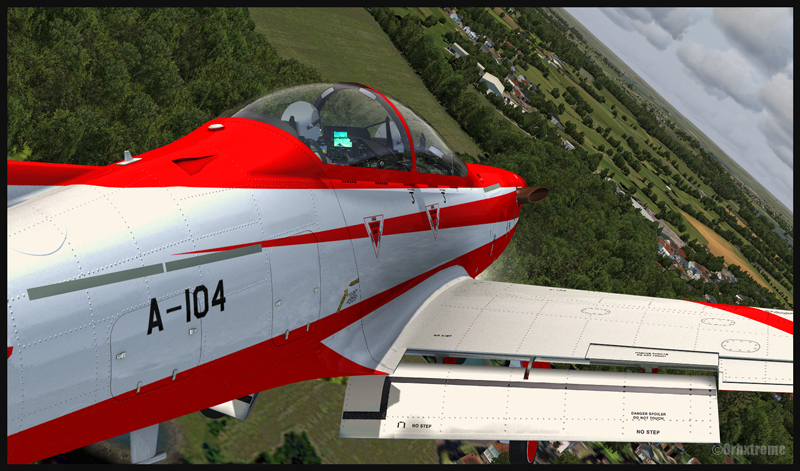
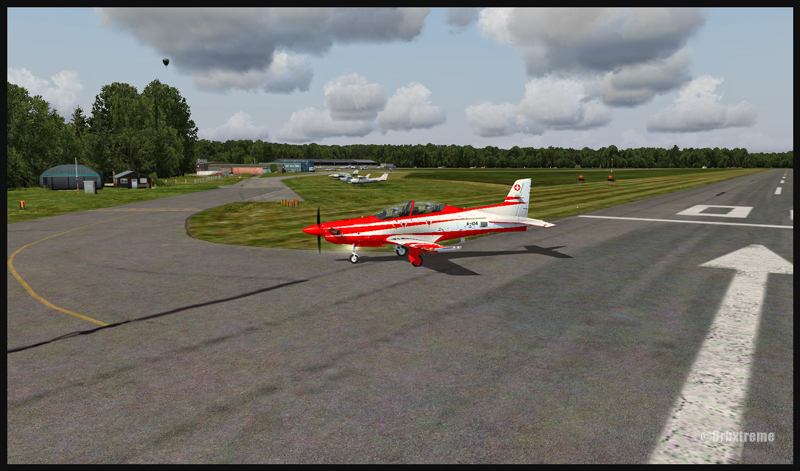
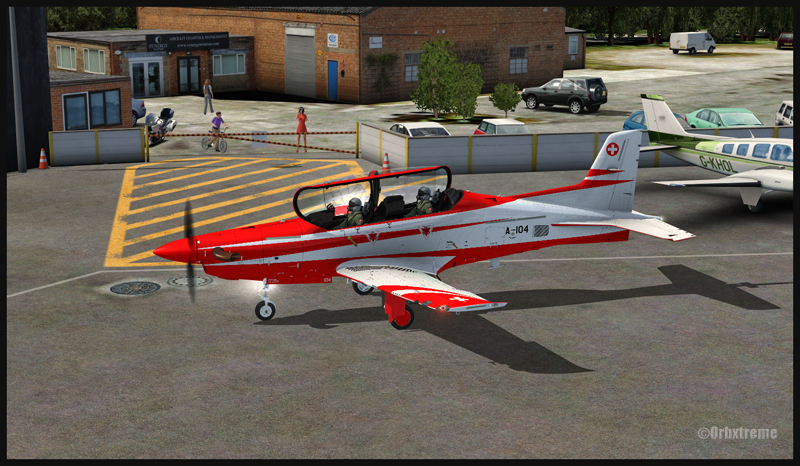
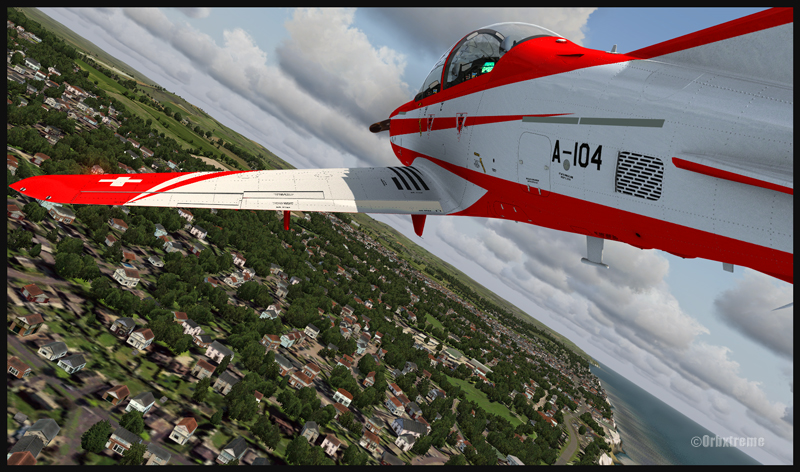
A serious training session is mandatory with the Pilatus PC-21 before attempting a landing in Fairoaks

A Pilatus PC-21 aircraft over Shoreham, United Kingdom
Near the Fairoaks airport, United Kingdom. Flaps and gear down on the Pilatus PC-21

The IRIS Pilatus PC-21 Pro Training Series is a high performance aircraft. It is equipped with a five blade graphite propeller as well as a Pratt-Whitney PT6A-68B engine able to develop 1600 SHP. Until the PC-21 was created, there were only jet aircrafts that could provide such performance when it comes to pilot training. The PC-21’s maximum airspeed is 370 knots, its service ceiling 38,000 feet and it can climb at a rate of 4000 feet/minute.

PC-21 aircraft near the Fairoaks airport, United Kingdom

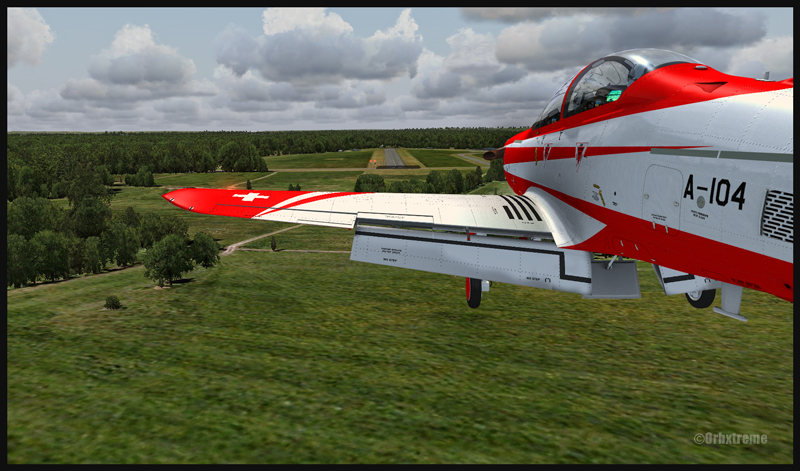
The above sequence of pictures represents a familiarization flight with that aircraft, before trying to attempt to land in Fairoaks. I have included this flight under the “flight simulation” section of the site, under “standard virtual flights”.

PC-21 turning final for Fairoaks airport, United Kingdom

The takeoff was done from Southampton and the route included Shoreham, Gatwick, Heathrow to finally end in Fairoaks. Along the route, different exercises were practiced like slow flight, inverted flight and other manoeuvers that allowed to learn the behavior of the machine under all kind of configurations.

PC-21 aircraft on final for the Fairoaks airport, United Kingdom
A PC-21 aircraft and the Fairoaks airport, United Kingdom

IRIS created that virtual Pilatus. ORBX is responsible for the Southampton, Shoreham and Fairoaks virtual airports, as well as sceneries generated by their well known Global, Vector, Open LC and Trees HD products. FSX was used for the flight. Clouds were generated by REX and CumulusX. For an even more realistic experience, UK2000 virtual airports like London Gatwick and London Heathrow could have been used since they are of excellent quality.

Pilatus PC-21 on the Fairoaks airport (FSX)

Beware of the approach in Fairoaks. There are trees near the threshold of the runway and the landing surface is relatively short, measuring only 813m (2667 feet). Flying an aircraft equipped with such a powerful engine and whose stall speed approximates 150 kmh with flaps and gear down will require much attention on the approach. It will be the difference between a successful landing or having your name in the first page of Fairoaks local newspaper the next day.

For other ideas of virtual flights that do not require a lot of experience, click on the following link: Standard virtual flights

For more articles on flight simulation on my web site, click on the following link : Flight simulation

Good luck!