Categories
Intelligence

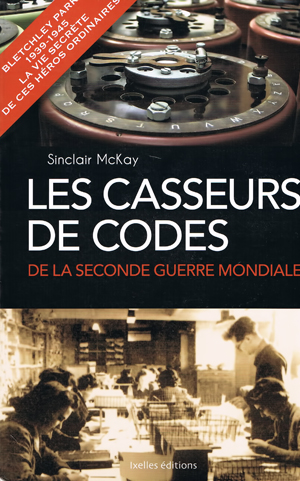
The secret life of Bletchley Park

This book is about the daily operations and lifestyle of the people who worked at decoding German messages in Bletchley Park, England, during the Second World War. The reader quickly realizes the incredible impact of the shadow workers on major battles like the Battle of England, El Alamein or eventually the D-Day. Moreover, it allows the reader to enter the Park’s installations to witness the rigor and professionalism of the men and women who worked day and night, through high tension and exhaustion, to accomplish their duties.

The Secret Life of Bletchley Park

Their efforts to obtain results bordered with obsession. Even while sleeping, brains were at work. A major breakthrough happened after a researcher woke up in the middle of the night with a long awaited solution. Naturally, names like Alan Turing, John Herivel or Dillwyn Knox are repeated on a regular basis. But they are just a few in a crowd who played an essential role.

Bletchley Park was highly efficient for many reasons:

1. A wise combination of employees with diversified training and capabilities. A wide cross-section of abilities and general culture were sought after. Women and men working at decoding were gifted with a highly superior intelligence and focusing capacity. Multiple fields of knowledge were required: there were experts in mathematics as much as in history, classical letters or linguistic. Dillwyn Knox, one of the Bletchley stars, was himself an expert in old papyrus. The combination of intelligence resulted in important innovation.

2. The ability to keep a secret: the employees were scrupulously screened and could not walk in any other buildings than the one that they were assigned for their work. If there had been a mole in one of the buildings, that person would not have been able to have a physical access to other buildings to try to acquire secret information. A common goal and a deep understanding about the importance of their sole objective helped the staff to deal with fatigue and keep the unavoidable personal conflicts under control. The discretion about the operations at Bletchley was even maintained by the employees after the war was officially over.

3. A special treatment for the code breakers: even if Bletchley Park was officially created for military purposes, there was no strict military regime implemented: [my translation] “Throughout the years and centuries, we observe that British intelligence is partly a military affair, but is mostly managed by talented civilians”. The code breakers needed a special treatment: [my translation] “It was deemed very important that the “experts” benefitted from enough space and liberty so that their brilliant thinking could be used at its full potential”. They did not have to deal with restrictions and discipline applied to other employees. This objective to avoid useless pressure on highly skilled employees has been repeated in successful international companies aimed at innovation.

4. Collaboration between countries: it is important to mention the essential collaboration between Poland, England and France at gathering results aimed at cracking the Enigma code. Up to the moment that France was defeated, all the found solutions were shared. Besides, Polish cryptanalysts where the first to decipher the codes on the first version of the Enigma machine, results that were shared with the two other countries.

5. The importance of the chance factor in the success of the operations: the chance factor would eventually play a key role in the ability for Bletchley Park to maintain its operations for a prolonged period. In spite of the intense German bombings, very little damage was inflicted to the buildings where the code breakers were working: [my translation] “We owe it to a miracle that only two bombs fell on Bletchley Park […]. Moreover, another bomb fell near the site where Knox and Lever were working, but it never exploded”. Furthermore, two other bombs fell on the Park, also without exploding.

There were nonetheless obstacles to efficient operations. These included the existence of useless levels of administration: primary information starts to be transformed as soon as it is passed to another level for interpretation. The more levels there are, the more the message is transformed. Some people become masters at protecting their own status and job and eventually become superfluous. Because of their higher status, they are harder to dislodge. This situation could not be avoided at Bletchley Park: [my translation] “Our working place is actually overcrowded by intelligence officers who mishandle our results and make no efforts to double check their arbitrary correction”.

A book passage that particularly touched me was the story of three British sailors who swam up to a slowly sinking U-Boat, the U-559, and helped protect and bring back a four rotor Enigma machine (the most complex version) as well as all the Stark keys used with the machine. The two sailors who entered the U-Boat drowned as they had insufficient time to get out on time. The third sailor, who had stayed outside, was able to bring back all the secret material (wisely placed in a sealed bag) to his ship. To get a hold of this Enigma machine and all its keys would be deemed of capital importance to help neutralize the German forces on the oceans.

I conclude with a quote from Mavis Batey which resumes quite well the state of mind of the people who worked at Bletchley Park: [my translation] “You do things or not, but if you don’t act, nobody will do it at your place”.

©2012 Ixelles Publishing SA
ISBN 978-2-87515-178-0
©Sinclair McKay 2010 (author), original English title: The Secret Life of Bletchley Park

Categories
Tragedy at sea

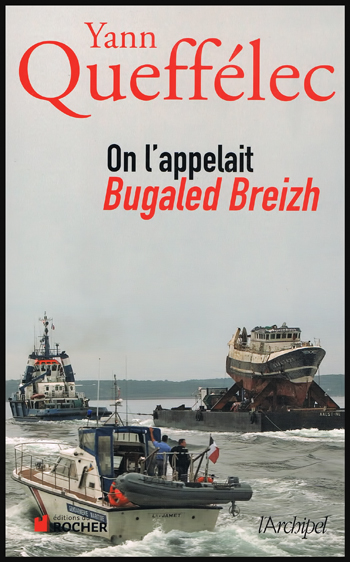
The Bugaled Breizh mysterious story

Bilingual readers who appreciate real life stories about the sea will love: “On l’appelait Bugaled Breizh”. This is the story of a trawler that sinks with all crew and equipment, while fishing in the Cornouailles region. Experienced sailors were on board and the weather was fair. Other trawlers were present in the area and their captains were maintaining contact with each other by radio. Suddenly, the Bugaled Breizh’s captain mayday call was received. Just a few words, not even enough time to complete his sentence.

Yann Queffélec - On l'appelait Bugaled Breizh
Yann Queffélec – On l’appelait Bugaled Breizh

We soon discover that the trawlers were not alone in the area. There were also nuclear submarines on an exercise in shallow waters. And there is a possibility that a submarine from an uninvited country could have also been watching the manoeuvers, well protected in the obscurity and silence.

The book raises the possibility that a fast moving submarine could have been entangled in the Bugaled Breizh’s fishing net, thus destabilizing the trawler and sinking it, without giving the captain any time to react. As for keeping the truth hidden about the accident,it is believed that if the facts were openly revealed to the general public, it would create strong political tensions due to admitting that an undetected submarine was closely watching the military exercise. The book enumerates possible reasons explaining the presence of the foreign submarine in the area.

The enquiry, or shall I say inquiries, have been stalled for over ten years now. But as questions have been asked over the years to a vast network of interested parties, a better idea of what could have been the causes behind that drama has emerged.

This is a really interesting book, signed by the reknowned writer Yann Queffélec (Goncourt prize 1985 for Les Noces barbares) also helped by Pascal Bodéré, a journalist known as one of the best connaisseur of the Bugaled Breizh affair.

Éditions du Rocher / L’Archipel, 2014.

ISBN 978-2-8098-1378-4

Categories
Environment

The Conundrum

The Conundrum eng

The Conundrum: How Scientific Innovation, Increased Efficiency and Good Intentions can Make Our Energy and Climate Problems Worse. Originally published by Riverhead Books, 2011.

This book is certainly a nice surprise. The author, David Owen, adopts a contrarian view on the supposedly positive effects of eco-energetic products on the environment. He develops his subject in a humoristic way, often citing himself as a bad student when it comes to excessive consumption of planetary resources. Owen makes the argument that it is often easier to think at length about a problem than to actually do something about it.

Mr. Owen successfully demonstrates that the only efficient solution to slow down global warming and act against excessive use of planetary resources is to lower general consumption. Instead of supporting the idea that eco-energetic solutions will save the environment, he demonstrates that they have, in fact, a rebound effect.

With science helping to create new and less expensive products, overuse gradually becomes the norm. Because of their low cost, these same products become available to a greater number of new users, thus creating a rebound effect and increasing the consumption and impact on the environment. The idea here is not to forbid the poorest people to have access to products that could improve their quality of life, but to aim for a better distribution of the planetary resources by asking the richest countries of the world to lower their own consumption.

Many forms of transportation are analyzed: the use of the electric car, commuter train and modern aviation. Let’s consider aviation: decades ago, a plane on an intercontinental flight was polluting the air more than today. Technological innovations helped diminish the level of pollution produced for each individual flight. The engines need less fuel and aircrafts are made of lighter components, etc. On a micro-scale effect, we could assume that this is a real success. But on a planetary scale, it is easy to realize that the number of flights have increased tremendously. A growing population, added to lower ticket prices and easier access to new customers help increase the carbon footprint.

When it comes to the impact of consumption on the environment, the micro-scale vision prevails. The responsible consumer tells himself: “I bought an electric car, or a hybrid vehicle, so I did my share for the environment”. The real solution does not reside in the possibility of doing more kilometers for a liter of fuel, but to do less kilometers on a yearly basis and eventually reduce the total number of drivers and vehicles. This looks like a huge proposition. The author explains that the use of a vehicle, whatever it is, requires the development and maintenance of an ever increasing number of kilometers of roads and highways. This also has the indirect effect of facilitating, for an ever larger number of drivers, access to suburbs that are increasingly farther from higher density zones.

David Owen stresses the importance of densification. Not any densification, but a well-planned one, where the citizen does not need to use a vehicle since he has access to all the essential services within a short distance. The site www.walkscore.com has some interesting information on the subject. The author names New-York and Hong-Kong as the two most eco-energetic cities in the world. Easier said than done. Especially when we realize that those cities are becoming environmental examples because they do not have a choice due to the limitation of a small territory that forces massive densification. We cannot deny, though, that a planned densification increases the number and diversity of available services.

But if we densify some areas while widening and extending highways that facilitate access to suburbs and low density areas, we apply opposite policies, thus greatly slowing down the densification process. This is a balance difficult to achieve. In order to solve some traffic problems, many cities have adopted the commuter train when it is clear in advance that the poor density of the population, added to a large territory, will prove ineffective.

The author names Phoenix as an example: this city has a modern commuter train serving a population twice as big as Manhattan but operating on a territory that is two hundred times larger. So the operation is solved by a yearly recurrent deficit.
In the end, the main problem is that it is easier to buy eco-energetic products and preserve a lifestyle, than to diminish our level of general comfort by reducing our consumption of planetary resources. But one must admit that it is not easy for the consumer to change his lifestyle, especially when he is constantly solicited by publicity and propaganda to increase his consumption.

At the end of his book, David Owen quotes Daniel Nocera, who holds the Henry Dreyfuss Chair in Science of Energy, at MIT: [my translation] “…confusion arises when we believe that with our heart we can solve environmental problems while, doing so, we only solve the problems of consciousness”.

Note: David Owen is a regular contributor to the New Yorker. He has written many books, among them Green Metropolis (2009), about the ecological superiority of megalopolis like New-York.

Categories
Updates

Hello Everybody!

Welcome to my new web space. It’s a very humble site for the moment as I am developing it at the same time that I am learning WordPress. Once my site is completed, you will find quality photos and insights into improving your photography skills. This site will also contain information about aviation, flight simulation, weather and flight information services (FSS). I will be uploading real life stories about flight information services spanning over thirty years of experience in Quebec and Canada’s North. These stories will be accompanied with photos that I took over the years. I will also share my passion for books.

I am looking forward to your visit in the coming weeks.

François